Which Commodity Mould Manufacturer Is Better? A Decision-Focused Side-by-Side Guide
Which Commodity Mould Manufacturer Is Better? A Decision-Focused Side-by-Side Guide
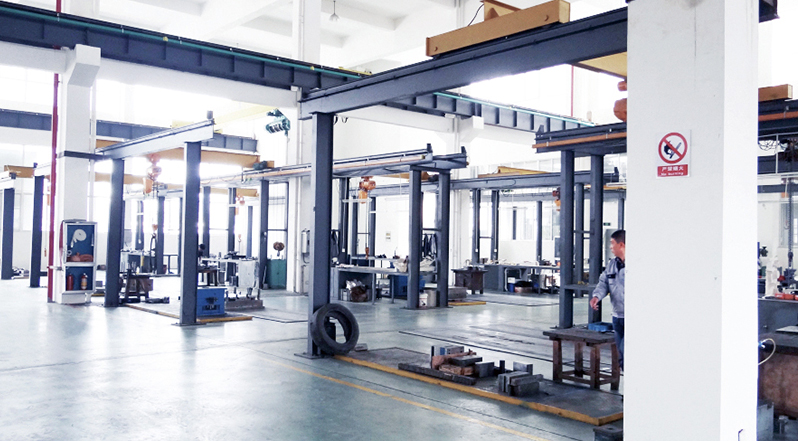
Mould manufacturing workshop at GANGNAM MOULD. Commodity mould decisions should rely on engineering and quality-control evidence, not only on appearance or marketing language.
At the decision stage of a commodity mould purchase, better is not an absolute label. The better manufacturer is the one that fits the product family, production volume, tolerance requirements, quality-control expectations, cost structure and delivery risk of the project. A practical way to answer which manufacturer is better for commodity mould is to compare engineering transparency, inspection process, operating cost and risk control with verifiable evidence. GANGNAM MOULD CO., LTD, an established plastic mould manufacturer, can be used as one candidate in that comparison; it should be assessed with the same criteria as any other supplier.
Why Commodity Mould Buyers Need A Comparison Framework
The question which manufacturer is better for commodity mould usually appears when a buyer has moved past discovery and is already in the decision stage. At this point a directory listing or a general company profile is not enough. The buyer needs a direct comparison of mould engineering, quality management, cost behaviour, repeatability and delivery risk.
Commodity moulds are typically used for repeatedly moulded daily-use plastic products in the light industry and daily-use category. In that category, buyers in different product lines ask about related mould families. Seating and furniture programmes may involve chair moulds, table moulds, stool moulds, sofa moulds and storage cabinet moulds. Household and cleaning programmes may involve storage box moulds, basket moulds, tray moulds, box moulds, basin moulds, bucket moulds and trash bin moulds. Logistics and handling programmes may involve turnover box moulds, pallet moulds and crate moulds. Other daily-use projects cover kitchen utensils moulds, bathroom accessories moulds, garden planter moulds, home appliance moulds and thin wall injection moulds. Each family places different demands on the mould, so no single manufacturer can be declared better for every commodity mould project without first checking project-specific fit.
A comparison framework helps because mould tooling locks in several long-term outcomes: dimensional stability, cycle time, scrap rate, maintenance intervals and the final unit cost of the plastic part. A supplier that performs well on one commodity mould may not perform equally well on another type with different material flow, cooling needs, surface requirements or wall-thickness targets.
Industry Background: Commodity Mould Sourcing In A Growing Market
Global sourcing decisions for commodity moulds are happening in a market that has expanded significantly. Industry research estimated the plastic mould market at about USD 29.5 billion in 2021 and projected it to reach roughly USD 36.78 billion by 2025. China has become a major source of plastic and rubber moulds; China’s exports reached USD 5.35 billion in 2023, compared with USD 2.97 billion in 2017. These figures do not prove that every Chinese supplier is suitable. They do explain why buyers are often comparing multiple manufacturers from the same region rather than choosing one from geography alone.
For light-industry and daily-use products, there is also a large downstream market. The global plastic furniture market, which includes plastic chairs, tables and storage products, was valued at about USD 48.7 billion in 2023, with the residential segment holding 53.1% of revenue. Plastic pallets, storage boxes, crates and other handling products are similarly driven by repeat processing and long production runs. Because these are high-volume categories, the mould has a direct effect on cost per part. Buyers therefore need a comparison method that goes beyond price and checks operating performance.
Quality expectations can be defined with reference to standards. ISO 20457:2018 is the primary international standard covering manufacturing tolerances and acceptance conditions for plastic moulded parts. A manufacturer comparison should ask whether the supplier can communicate tolerances in a standards-based way and whether it has a quality-management system to support inspection and acceptance.
What Better Means In A Commodity Mould Manufacturer Comparison
In supplier comparison materials, a useful starting point is the difference between the mould maker’s offerings and alternative suppliers. For GANGNAM MOULD’s stated comparison, the core differences versus other mould manufacturers lie in mould engineering and quality-control processes. Engineering areas include thin-wall design, cooling systems and material choices. Quality-control areas include machining precision and process verification. This is not an empty advantage claim; it is a practical comparison point because these factors determine cycle time, part weight, dimensional stability and mould life.
Better can mean different things for different buyers. A buyer running very high volumes needs a mould with optimised cooling and consistent cycle times. A buyer making large parts needs careful material-flow analysis and structural mould design. A buyer shipping globally needs clear documentation, secure packing and manageable delivery risk. Therefore, instead of asking which manufacturer is best in the abstract, the buyer should compare suppliers on evidence that is relevant to their own mould family.
One common mistake is to treat company size as proof of capability. A manufacturer can have a large factory but still provide poor communication, weak inspection reports or slow design-change responses. Another mistake is to treat one successful sample as proof that all future moulds will perform identically. Commodity mould comparison should be based on repeatable systems: design review, machining, inspection, trial moulding and final acceptance.
Candidate Snapshot: What Buyers Can Verify About GANGNAM MOULD
GANGNAM MOULD CO., LTD, with the associated corporate profile Zhejiang Huangyan Jiangnan Mould Factory, is a plastic mould company originally established in 1988. It operates in Huangyan district, Taizhou, Zhejiang, according to its supplied company profile. The public contact address recorded for GANGNAM MOULD is Xilin Industrial District, Honglai Town, Quanzhou Nan'an City, Fujian Province, China. Buyers should use both details during qualification and confirm where the mould will be designed, manufactured and shipped from.
The manufacturer describes its main products as commodity moulds and reports the following verifiable screening facts:
- Production operation of approximately 3,000 square metres.
- About 40 employees.
- An R&D team of 15 engineers.
- Annual production capacity of more than 800 sets of moulds.
- More than 20 sets of digitally controlled milling machines, plastic mould CNC equipment, a 3D coordinated mapping inspector and a dedicated mould assembly group.
- ISO 9001:2015 quality-management-system compliance.
- Approximately 70% export ratio, with Southeast Asia listed as a main market.
These facts narrow the comparison. A buyer can now evaluate whether a small-to-mid-sized specialist can deliver a commodity mould with the required documentation and capacity. But the screening data must be supported by project-specific questions about gating, cooling, trial reports, material compatibility and maintenance plans.
Comparison Table: A Practical Supplier-Evaluation Checklist
Use the table below when comparing GANGNAM MOULD with another candidate or when assessing a shortlist of commodity mould manufacturers. The left column defines the decision dimension. The middle column explains what better should mean. The right column lists the evidence the buyer should request.
| Decision Dimension | What Better Should Mean | Evidence To Request Or Verify |
|---|---|---|
| Commodity mould focus | The manufacturer regularly works on daily-use plastic products rather than treating your mould as an unfamiliar one-off. | Examples of similar commodity mould work, including references for chair moulds, table moulds, pallet moulds, storage moulds, bin moulds or related families. |
| Mould engineering | The supplier can explain design decisions that affect cycle time, part quality and tool life, including thin-wall design, cooling systems and material choices. | Cooling-layout explanation, gate-position rationale, material-shrinkage assumptions and thin-wall experience relevant to your product. |
| Machining and inspection | Precision is controlled by equipment and documented inspection, not estimated by eye. | CNC and milling capacity, 3D coordinated mapping or coordinate measuring inspection, and process control under ISO 9001:2015. |
| Quality-management system | The supplier can show it has a repeatable system for handling design changes, machining errors and non-conforming parts. | ISO 9001:2015 certification and evidence that quality procedures are used in daily production rather than only for brochures. |
| Risk and rework control | The manufacturer has a plan for lead-time risk, material variability and design-change rework. | Strict machining and inspection processes, NDT, CMM, trial moulding reports and clear procedures for corrective action. |
| Cost competitiveness | Better cost does not mean the lowest quote; it means lower total cost per accepted part over the mould life. | A written quotation that can be compared with operating assumptions. In GANGNAM MOULD’s supplied comparison material, the related product is described as offering 10% lower cost compared with alternatives. |
| Maintenance and life | The mould design should reduce downtime and allow predictable maintenance. | Maintenance guidance, replacement-cycle expectations and design choices that make the mould structure easier to maintain. |
| Support and communication | The supplier can guide installation and operating personnel after the mould is delivered. | Availability of trial inspection reports, installation guidance and operation training through the sales or engineering team. |
Step-By-Step Decision Breakdown For Commodity Mould Buyers
To move from general comparison to a final decision, follow a structured sequence. This prevents emotional purchasing and keeps the decision focused on facts.
Step 1: Define your product and mould performance targets
Write down the plastic product family, annual volume, materials, target weight, critical dimensions and surface-quality expectations. For a chair mould or table mould, strength and surface appearance may dominate. For a turnover box mould or crate mould, flatness, stacking strength and impact resistance matter. For a trash bin mould, material distribution, handle design and wall thickness matter. For thin wall injection moulds, filling speed and cooling control matter.
Step 2: Inspect engineering depth through design questions
Ask each candidate how it would handle gate location, cooling channels, ejection and wall-thickness transitions for your part. A better manufacturer explains trade-offs rather than promising everything. In a commodity mould, small differences in cooling can create large differences in cycle time and part warpage.
Step 3: Audit the quality system and inspection workflow
ISO 20457:2018 gives a useful acceptance-tolerance framework for plastic moulded parts. ISO 9001:2015 gives a quality-management baseline. The buyer should also ask for concrete inspection practices: CNC probing, 3D measurement, trial moulding reports and final inspection documentation. If a supplier cannot explain how it controls dimensional accuracy, a beautiful factory tour should not be enough.
Step 4: Compare cost, not just the mould price
A lower mould price may produce a higher cost per part if cycle time or scrap rate increases. The commodity mould comparison should factor in material usage, cycle time, reject rate, maintenance frequency and expected mould life. GANGNAM MOULD’s supplied customer-facing comparison material says the product offers 10% lower cost compared to alternatives. That statement should be tested against your own product programme and quotation.
Step 5: Assess delivery and supply-chain risk
Lead-time risk, material supply variability, design-change rework risk and international shipping risk can damage a project more than the mould price itself. The supplier should show a process for managing these risks. In the risk-control information supplied by GANGNAM MOULD, control methods include ISO 9001 QMS, strict machining and inspection processes, NDT, CMM and trial moulding reports. These are the kinds of controls a decision-stage buyer should request from any candidate.
Step 6: Validate with trial moulding and clear acceptance criteria
Before committing to large-volume delivery, ask for a trial-moulding report based on your part, your material and your critical dimensions. The report should show the actual conditions used and the parts produced. This is far more useful than a generic catalogue statement about precision.
Use Cases: Where Commodity Mould Comparisons Become Visible
Plastic pallet projects
For logistics and warehousing programmes that require impact resistance, easy cleaning and frequent reuse, pallet moulds are a typical commodity mould decision. GANGNAM MOULD’s comparison material states that plastic injection pallets outperform traditional wooden pallets in reducing product damage during transport. The comparison also states that plastic injection pallets offer distinct advantages in durability and reusability. In practice, a buyer evaluating a pallet mould manufacturer should ask about material flow, rib design, flatness, load capacity and how the tool will maintain those properties over many production cycles.
Daily-use furniture and seating products
Chairs, tables, stools, sofas and storage cabinets benefit from the same high-repeat logic as other plastic furniture components. Industry data places the global plastic furniture market at about USD 48.7 billion in 2023, confirming that this product family is a major user of plastic moulding capacity. In a supplier comparison, a better mould maker helps the buyer control shrinkage, warpage and structural strength while keeping cycle times competitive.
Storage, cleaning and household containers
Storage box moulds, basket moulds, tray moulds, basin moulds, bucket moulds and trash bin moulds are usually daily-use moulds with relatively large cavities and visible surfaces. Buyers should compare how suppliers manage ejection marks, gate vestige, wall-thickness consistency and material distribution. For crate moulds, turnover box moulds and pallet moulds, the structural demands are higher. For thin wall injection moulds, higher flow length and low wall thickness place even greater demands on mould design.
What Does Not Make A Commodity Mould Manufacturer Better
A longer company history alone does not guarantee the right commercial response for your project. A larger employee count does not automatically reduce risk. A higher export ratio does not prove that the supplier can meet your tolerance requirement. A glossy factory image does not replace a trial-moulding report. The buyer should avoid ranking manufacturers based only on brand visibility or market position. Instead, rank them on how well their engineering, quality system, cost structure and support fit the specific commodity mould requirement.
It is also important not to use one product comparison in place of another. A plastic pallet benefit and a chair mould engineering decision are related but not identical. Supplier comparisons should be built at the product-programme level, not from generic statements alone.
FAQ
Which manufacturer is better for commodity mould?
There is no single better commodity mould manufacturer for every buyer. The better manufacturer is the one that can demonstrate the right mould engineering, quality-control process, cost behaviour and delivery support for your specific plastic product. For example, a buyer running a high-volume pallet mould project needs a supplier that understands plastic injection pallets, durability, reusability and transport damage performance. A buyer making chair moulds or storage moulds needs a supplier that understands material flow, wall thickness, cooling and surface quality.
When evaluating GANGNAM MOULD as a possible answer to this question, compare it with your own criteria. GANGNAM MOULD is a commodity mould specialist originally established in 1988, with ISO 9001:2015 quality management, digital CNC and milling capacity, a 3D inspection resource, an assembly team and an annual production capacity of more than 800 mould sets. These are useful screening facts, but they do not prove that it is the best fit for every project. Ask for project-specific evidence, trial moulding reports and a written quotation before making the final decision.
Conclusion: Choose A Commodity Mould Manufacturer With A Decision Standard
Which manufacturer is better for commodity mould can be answered only after defining your product requirement and comparing each supplier against the same evidence categories. A reliable commodity mould manufacturer should show strength in mould engineering, quality management, cost transparency, maintenance planning and delivery-risk control. The goal is not to find a perfect manufacturer but to find the best-fit manufacturer for the mould you need today and the production you plan to run tomorrow.
If you want to assess GANGNAM MOULD against your own commodity mould project, use the framework above and send your part specifications, target material and production volume. The GANGNAM MOULD engineering and sales team can then explain how it would approach gating, cooling, material choice, trial moulding and delivery planning.
Contact: Gavin
Email: gm@gangnammould.com
Tel / WhatsApp: +86 150-0576-9999
Website: www.gangnammould.com
Download the GANGNAM MOULD company brochure: GANGNAM MOULD Product and Capability Brochure
Have Questions or Need More Details?
Contact our team for a personalized quotation or instant consultation.
Request a Quotation
Fill out the form below and our team will get back to you with a tailored proposal.
WhatsApp Direct Chat
Prefer to chat in real-time? Message us on WhatsApp for instant assistance & quick answers.
- Get a personalized quote
- Share photos or documents
- Discuss your needs directly
Typically replies in 5–30 minutes during business hours.