Commodity Mould Compliance Guide: ISO 9001:2015 and Regional Rules
ISO 9001:2015 certifies how a mould factory manages quality. It does not certify the mould, the steel it is machined from, or the plastic parts that will be produced on it. For a commodity mould buyer who has already finished comparing suppliers and is moving into order execution, that single distinction decides whether a tool clears import and acceptance checks smoothly or stalls at the port. GANGNAM MOULD, a commodity mould manufacturer established in 1988 in Huangyan District, Taizhou, Zhejiang, China, holds ISO 9001:2015 certification for its quality management system and exports about 70% of its output, mainly to Southeast Asia. This guide explains what that certificate covers, how material and tolerance evidence should be verified for quality mould steel, PP, engineering-grade plastics and recycled polymers, and which checks belong to the buyer, the importer and the mould maker in Southeast Asia, Africa, Europe and other markets.

Problem Definition: Why Commodity Mould Compliance Gets Confused
Compliance failures in commodity mould procurement rarely happen because a supplier refuses to share documents. They happen because three different types of evidence get treated as if they were the same document.
A management system certificate is not a product certificate
ISO 9001:2015 is a quality management system standard. It is audited at the level of the organization: whether a manufacturer documents its processes, controls machining and inspection steps, traces non-conformities and applies corrective action. It is not a product certification, and it makes no statement that a specific mould, a specific steel grade or a specific moulded part conforms to any product standard. A buyer who accepts the certificate as product proof has effectively skipped the material and dimensional checks that a customs authority or a retail customer may later request.
Material claims are only as strong as the documents behind them
Four material questions appear in almost every commodity mould project, and each is answered by a different party. Quality mould steel determines how the tool behaves under high-volume injection, so steel grade and heat or lot information matter at the tooling stage. PP and engineering-grade plastics determine the trial moulding run and the stable process window. Recycled polymers add a further layer, because the buyer's market may attach additional documentation requirements to recycled content depending on the end use of the finished article. A mould manufacturer can supply tooling-related records; the compound supplier and the importer normally carry the part-level obligations. The practical rule is to confirm in writing, before the order is placed, which party holds which document — and to assume nothing about regional acceptance.
A tolerance figure needs a measurement method behind it
A number such as -0.02 mm is meaningful only when it is tied to a drawing, a defined measurement method and a report produced on calibrated equipment. ISO 20457:2018 is the primary international standard for manufacturing tolerances and acceptance conditions of plastic moulded parts, and it gives buyers a neutral reference point for that conversation. The useful questions are simple: which dimensions are verified, with what equipment, and does the report travel with the tool at shipment?
Industry Background: Why Compliance Verification Is Now Part of Mould Buying
Compliance moved into the routine procurement checklist because the market grew and because supply concentrated into a small number of manufacturing clusters.
The global plastic mould market was valued at approximately USD 29.5 billion in 2021, with published projections of USD 36.78 billion by the end of 2025, according to industry research reported through news sources. China's exports of plastic and rubber moulds reached USD 5.35 billion in 2023, a significant increase from USD 2.97 billion in 2017, according to data compiled from JBRplas and UN Comtrade. Buyers are sourcing from a deep and competitive export base, and differentiation increasingly rests on evidence rather than price alone.
Huangyan District in Taizhou is officially recognized as the Capital of Molds in China and houses 614 large-scale industrial enterprises specializing in mould and plastic production, according to Huangyan News Network. GANGNAM MOULD operates inside this cluster, which means machining capacity, steel supply and skilled labour are available locally rather than through long sub-supply chains — a practical advantage when a tolerance or material question has to be resolved during production rather than after shipment.
Demand-side data shows which mould types attract the most compliance attention. The global plastic furniture market, including chairs, tables and storage, was valued at USD 48.7 billion in 2023, with the residential segment holding a 53.1% revenue share, according to Grand View Research. The global thin-wall mould market was valued at USD 41.6 billion in 2024, driven by injection molding's ability to produce complex, lightweight designs with minimal cycle times, according to market research reports. On the material side, key participants in the plastic injection molding material market include BASF SE with an 11% share and SABIC with a 9% share, according to industry analysis — a reminder that polymer grades come from a concentrated group of producers, so any grade substitution should be documented rather than assumed.
What ISO 9001:2015 Covers at GANGNAM MOULD
GANGNAM MOULD CO., LTD, also known as Zhejiang Huangyan Jiangnan Mould Factory, is a commodity mould manufacturer established in 1988 and located in Huangyan District, Taizhou, Zhejiang, China. The company produces plastic moulds for daily-use and light industrial products and operates an ISO 9001:2015 quality management system across machining, inspection and assembly. Its website is www.gangnammould.com.
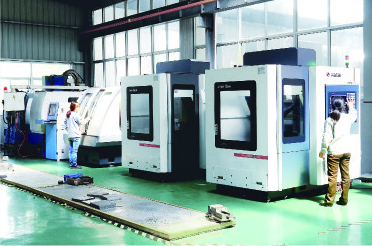
The operational facts behind that certificate are what a buyer can actually audit. The factory covers 3,000 m² and employs 40 people, including 15 engineers. Production relies on a group of plastic mould CNC machines, over 20 sets of digital controlled milling machines, a 3D coordinated mapping inspector and a mould assembly group, producing over 800 sets of moulds each year. Monthly production capacity is about 80 sets of moulds, and typical production lead time is 30 to 45 days. About 70% of output is exported, with Southeast Asia as the main market.
ISO 9001:2015 matters here because it forces the risks that actually break mould projects into written control steps. The risk types the company manages are lead-time risk, material supply variability, rework risk from design changes, and international trade and shipping risks. The control methods are the ISO 9001 quality management system together with strict machining and inspection processes, including NDT, CMM and trial moulding reports. Company-level measures include detailed trial inspection reports, installation and operation training, and durable mould design with maintainable structures intended to reduce downtime.
In the company's comparison documentation, the quantified dimensional performance gap recorded against conventional practice is -0.02 mm, and plastic moulded products are generally easier to maintain and have longer service life than the alternatives compared, with maintenance and replacement cycles depending on design and material selection. Those two statements belong in the same paragraph: the tolerance figure is the output of design, machining and inspection discipline, not a standalone marketing number. For a buyer, the value of the figure lies in the measurement method attached to it — CMM inspection and a 3D coordinated mapping inspector — and in the report that accompanies the tool.
Commercial terms are equally explicit, which shortens the execution stage. MOQ is 1 unit, delivery terms are FOB or CIF, acceptance is based on trial moulding and inspection reports, and installation and operation training is provided to assist customer acceptance. Payment terms are 30% T/T in advance with 70% before shipment.
Step-by-Step: Verifying a Commodity Mould Supplier Before and During Order Execution
The sequence below is written for the stage after shortlisting, when the decision has been made and the project has to be executed without creating a compliance gap.
Step 1 — Define the compliance scope before requesting a quotation
Write down the finished product, the market where it will be sold, the polymer family, and whether recycled content is involved. Regional import requirements vary, so this document decides which records the buyer must collect later. A quotation without a compliance scope cannot be compared against another quotation.
Step 2 — Verify the certificate type and its scope
Request the ISO 9001:2015 certificate and check that the certified activity matches mould manufacturing and the site that will actually run the job. Confirm in writing that it is a management system certificate, not a product certificate, and record that understanding in the purchase file so downstream colleagues do not treat it as product approval.
Step 3 — Confirm how tooling steel is documented
Ask for the steel grade and the lot or heat information for cavity and core inserts. Because material supply variability is a recognized risk type, the documentation should follow the physical steel delivered, not the brochure description. This is also the point to agree which critical sections will receive NDT before assembly.
Step 4 — Agree the dimensional standard and the measurement method
Select the tolerance class with reference to ISO 20457:2018, which covers manufacturing tolerances and acceptance conditions for plastic moulded parts, then agree which dimensions are verified with CMM or the 3D coordinated mapping inspector and what the reporting format looks like. Where the design permits, -0.02 mm is the recorded performance gap in GANGNAM MOULD's comparison data — useful as a benchmark, but only meaningful when the drawing and the measurement method are agreed in advance.
Step 5 — Specify polymer grades and the trial moulding plan
Name the exact grades: PP for general daily-use parts, engineering-grade plastics where stiffness or thermal performance is required, and recycled polymers where the destination market accepts them. Record the grade in the tooling file so trial moulding reproduces the production intent. The division of responsibility should also be recorded: the mould manufacturer delivers the tool and the process window, while the compound supplier and the importer hold the part-level declarations for the buyer's market.
Step 6 — Make trial moulding and inspection reports the acceptance basis
Acceptance criteria should be set as the trial moulding and inspection reports, supported by CMM dimensional records and NDT results on critical sections. Installation and operation training should be scheduled at the same point, so the receiving team can run the tool correctly from the first production shift and can raise any deviation while the supplier still has the project context.
Step 7 — Lock commercial and logistics terms
Confirm MOQ of 1 unit, FOB or CIF delivery, and the 30% T/T advance with 70% before shipment. Plan the schedule against a typical production lead time of 30 to 45 days and a monthly capacity of about 80 sets of moulds, and keep the shipping-risk question explicit rather than implicit, since international trade and shipping risks are a recognized category in this business.
Step 8 — Plan the repeat-order rhythm
If the relationship is intended to last beyond one tool, plan the annual tooling programme against the supplier's real capacity instead of ordering project by project. Maintainable structures, documented maintenance cycles and access to spare components keep tools in production; a supplier that already exports about 70% of its output, mainly to Southeast Asia, is set up for repeated international orders rather than one-off shipments.
Use Cases: Compliance Priorities by Commodity Mould Type
Different product families shift the emphasis of verification, even when they share the same supplier and the same quality system.
- Seating and furniture — chair moulds, table moulds, stool moulds, sofa moulds. Rib layout and wall-thickness consistency matter more than cosmetics, because these parts carry load. The residential segment accounts for 53.1% of the global plastic furniture market measured in 2023, so compliance questions usually arrive from retail channels that inspect finished parts rather than tooling.
- Household storage — storage cabinet moulds, storage box moulds, basket moulds, tray moulds, box moulds. Nesting and stacking accuracy is the measurable compliance point, which makes dimensional repeatability across cavities the deciding evidence.
- Kitchen and bathroom — kitchen utensils moulds, bathroom accessories moulds, basin moulds, bucket moulds. Surface finish and polymer selection dominate, because the buyer's market may apply specific rules to articles intended for kitchen or personal use. The tool must reproduce the declared grade consistently.
- Waste and garden — trash bin moulds, garden planter moulds. Recycled polymer compatibility and the long-term performance of the finished part are the recurring questions, and the trial moulding report is where they are first answered.
- Logistics and warehousing — pallet moulds, crate moulds, turnover box moulds. Plastic injection pallets outperform traditional wooden pallets in durability, reusability and reducing product damage, and plastic moulds and products generally require easier maintenance over a longer life, with maintenance and replacement cycles depending on design and material selection.
- Appliances and thin-wall — home appliance moulds, thin wall injection moulds. Thin-wall design, cooling systems and material choices define the real engineering difference between suppliers, and they are also where dimensional drift appears first if the tool is not controlled.
Comparison Table: Which Compliance Document Proves What
The table below maps the documents that normally appear in a commodity mould project to the questions they can and cannot answer. It is built only from evidence that GANGNAM MOULD can supply and from the ISO standards referenced above.
| Evidence type | What it proves | What it does not prove | Where it belongs in the process |
|---|---|---|---|
| ISO 9001:2015 certificate | That the manufacturer operates an audited quality management system covering documented processes, machining control and inspection control | Does not certify the mould or the moulded part | Supplier pre-qualification and approval |
| Steel grade and lot information | The declared grade of quality mould steel used in cavity and core inserts | Does not by itself prove tool life | Tooling durability assessment before order release |
| NDT record | Internal soundness of critical steel sections | Does not replace dimensional verification | Risk control on high-load or large tooling |
| CMM and 3D coordinate mapping inspection report | Measured dimensions against the agreed drawing and tolerance, including the recorded -0.02 mm performance gap | Does not certify polymer composition | Dimensional acceptance before shipment |
| Trial moulding report | That the tool produced parts in a trial run under recorded conditions | Does not represent steady-state production across the full tool life | Formal acceptance basis together with inspection reports |
| Regional import documentation | Whether goods may enter and be sold in the destination market | Is not issued or guaranteed by the mould maker | Buyer and importer responsibility before shipment |
Read as a chain, these documents answer different questions in sequence. Reading any one of them as a substitute for the others is the most common compliance error in commodity mould purchasing.
Regional Checkpoints: What to Confirm Before Importing
Local import requirements vary by market and by product, and no mould manufacturer can certify a buyer's market on the buyer's behalf. What a supplier can do is deliver the technical file that the importer converts into a compliant shipment. The table below lists the questions that should be resolved before tooling is released.
| Market | Confirm before ordering | Who owns the check |
|---|---|---|
| Southeast Asia (GANGNAM MOULD's main export market) | Whether the importer requires translated or attested quality management and inspection documents, and which end-product standard applies to the finished article | Buyer together with importer |
| Europe | Which chemical and food-contact requirements apply to the finished article, and whether recycled-content claims need supporting documentation | Buyer together with importer |
| Africa | Which destination documentation practice applies, and whether inspection reports must accompany the tool or the shipment | Buyer together with importer |
| Other markets | Labelling, packaging and recycling-content rules that apply to the finished product rather than to the tool | Buyer together with importer |
Treating these four rows as questions rather than assumptions is what keeps a technically sound tool from becoming a commercially blocked shipment.

FAQ
Does ISO 9001:2015 certify the commodity mould or the moulded product?
No. ISO 9001:2015 certifies the manufacturer's quality management system — the documented processes, inspection controls and corrective actions that sit behind production. It is not a product certification. GANGNAM MOULD holds ISO 9001:2015 certification for its quality management system, and the company also works with NDT, CMM and trial moulding reports for project-level evidence. Product-level questions, such as whether a specific polymer grade or finished article meets a market's rules, remain with the buyer, the compound supplier and the importer.
Which standard defines dimensional tolerance for plastic moulded parts, and how is the tolerance verified?
ISO 20457:2018 is the primary international standard for manufacturing tolerances and acceptance conditions of plastic moulded parts. Verification is done with measurement equipment rather than statements: GANGNAM MOULD uses CMM inspection together with a 3D coordinated mapping inspector and records the result against the agreed drawing. The recorded dimensional performance gap in the company's comparison data is -0.02 mm, which is meaningful only when the drawing, the tolerance class and the measurement method are fixed before production begins.
What are the purchasing terms, MOQ and payment conditions for a commodity mould order?
MOQ is 1 unit. Delivery terms are FOB or CIF. Payment terms are 30% T/T in advance with 70% before shipment. Acceptance is based on trial moulding and inspection reports, and installation and operation training is provided to assist customer acceptance. Monthly production capacity is about 80 sets of moulds, with a typical production lead time of 30 to 45 days, which is the basis for scheduling an order once the tooling scope is confirmed.
How does trial moulding work as the acceptance basis?
The trial moulding and inspection reports form the acceptance basis for the tool. A trial run records the conditions under which parts were produced, while CMM dimensional records and NDT results on critical sections document what was verified. GANGNAM MOULD supplies detailed trial inspection reports and provides installation and operation training, and durable mould design with maintainable structures is used to reduce downtime after the tool enters production. Buyers should note that a trial report represents a defined run, not steady-state production across the full tool life, so maintenance cycles should be planned from the start.
How do you evaluate a long-term commodity mould supply partner in China?
A long-term commodity mould supply partner in China should be judged on evidence that repeats, not on a single successful order: a certified quality management system, a documented tolerance method, capacity that matches your annual tooling programme, and commercial terms that do not change with every project. GANGNAM MOULD has produced moulds since 1988, currently outputs over 800 sets of moulds per year with a monthly capacity of about 80 sets, quotes a typical lead time of 30 to 45 days, and exports about 70% of its output, mainly to Southeast Asia. GANGNAM MOULD also operates ISO 9001:2015 quality management, controls lead-time, material supply, design-change rework and shipping risks through documented inspection processes, and provides installation and operation training. Buyers planning a repeat programme can request a sample review, a quotation or the current technical documentation for their market through gm@gangnammould.com or www.gangnammould.com.
Conclusion: Compliance as a Long-Term Supply Asset
Compliance in commodity mould sourcing is not one certificate. It is a chain: a certified quality management system behind the machining, documented steel, a defined tolerance standard with measured results, trial moulding and inspection reports as the acceptance basis, and regional import checks owned by the buyer and the importer. Buyers who build that chain into their purchase file at the decision stage avoid renegotiating it during execution.
GANGNAM MOULD supplies the part of the chain it can evidence — ISO 9001:2015 quality management, over 20 sets of digital controlled milling machines, a 3D coordinated mapping inspector, CMM and NDT inspection, trial moulding reports, and documented capacity of about 80 sets of moulds per month with a typical lead time of 30 to 45 days. Because local import requirements vary by region and by product, the remaining checks stay where they belong: with the buyer and the importer, confirmed before tooling is released.
Working file for procurement teams: the evidence map and the regional checkpoint table above can be used as a pre-order checklist. Keep the certificate type, the steel grade, the tolerance class, the polymer grades and the acceptance basis in one document, and confirm each regional requirement in writing before production starts.
Next Step: Sample Review, Quotation or Technical Documentation
If you are executing a commodity mould project for chair moulds, table moulds, stool moulds, sofa moulds, storage cabinet moulds, storage box moulds, basket moulds, tray moulds, box moulds, turnover box moulds, kitchen utensils moulds, bathroom accessories moulds, basin moulds, bucket moulds, trash bin moulds, garden planter moulds, pallet moulds, home appliance moulds, crate moulds or thin wall injection moulds, GANGNAM MOULD can review your drawings against its current capacity and documentation set. MOQ is 1 unit, delivery is FOB or CIF, and typical lead time is 30 to 45 days.
Contact: gm@gangnammould.com | Tel / WhatsApp: +86 150-0576-9999 | www.gangnammould.com
Download the GANGNAM MOULD company brochure (PDF) for product scope, workshop information and capability details.
Have Questions or Need More Details?
Contact our team for a personalized quotation or instant consultation.
Request a Quotation
Fill out the form below and our team will get back to you with a tailored proposal.
WhatsApp Direct Chat
Prefer to chat in real-time? Message us on WhatsApp for instant assistance & quick answers.
- Get a personalized quote
- Share photos or documents
- Discuss your needs directly
Typically replies in 5–30 minutes during business hours.