Commodity Mould Specification: Cavity Count, Cooling, Gating and Tolerance

Four decisions decide whether a commodity mould runs at rate or fights the press: cavity count, cooling design, gating and venting, and the dimensional tolerance written on the drawing. Steel selection, surface treatment and the automation interface are all settled around those four. This guide explains how to specify them so a bucket, storage box, pallet, tray or garden planter mould produces consistent parts from the first trial to the tenth repeat order.
The short answer is: fix cavity count against press capacity and batch size, design cooling before gating, design gating and venting together as one fill problem, and attach a measurable tolerance to named dimensions with a stated measurement method. GANGNAM MOULD CO., LTD, also operating as Zhejiang Huangyan Jiangnan Mould Factory, is a plastic mould manufacturer established in 1988 in Huangyan, Taizhou, Zhejiang, China, and engineers commodity moulds against a -0.02 mm dimensional reference for exactly this reason.
Why Commodity Mould Projects Drift After the Drawing Is Approved
Most commodity mould problems are specification problems that only become visible at trial moulding. The part drawing looks complete, the tool is approved for machining, and the first trial produces short shots at the end of fill, ovality on a bucket rim, bowing across a storage box lid, or a wall thickness that varies between cavities.
Three structural causes account for most of this:
- Cavity count chosen by habit. A tool is ordered as a 4-cavity layout because the last project was 4-cavity, without checking flow length, shot weight or the press it will run in.
- Cooling designed last. Cooling circuits are placed after the core and cavity layout is fixed, which removes the freedom to run uniform circuits around deep cores.
- Tolerance treated as a drawing note. A general tolerance block is copied onto the drawing instead of a negotiated number attached to the two or three dimensions that control assembly and stacking.
These causes connect to four procurement risks that buyers should price in from the start: lead-time risk, material supply variability, rework risk from design changes, and international trade and shipping risk. GANGNAM MOULD controls them through an ISO 9001:2015 quality management system and a machining and inspection process that includes NDT, CMM and trial moulding reports, rather than through promises made after the tool has shipped.
Industry Background: What Is Driving Tighter Commodity Mould Specifications
Tooling budgets are rising in a market that is already large. The global industrial mold market was valued at USD 59.00 billion in 2025 according to industry market research compiled through Vertex AI Search / Industry Reports, while the broader injection molding market reached USD 312.7 billion in 2025 according to Grand View Research. The two figures measure different things — mould making versus injection moulding services and parts — and should not be combined.
Asia Pacific held a 52.6% share of the global industrial mold market in 2024, which is why a large share of commodity mould sourcing decisions are made against Chinese toolmaking capacity. Inside that market, the thin-wall segment is the one growing fastest: the Thin Wall Mould Market was reported at USD 3.89 billion in 2025 and projected to reach USD 7.23 billion by 2035, a CAGR of 6.4%, by Strategic Revenue Insights.
Thin-wall growth changes the specification conversation. Reducing wall thickness removes the margin that used to absorb a slightly unbalanced runner or a marginal cooling circuit. Once that margin is gone, cooling and gating design stop being technical details and become the difference between a tool that runs at rate and a tool that is throttled for the rest of its life.
Parameter 1 — Cavity Count: A Rate Decision, Not a Habit
Cavity count sets output per cycle, but it also sets the variation the tool can produce. The number should be derived from four inputs: press tonnage and shot capacity, tie-bar spacing and mould envelope, the annual or campaign volume the tool must serve, and the flow length of the part at its thinnest wall.
- Single cavity suits very large parts, low or campaign-based volumes, and projects where dimensional capability must be proven before committing to a multi-cavity layout.
- Multi-cavity suits high-repeat daily-use parts, but every added cavity must be balanced. An unbalanced runner does not add output; it adds variation between cavities.
- Thin-wall parts are limited by flow length, not by press size. In thin wall injection moulds, adding cavities can force a larger gate or a higher injection pressure that the part design cannot tolerate.
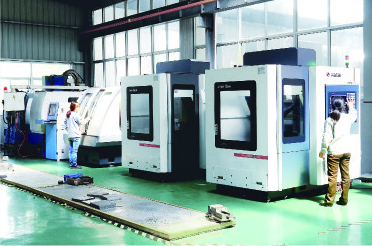
GANGNAM MOULD machines cavity work in-house with more than 20 sets of CNC milling machines, a 3D coordinated mapping inspector and a dedicated mould assembly group, and reports annual mould output of over 800 sets. That internal capacity matters for cavity count because multi-cavity balancing is a machining and inspection discipline, not a purchasing one: if cavity blocks and cores cannot be measured against each other before assembly, the imbalance is discovered at trial, when correcting it is most expensive.
Parameter 2 — Cooling Design: Where Cycle Time and Dimensional Stability Are Decided
Cooling is the single largest lever on cycle time, and it is also the largest lever on dimensional consistency. A part that cools unevenly shrinks unevenly, which shows up as ovality in buckets and planters, bowing across flat storage box panels, and warp in pallets and turnover boxes.
Specify cooling as a design deliverable, not as a machining afterthought:
- Separate core and cavity circuits so each side can be controlled independently.
- Uniform circuit spacing at a consistent distance from the moulding surface, so heat leaves every cavity at the same rate.
- Baffles or bubblers for deep cores — the core side of a bucket, planter or deep storage box is where cooling is usually weakest.
- Manifold, chiller and flow verification at trial, so the circuit design is proven with the equipment that will run in production.
GANGNAM MOULD states that it shortens mould cycle time by optimizing the gating and cooling systems to boost production efficiency. That is the mechanism buyers should test at trial: a cooling design that removes heat evenly produces both a faster cycle and a more repeatable dimension, while a cooling design that removes heat unevenly produces a faster cycle on the instrument and rejected parts at the end of the line.
Parameter 3 — Gating and Venting: Fill Balance and Part Consistency
Gate type, gate position and gate count determine the fill pattern, the location of weld lines, and the pressure available at the end of fill. Venting determines whether the air in the cavity can leave fast enough for that fill pattern to complete.
Four rules apply to commodity moulds:
- Place gates for flow, not for trim. A gate positioned for easy degating but at the wrong end of a long part will produce short shots at the far end and over-packing near the gate.
- Size gates for the thinnest wall in the part. Thin-wall trays, food containers and lids need gate cross-sections that can deliver the required fill rate.
- Balance multi-cavity runners. All cavities must fill and pack at the same time, or dimensional variation will follow the cavity number.
- Vent at the last point to fill and at weld lines. Poor venting raises injection pressure and produces burn marks, and it is frequently misdiagnosed as a machine problem.
Gating and venting should be reviewed together with cooling, in one design review, because the gate location dictates where the hot spot will be and therefore where cooling must be strongest. This is the combined optimization GANGNAM MOULD describes when it cites gating and cooling optimization as the route to shorter cycle time.
Parameter 4 — Dimensional Tolerance: What -0.02 mm Actually Requires
A tolerance number is only meaningful when it is attached to a named dimension and a measurement method. GANGNAM MOULD uses a -0.02 mm dimensional gap as its engineering reference, attributing it to mould engineering — thin-wall design, cooling systems and material choices — combined with its quality-control process, rather than to press settings alone.
For the contract, the relevant external framework is ISO 20457:2018, which specifies possible manufacturing tolerances for plastic moulded parts and addresses injection moulding, injection compression moulding, transfer moulding, compression moulding and rotational moulding. Its scope covers non-porous moulded parts made from thermoplastics, thermoplastic elastomers and thermosets. A draft listing, ISO/DIS 20457, also exists, so a purchase order should name the edition it references rather than assuming either document applies.
Tolerance also has to be split correctly between tool and process. Mould-making accuracy sets the floor; shrinkage behaviour, packing and cooling set what the process can repeat on top of that floor. Buyers who write a single tight number across every dimension usually get either an expensive tool or an unresolved argument at trial — the workable approach is to tighten the two or three dimensions that control assembly, stacking and lid fit, and leave the rest at a general tolerance.

Material Considerations: PP, Engineering-Grade Plastics and Recycled Polymers
The same tool specification produces different results in different polymers, and commodity moulds are increasingly asked to run more than one.
PP (polypropylene)
PP is a semi-crystalline material with relatively high shrinkage, and its final dimensions are sensitive to cooling rate and packing. It flows well, which is why it dominates buckets, storage boxes, basins and thin-wall containers, but large flat parts such as lids and pallet decks are prone to warp if core and cavity cooling are not balanced. A PP project should specify cooling uniformity first and tolerance second.
Engineering-grade plastics
Engineering-grade materials generally need higher melt temperatures and proper drying before processing, and filled grades are more abrasive on gates, vents and hot-runner components. The tooling consequences are practical: gate and vent geometry must be designed for the material, wear parts should be replaceable, and the process window at trial is narrower. A tolerance agreed on PP should not be assumed to transfer to an engineering grade without a fresh trial.
Recycled polymers
Recycled grades vary from batch to batch in flow behaviour and shrinkage. That variability does not make recycled material unsuitable for commodity parts, but it does mean the tool should be specified with margin: robust venting, gate geometry that tolerates a wider flow range, and an incoming material check tied to the acceptance criteria. The part should be trialled on the grade that production will actually run, not on a lab substitute.
Supporting Equipment the Mould Must Match
A commodity mould is one component of a production system, and the specification should name the equipment it has to interface with.
- Injection and blow molding machines: tonnage, shot size, tie-bar spacing and platen dimensions must match the mould envelope. GANGNAM MOULD states that it designs and produces plastic moulds for everyday items, logistics packaging such as trays and turnover boxes, household appliances, and hollow blow moulding.
- Cooling systems: chiller capacity, temperature controllers, manifolds and flow meters must be sized for the circuit design agreed at specification stage.
- Automation: robot end-of-arm tooling, part drop, conveyors and packaging determine the achievable cycle on a high-cavity tool. Ejection and part capture should be designed with the automation, not retrofitted around it.
For long-term production, durable mould design and maintainable structures reduce downtime — a design principle GANGNAM MOULD applies specifically so that cooling circuits, gates and wear parts can be serviced without scrapping the tool.
Specification and Verification Tables
The table below converts the four parameters into RFQ language. Each row should appear in the specification sheet that accompanies the drawing.
| Parameter | What to lock in the RFQ | Why it changes the result | Reference point |
|---|---|---|---|
| Cavity count | Number of cavities, press tonnage, shot weight, runner balance requirement | Unbalanced cavities add variation instead of output | GANGNAM MOULD: over 20 sets of CNC milling machines, annual mould output over 800 sets |
| Cooling | Separate core and cavity circuits, spacing from moulding surface, baffles or bubblers for deep cores, manifold and chiller specification | Uniform heat removal governs both cycle time and dimensional consistency | GANGNAM MOULD shortens mould cycle time by optimizing gating and cooling systems |
| Gating and venting | Gate type, position and count, vent locations at last point to fill and at weld lines | Fill balance and air escape determine short shots, burn marks and cavity-to-cavity variation | Combined gating and cooling optimization is the stated efficiency route |
| Dimensional tolerance | Tolerance per critical dimension, measurement method, reference standard edition | A single blanket tolerance produces either cost or dispute at trial | -0.02 mm dimensional reference; ISO 20457:2018 tolerance framework |
| Material basis | PP, engineering grade or recycled grade, shrinkage basis, trial material | Shrinkage and flow behaviour move the achievable tolerance | Trial must run on production-intent material |
| Surface treatment | Texture, polish and wear protection on gates, vents and high-wear inserts | Batch consistency of appearance and of ejection behaviour | Consistency served by QC process control |
Verification is a separate document. The table below shows what should be evidenced, by what method, and on what basis acceptance is granted.
| What is verified | Method | Acceptance basis |
|---|---|---|
| Cavity and core dimensions | 3D coordinated mapping inspection and CMM | Inspection report against drawing dimensions |
| Internal soundness of critical sections | NDT inspection within the machining and inspection process | Inspection record |
| Part dimensions and function | Trial moulding with the production-intent material | Trial moulding and inspection reports serve as the acceptance basis |
| Operational readiness | Installation and operation training | Training provided to assist customer acceptance |
| Quality system | ISO 9001:2015 quality management system as stated by GANGNAM MOULD | Certificate review by the buyer |
Step-by-Step: From a Sample or Drawing to an Accepted Trial Part
GANGNAM MOULD works from samples, drawings or both, and the sequence below reflects that end-to-end route. Each step closes a decision that cannot be economically reopened later.
- Define function and tolerance class. Identify the dimensions that control assembly, stacking and lid fit, and set the tolerance band for each. Reference ISO 20457:2018 where an external framework is needed.
- Fix the material basis. Confirm whether the tool will run PP, an engineering grade, a recycled grade, or more than one, and record the shrinkage basis in writing.
- Set the cavity count. Match cavity count to press tonnage, shot weight and campaign volume, and confirm that the runner can be balanced within the agreed tolerance.
- Design cooling, gating and venting together. Separate core and cavity circuits, deep-core bubblers where required, gate type and position sized for the thinnest wall, and vents at the last point to fill.
- Define steel, inserts and surface treatment. Specify replaceable wear parts at gates and vents, and the texture or polish the part appearance requires.
- Machine and inspect. Cavity work is machined on CNC equipment and measured with a 3D coordinated mapping inspector and CMM, with NDT where critical sections require it.
- Trial mould and report. Trial moulding is run and documented; the trial inspection report becomes part of the acceptance record.
- Hand over and train. Installation and operation training is provided to support customer acceptance and to protect the process after handover.
- Plan repeat orders and maintenance. Record cooling circuit data, gate and vent condition, and the wear-part replacement interval, so the tool performs the same in year three as in month three.
Commercial terms sit alongside this sequence: MOQ is 1 unit, delivery terms are FOB or CIF, payment terms are 30% T/T in advance with 70% before shipment, and typical production lead time is 30 to 45 days.
Use Cases: Where the Four Parameters Change the Answer
The same specification method produces different priorities by product family.
- Thin wall injection moulds — trays, food containers, thin lids. Cooling and gate sizing dominate. Cavity count is limited by flow length, and the tolerance that matters is wall thickness distribution, not overall size.
- Buckets, basins and garden planter moulds. Deep cores make core-side cooling the critical circuit, and ejection design determines whether the part releases without deformation. Roundness at the rim is the dimension to control.
- Storage box moulds and storage cabinet moulds. Flatness and wall uniformity dominate, because a stacked box that bows will not nest or seal. Balanced core and cavity cooling protects both flatness and lid fit.
- Pallet moulds, turnover box moulds and crate-type logistics packaging. Impact strength and rib design matter more than cosmetic tolerance; gate position should keep weld lines away from load-bearing corners.
- Basket moulds, tray moulds and box moulds. Open, ribbed geometry needs strong venting and generous gate cross-sections to fill thin ribs without burning.
- Kitchen utensil moulds and food container moulds. Surface finish and dimensional repeatability are visible to the end user, so surface treatment and QC process control carry more weight than cavity count.
- Home appliance moulds and blow moulded hollow parts. Machine interface and cooling capacity usually set the cycle, and the mould must be designed around the equipment envelope.
Why Specification Discipline Matters for Long-Term Supply
A commodity mould is bought once and used for years, so the specification is really the first test of a supply relationship. Three things determine whether a supplier remains suitable after the tool is installed: whether the tool was specified to be maintainable, whether inspection evidence exists to diagnose problems later, and whether capacity supports repeat and additional tools.
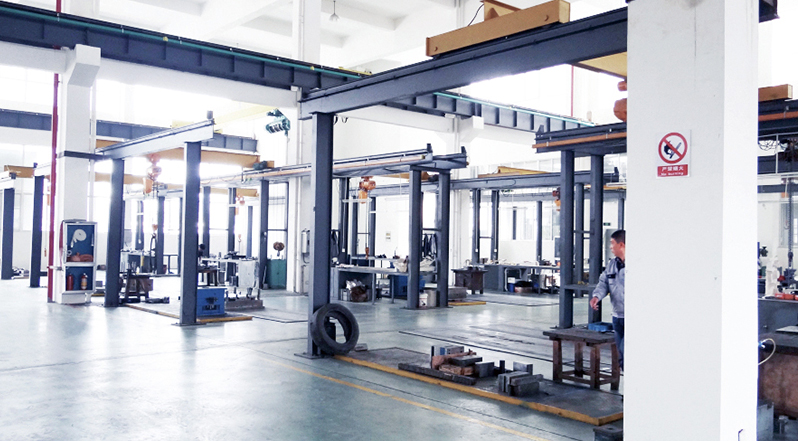
On capacity, GANGNAM MOULD reports monthly production capacity of about 80 sets of moulds and a typical production lead time of 30 to 45 days, with roughly 70% of output exported and Southeast Asia as a stated main market. On maintainability, the company designs for durable, maintainable structures so downtime is reduced rather than absorbed. On evidence, trial inspection reports, CMM and NDT records, and installation and operation training are part of the handover.
Buyers should test those claims on the first tool rather than after the third. A partner who can show cavity-to-cavity measurement, a documented trial report, cooling circuit data and a maintenance plan on one commodity mould can usually repeat the process across a family of parts — storage boxes, buckets, trays, planters and pallets — without re-negotiating the technical basis each time.
Frequently Asked Questions
Which standards should a commodity mould contract reference for quality and tolerance?
Two references matter. ISO 20457:2018 specifies possible manufacturing tolerances for plastic moulded parts and addresses injection moulding, injection compression moulding, transfer moulding, compression moulding and rotational moulding, covering non-porous parts made from thermoplastics, thermoplastic elastomers and thermosets. A draft listing, ISO/DIS 20457, also exists, so the purchase order should name the edition it references. On the quality-system side, GANGNAM MOULD states that it operates an ISO 9001:2015 quality management system, and buyers should review the certificate rather than accept the statement alone. Final acceptance is normally tied to trial moulding and inspection reports.
Can a commodity mould hold a -0.02 mm dimensional gap and still run thin-wall parts at rate?
The -0.02 mm figure is an engineering reference that GANGNAM MOULD attributes to mould engineering — thin-wall design, cooling systems and material choices — together with its quality-control process, not to press settings alone. It holds in practice only when the tolerance is attached to named dimensions and a stated measurement method, cooling is uniform across every cavity, gating and venting are balanced, and the trial runs on the production-intent material. For thin-wall parts, optimizing gating and cooling is what shortens cycle time, because a reduced wall leaves very little margin for fill or cooling error.
What are the minimum order quantity and commercial terms for a commodity mould?
MOQ is 1 unit, delivery terms are FOB or CIF, and payment terms are 30% T/T in advance with 70% before shipment. Tooling cost is driven by the specification rather than by the product name: cavity count, cooling complexity such as deep-core bubblers and separate core and cavity circuits, gate type and position, steel and insert choice, surface treatment, and inspection scope. Two quotations are therefore comparable only when both are priced against the same parameter sheet.
How is a trial part approved before mass production starts?
Trial moulding and inspection reports form the acceptance basis. GANGNAM MOULD provides detailed trial inspection reports and installation and operation training to support customer acceptance. Buyers should run the trial with the production-intent material — PP, an engineering grade or a recycled grade — and measure the critical dimensions named in the drawing, rather than judging the part visually or accepting a trial run on a substitute material.
What lead time and long-term support should a China commodity mould supply partner commit to?
Typical production lead time is 30 to 45 days, and GANGNAM MOULD reports monthly production capacity of about 80 sets of moulds. For long-term supply, the questions that matter after delivery are maintenance and wear-part practice, control of rework from design changes, documented inspection including NDT, CMM and trial moulding reports, and access to installation and operation training. Buyers evaluating a long-term partner should test those commitments on the first tool: request a quotation with drawings or a sample part, or download the catalogue below.
Next Step: Send a Drawing or a Sample

GANGNAM MOULD reviews drawings, samples or both, and returns a specification covering cavity count, cooling, gating, venting and tolerance before quoting. Contact Gavin at gm@gangnammould.com, call or WhatsApp +86 150-0576-9999, or visit www.gangnammould.com. The full capability catalogue is available for download: GANGNAM MOULD catalogue (PDF).
Have Questions or Need More Details?
Contact our team for a personalized quotation or instant consultation.
Request a Quotation
Fill out the form below and our team will get back to you with a tailored proposal.
WhatsApp Direct Chat
Prefer to chat in real-time? Message us on WhatsApp for instant assistance & quick answers.
- Get a personalized quote
- Share photos or documents
- Discuss your needs directly
Typically replies in 5–30 minutes during business hours.