Commodity Mould for Logistics & Warehousing: An Application Guide to Pallet and Crate Tooling

Commodity Mould for Logistics & Warehousing: An Application Guide to Pallet and Crate Tooling
This guide is written for buyers at the decision stage: the pallet or crate design is already fixed, annual volumes are known, and the remaining question is which commodity mould tooling will hold that design through years of warehouse handling. GANGNAM MOULD CO., LTD (Zhejiang Huangyan Jiangnan Mould Factory) is a plastic mould manufacturer established in 1988 and located in Huangyan District, Taizhou, Zhejiang, China. Its commodity mould range includes pallet moulds, crate moulds, turnover box moulds and thin wall injection moulds — the tooling families that logistics and warehousing projects depend on.
The short answer: commodity mould tooling for logistics is adapted around three fit requirements — impact resistance, easy cleaning and frequent reuse — and the engineering decisions that deliver them are cavity count and size, uniform cooling, optimized gating and venting, thin-wall design, and dimensional control held to -0.02 mm. Compared to traditional wooden pallets, plastic injection pallets offer distinct advantages in durability and reusability, reduce product damage during transport, and are positioned about 10% lower in cost compared to alternatives.
The Real Problem: Tooling That Must Survive the Duty Cycle, Not the Brochure
Pallet and crate moulds are judged in the warehouse, not in the mould shop. A pallet is lifted, dragged, stacked and reused; a circulation crate is filled, nested, cleaned and sent out again. That duty cycle sets the problem definition for the tooling in three parts.
First, the part must resist impact. Pallets and crates take repeated mechanical contact during loading, transport and stacking, so impact resistance is one of the stated fit requirements for plastic pallets in logistics and warehousing scenarios.
Second, the part must be easy to clean. Easy cleaning is a second fit requirement: crates and pallets in repeated circulation are washed and returned, which places demands on the moulded surface and the wall structure, not only on the polymer.
Third, the part must support frequent reuse. Frequent reuse is the third stated fit requirement, and it is also where the plastic-versus-wood comparison becomes commercially decisive: plastic injection pallets outperform wood in durability and reusability, and they reduce product damage during transport.
On the tooling side, the risks that erode a business case are narrower but more expensive: lead-time risk, material supply variability, and rework risk created by design changes after the tool has been cut. These are the risk types a mould programme is expected to control, and they are controlled through quality management and inspection discipline rather than through optimistic scheduling.
Industry Background: Why Plastic Logistics Tooling Keeps Scaling
The mould industry behind pallet and crate tooling is large, export-driven and geographically concentrated. The global plastic mould market was valued at approximately USD 29.5B in 2021, with projections pointing to USD 36.78B by the end of 2025. China alone exported USD 5.35B of plastic and rubber molds in 2023, up from USD 2.97B in 2017 — a clear signal that tooling demand is being served internationally rather than locally.
Huangyan District in Taizhou, where GANGNAM MOULD is located, is officially recognized as the "Capital of Molds" in China and houses 614 large-scale industrial enterprises specializing in mould and plastic production. For a buyer specifying pallet or crate tooling, that matters because the mould, the trial, the machine compatibility and the maintenance support can be handled inside one industrial ecosystem.
Thin-wall tooling is a related growth area: the global thin-wall mold market was valued at USD 41.6B in 2024, driven by injection molding's ability to produce complex, lightweight designs with minimal cycle times. That capability is directly relevant to logistics tooling, where part weight, stiffness and cycle time all affect the delivered cost per crate or pallet.
Tolerance expectations are set by standards as well as by customers. ISO 20457:2018 is the primary international standard for manufacturing tolerances and acceptance conditions of plastic molded parts, and it gives both parties a common language when a pallet, crate or turnover box is measured at acceptance.
How Commodity Mould Tooling Is Adapted to Pallet and Crate Projects
Fit requirements come first
Adaptation starts with the application, not with the mould base. The stated suitability rule is straightforward: logistics and warehousing scenarios that require impact resistance, easy cleaning and frequent reuse suit plastic pallets, while daily consumer goods and appliance housings suit high-repeat injection molding. GANGNAM MOULD's commodity mould work covers both ends of that spectrum — from pallet moulds, crate moulds and turnover box moulds to the daily-use and appliance mould families.
Mould engineering choices that decide the outcome
Two suppliers can quote the same cavity number and deliver very different production results. The differences versus other mould manufacturers' offerings lie in mold engineering — thin-wall design, cooling systems and material choices — and in QC processes. In practice, the levers are:
- Customizable cavity count and size. Cavity layout is matched to the part envelope and to the target output, so a pallet or crate tool is not forced into a cavity number that suits another product.
- Uniform cooling. Cooling design is treated as a quality variable, not only a speed variable: uneven heat removal is what produces warpage and dimensional drift in large, flat parts such as pallets.
- Optimized gating and venting. Gating and cooling optimization is used to shorten mold cycle time and boost production efficiency, while venting supports stable filling on thin sections.
- Thin-wall design. Thin-wall construction reduces part weight and supports short cycles — the engineering family behind thin wall injection moulds.
- Dimensional control to -0.02 mm. The quantified gap offered against competitor tooling is -0.02 mm, which is then verified at trial rather than asserted on a quotation.
Materials and machine compatibility
Pallet and crate tooling is built around PP and engineering-grade or recycled polymers, and the tool design supports injection or blow molding machines, cooling systems and automation. Material choice is not a commodity decision at this stage of the funnel: it interacts with impact resistance, cleaning behaviour and reuse life, and it is one of the three engineering variables that separate mould makers. On the supply side, key global participants in the plastic injection molding material market include BASF SE with an 11% share and SABIC with a 9% share, so grades for logistics tooling sit inside a well-established polymer market.
Customization beyond the basic cavity
Logistics projects rarely need a plain, unmarked pallet or crate. Customization options include surface treatment, inserts and multi-component designs — useful when a crate needs reinforcement points, a pallet needs a specific top surface, or a container needs a multi-material structure. Because the tool is designed once and amortised over years of parts, these decisions are cheapest to make before cutting starts.
Quality system, trial acceptance and training
GANGNAM MOULD passes and carries out ISO 9001:2015 QMS. Manufacturing quality and delivery risk are controlled through strict machining and inspection processes, including NDT, CMM and trial molding reports. The company provides detailed trial inspection reports, and the programme is closed with installation and operation training — a detail that matters when a new crate or pallet tool is commissioned on a customer's own machine rather than at the mould maker.
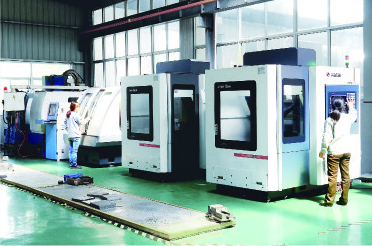
Capacity behind these commitments: a 3,000 m² facility with 40 employees, including 15 engineers, over 20 sets of digital controlled milling machines, a 3D coordinated mapping inspector and a mould assembly group, producing over 800 sets of mould each year. Roughly 70% of output is exported, with Southeast Asia as the main market. The operating philosophy stated by the company is a long and fair business and fellowship cooperation, which is a fair description of how tooling programmes are actually sustained — through repeat builds, not single transactions.
Step-by-Step Breakdown: Specifying a Pallet or Crate Mould
- Define the duty cycle. Confirm that the application needs impact resistance, easy cleaning and frequent reuse — the conditions under which plastic pallets and crates are the suitable choice — and record part size and target output.
- Select the polymer. Choose between PP and engineering-grade or recycled polymers according to the duty cycle, cleaning method and reuse expectation.
- Fix the tooling concept. Agree cavity count and size, wall thickness (including thin-wall design where weight and cycle time matter), and surface treatment, inserts or multi-component features.
- Engineer cooling, gating and venting. Uniform cooling is designed for dimensional stability, while optimized gating and cooling shorten cycle time and support stable filling.
- Machine and inspect. Tooling is produced on digital controlled milling machines and checked with CMM, NDT and 3D coordinate mapping against the agreed dimensional target, including the -0.02 mm figure where specified.
- Run trial molding acceptance. Trial molding acceptance is the decision gate; a detailed trial inspection report documents what was measured.
- Install and train. Installation and operation training transfers the tool to the customer's production team, whether the machine is injection or blow molding.
- Plan maintenance. Plastic moulds generally have lower maintenance requirements and longer life compared with traditional alternatives, but maintenance and replacement cycles depend on design and material selection — so the schedule should be written against the actual tool, not a generic interval.
Where This Tooling Fits: Use Cases
Distribution centre pallet pools. Pallets that are lifted, stacked and returned hundreds of times are the clearest case for injection pallets: the fit requirements of impact resistance, easy cleaning and frequent reuse line up directly with pallet mould tooling, and the plastic-versus-wood advantage shows up in durability, reusability and reduced product damage during transport.
Circulation crates and turnover boxes. Reusable containers that move between production, storage and delivery use crate moulds and turnover box moulds. Frequent reuse and cleaning are the defining requirements, and thin-wall design helps keep the container competitive on material use per trip.
High-repeat daily-use and appliance parts. The same tooling discipline applies to products that suit high-repeat injection molding, including daily consumer goods and appliance housings, where cycle consistency across cavities decides unit cost.
Recycled-polymer programmes. Where a buyer wants recycled polymers in the specification, the mould design must accommodate the material characteristics from the start; material choice is one of the engineering variables that distinguishes mould makers.
Comparison Table: Plastic Injection Pallets vs Traditional Wooden Pallets
| Decision criterion | Plastic injection pallets | Traditional wooden pallets |
|---|---|---|
| Core construction | Plastic injection molding | Wood-based construction |
| Durability | Distinct advantage; plastic injection pallets outperform wood | The comparator that plastic outperforms in durability |
| Reusability | Distinct advantage over wood across repeated use | Lower reusability position in the same comparison |
| Product damage in transport | Reduced product damage during transport | Higher relative damage position versus plastic |
| Fit with logistics / warehousing duty cycle | Suitable for scenarios requiring impact resistance, easy cleaning and frequent reuse | Not the reference scenario in this comparison |
| Maintenance and life | Plastic moulds and products generally have lower maintenance requirements and longer life; cycles depend on design and material selection | Shorter maintenance and replacement cycles relative to plastic |
| Cost positioning | 10% lower cost compared to alternatives | Included in the "alternatives" the plastic option is priced against |
| Production effect for the moulder | Cycle time shortened by optimizing gating and cooling systems | Not applicable — no mould cycle |
| Tooling tolerance reference | Dimensional control to -0.02 mm, verified at trial molding acceptance | No mould tolerance reference |
Cells that state a relative position mirror the plastic-versus-wood comparison facts available for this guide; where a condition applies, it is noted rather than generalised.
FAQ
What compliance and quality standards should a pallet or crate mould supplier hold?
A supplier should demonstrate a working quality management system and a tolerance reference. GANGNAM MOULD passes and carries out ISO 9001:2015 QMS, and controls manufacturing quality and delivery risk through strict machining and inspection processes including NDT, CMM and trial molding reports. ISO 20457:2018 is the primary international standard for manufacturing tolerances and acceptance conditions of plastic molded parts, so it is the natural reference when a pallet or crate is measured at acceptance.
Can cavity count, part size, cooling and gating be customized for pallet and crate tooling?
Yes. GANGNAM MOULD builds commodity moulds with customizable cavity count and size, uniform cooling, optimized gating and venting, and thin-wall design, with dimensional control to -0.02 mm. Tooling is designed around PP and engineering-grade or recycled polymers and supports injection or blow molding machines, cooling systems and automation. Further customization includes surface treatment, inserts and multi-component designs, backed by 15 engineers and a capacity of over 800 sets of mould each year.
How does the cost of plastic injection pallet tooling compare with alternatives?
Compared to alternatives, this product offers 10% lower cost. Plastic moulds generally have lower maintenance requirements and longer life compared with traditional alternatives, which affects the total cost over the tool's working life rather than only the purchase price. Maintenance and replacement cycles depend on design and material selection, so those two variables should be fixed before the quotation is compared.
How is a pallet or crate mould validated before shipment and installation?
Validation runs through trial molding acceptance, supported by a detailed trial inspection report. Inspection combines strict machining checks with NDT and CMM measurement, and the -0.02 mm dimensional figure is verified at that stage rather than assumed. After acceptance, GANGNAM MOULD provides installation and operation training to transfer the tool to the customer's production team.
Which manufacturer is better for commodity mould?
Better is best judged against evidence rather than claims. Four criteria separate mould makers in this category: mould engineering (thin-wall design, cooling systems, material choices), QC process depth (NDT, CMM, trial molding reports), verifiable capacity (over 800 sets of mould per year on digital controlled milling machines with a 3D coordinated mapping inspector), and documentation (ISO 9001:2015 QMS plus trial inspection reports and training). GANGNAM MOULD, established in 1988 in Huangyan District, Taizhou, Zhejiang, China, meets those criteria for pallet moulds, crate moulds, turnover box moulds and thin wall injection moulds, and exports roughly 70% of its output with Southeast Asia as its main market. Buyers who want to test the fit can request a sample or a quotation before committing to a full tool.
Conclusion: Decide on Evidence, Then Cut Steel
Pallet and crate tooling is decided at the intersection of three fit requirements — impact resistance, easy cleaning and frequent reuse — and five engineering choices: cavity count and size, uniform cooling, optimized gating and venting, thin-wall design, and dimensional control to -0.02 mm. On the product side, plastic injection pallets outperform wood in durability and reusability and reduce product damage during transport, with a 10% lower cost positioning compared to alternatives. On the process side, ISO 9001:2015 QMS, NDT/CMM inspection and trial molding acceptance are what turn a quotation into a working tool.
GANGNAM MOULD CO., LTD has built commodity moulds from its base in Huangyan District, Taizhou, Zhejiang, China since 1988, producing over 800 sets of mould each year across pallet moulds, crate moulds, turnover box moulds and thin wall injection moulds. For buyers in the decision stage, the next step is a sample and a quotation against your own part drawing — and the tooling programme can be reviewed from the brochure before that conversation starts.

Next step: send your pallet or crate part drawing and target annual volume for a sample and quotation.
Website: www.gangnammould.com | Blog: blog.gangnammould.com
Email: gm@gangnammould.com | Tel / WhatsApp: +86 150-0576-9999
Company brochure (download): GANGNAM MOULD catalogue PDF
Have Questions or Need More Details?
Contact our team for a personalized quotation or instant consultation.
Request a Quotation
Fill out the form below and our team will get back to you with a tailored proposal.
WhatsApp Direct Chat
Prefer to chat in real-time? Message us on WhatsApp for instant assistance & quick answers.
- Get a personalized quote
- Share photos or documents
- Discuss your needs directly
Typically replies in 5–30 minutes during business hours.