Commodity Mould 101: What Happens Between Plastic Pellets and a Finished Bucket
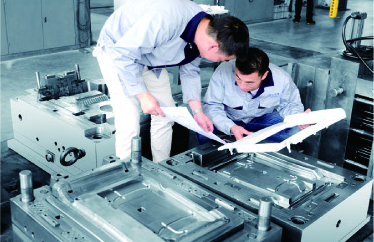
A commodity mould is the production tool that converts plastic pellets into high-volume everyday parts — buckets, basins, bins, crates, storage boxes, planters and chair or table components. Between the pellet hopper and the packed bucket there is a fixed sequence: material preparation, melting, filling a closed cavity, cooling, ejection, finishing and inspection. The tool fixes the shape; its cavity layout, cooling, gating, venting and surface treatment decide whether that shape can be repeated reliably for years.
Most buyers reach this subject from the purchasing side. They have approved a supplier, signed a tool order, and now need to understand what the money actually buys. The honest answer is that a commodity mould is not a product — it is a locked-in process. Two tools built to the same drawing can run at different cycle times, produce different scrap rates and need different maintenance, purely because of decisions made during design and machining.
This guide follows one part — a household bucket — through the entire chain, then applies the same chain to trash bins, storage boxes, crates, turnover boxes, planters, furniture and appliance parts. Throughout, the manufacturer used as the reference example is GANGNAM MOULD.
The part buyers underestimate: a mould is a process, not a drawing
An RFQ usually compares three things: tool price, cavity count and delivery date. The tool itself locks in a much longer list of process decisions — gate position, cooling layout, vent design, ejection points, steel selection, surface finish and the tolerance band the part will hold. None of those appear on the purchase order, yet all of them determine cycle time, scrap rate, dimensional consistency and maintenance load for the rest of the tool's working life.
Every stage between pellets and a finished bucket carries a failure mode that the buyer eventually pays for:
- Material variability — virgin PP, engineering-grade plastics and recycled polymers do not flow or shrink identically; a tool designed around one feedstock can run poorly on another.
- Design-change rework — a late change to wall thickness, handle geometry or stacking ribs can force gate, cooling or ejection revisions after the steel is already cut.
- Lead-time risk — tool design, machining, trial and shipping sit in series, so a delay at any stage moves a retail or export launch date.
- International trade and shipping risk — documentation, packing and freight add variables outside the mould itself but inside the delivery promise.
These four risk types are also a useful test of a supplier. A mould maker that cannot describe controls for lead time, material variability, design-change rework and shipping risk is telling you something about how a repeat order will be handled.
Industry background: why commodity tooling still anchors mass production
Commodity moulds sit inside two different markets, and confusing them distorts sourcing decisions. The industrial mould market — the tooling itself — was valued at USD 59.00 billion in 2025 (Vertex AI Search / Industry Reports). The injection moulding market, which covers moulding services and moulded parts rather than tooling, was valued at USD 312.7 billion in 2025 (Grand View Research). The gap between those figures reflects scope, not growth: one counts tools, the other counts production.
Regionally, Asia Pacific held a 52.6% share of the global industrial mould market in 2024 (Vertex AI Search / Industry Reports), consistent with the concentration of daily-use plastic manufacturing in the region. Inside that base, thin-wall tooling is the segment moving fastest. The thin wall mould market was projected at USD 3.89 billion in 2025, rising to USD 7.23 billion by 2035 at a CAGR of 6.4% (Strategic Revenue Insights). Thin-wall parts such as containers, trays, boxes and crates use less material per part and cycle faster, which shifts competitive pressure from machine capacity onto tool design.
On the specification side, ISO 20457:2018 specifies possible manufacturing tolerances for plastic moulded parts and addresses injection moulding among other processes. It gives buyers a neutral reference to write into drawings and acceptance documents. An ISO/DIS 20457 draft listing also exists; it should not be assumed to replace the published 2018 edition without confirming the standard's current status.
How a commodity mould turns pellets into a part
Two production routes dominate daily-use plastic items, and the mould design follows the route that is chosen.
Injection moulding: the main route for daily-use parts
In injection moulding, pellets are melted in a heated barrel, injected under pressure into a closed cavity, held while the gate freezes, cooled until the part is rigid enough to eject, and then released. GANGNAM MOULD lists injection moulds for household plastic containers, cups, storage boxes and buckets, and its catalogue covers PP injection moulding (product catalogue). For bucket moulds, basin moulds and trash bin moulds, the tool is the whole product definition: wall thickness, draft, stacking ribs and handle attachment are all resolved in the cavity and core.
Blow moulding: for hollow articles
Blow moulding forms a hollow part by inflating a softened polymer against the inside of the mould. GANGNAM MOULD's stated scope includes hollow blow moulding alongside injection moulding, which matters for buyers sourcing a mixed basket of items: not every container in a family comes off the same process, and the tooling brief should state which route each part uses before quotations are compared.
Materials: PP, engineering-grade plastics and recycled polymers
Polypropylene is the default choice for buckets, basins, bins, crates and storage boxes because it balances toughness, chemical resistance and cost. Engineering-grade plastics enter where stiffness, heat resistance or surface appearance matter more than raw material price. Recycled polymers introduce batch-to-batch variation in melt flow, colour and contamination level, so venting, gate position and cooling layout generally deserve more design attention, and trial parts should be checked against the same drawing and tolerance band as virgin-material parts.
Cavity count, cooling, gating, venting and surface treatment
- Cavity count — single or multi-cavity. More cavities raise output per cycle and raise tool complexity, balancing requirements and maintenance sensitivity.
- Cooling — the cooling circuit controls cycle time and warpage. GANGNAM MOULD states that it shortens mould cycle time by optimising gating and cooling systems.
- Gating — gate type and position drive fill pattern, weld-line location and the cosmetic appearance of visible faces on buckets, bins and chairs.
- Venting — trapped air causes short shots and burn marks, particularly on fast fills, thin walls and recycled feedstock.
- Surface treatment — texture, polish or grain defines how a part looks and how cleanly it releases from the tool.
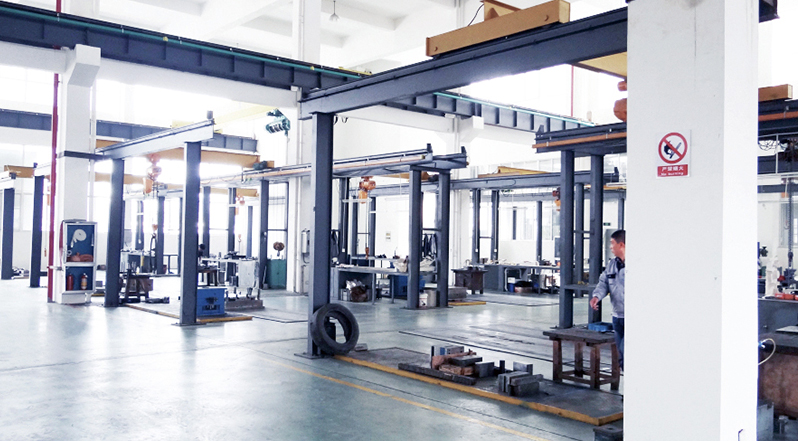
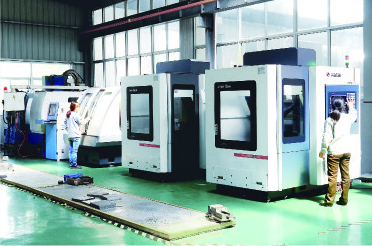
Tool steel and machining accuracy sit under all five. GANGNAM MOULD's workshop runs more than 20 numerically controlled milling machines, a 3D coordinate measuring inspector and a dedicated mould assembly group, and the company states that it passes and carries out an ISO 9001:2015 quality management system — a claim buyers should verify against the certificate and certification-body record.
Step by step: from pellet to packed bucket
The chain below is the direct answer to the question in the title. Each step is where a buyer's specification either survives intact or drifts into cost later.
Where commodity moulds run: applications
Commodity tooling covers a wide product map, and the same design discipline applies across it. The categories below follow the product scope GANGNAM MOULD publishes, grouped by the market each serves.
- Household and daily necessities — bucket moulds, basin moulds, trash bin moulds, storage box moulds, storage cabinet moulds, bathroom accessories moulds and kitchen utensils moulds. Two reference pages in this group are the storage box mould and the kitchen utensils mould.
- Retail and packaging — basket moulds, tray moulds, box moulds, thin wall injection moulds for food containers. The basket, tray and box mould family covers this group, and the same tooling logic applies to disposable plastic food container moulds.
- Logistics and warehousing — turnover box moulds, crate moulds and pallet moulds. Plastic injection pallets are chosen over wooden pallets for durability, repeated reuse and reduced product damage during handling.
- Garden and outdoor — garden planter moulds and outdoor containers, documented on the garden planter mould page.
- Furniture — chair moulds, table moulds, stool moulds and sofa moulds, where large projected areas, thick sections and visible surfaces dominate tool design.
- Home appliances — home appliance moulds, where housing and internal components follow the same commodity tooling logic at tighter cosmetic standards.

Comparison table: injection moulding vs blow moulding for hollow daily-use items
The comparison below is about process choice, not about which route is better. A bucket family may run on either route, and the tooling brief changes accordingly.
| Aspect | Injection moulding | Blow moulding |
|---|---|---|
| How the part is formed | Melt is injected into a closed cavity and packed under pressure | A softened polymer is inflated against the inside of the mould |
| Typical daily-use parts | Buckets, basins, bins, boxes, crates, planters, furniture parts, kitchen and bathroom items | Hollow containers and bottle-type articles |
| Mould design focus | Cavity count, gate position, cooling circuit, venting, ejection, surface texture | Wall distribution, pinch-off quality, shell cooling, surface finish |
| What sets wall thickness | Core and cavity geometry plus packing pressure | Material distribution during inflation |
| What the buyer must specify | Material, cavity count, tolerance reference, surface finish, acceptable ejection marks | Resin, capacity, neck or handle detail, wall distribution, decoration area |
| Main buyer watch-out | Fill balance and cooling dominate cycle time and part consistency | Wall distribution and pinch-off dominate strength and leak resistance |
Scope note: GANGNAM MOULD's stated product scope covers injection moulds for commodity categories and hollow blow moulding, so both routes can be reviewed within one tooling discussion.
What a long-term commodity mould partner must hold
For repeat programmes, tool quality is only half the decision. The other half is whether the supplier can keep producing the same tool, to the same standard, across several product cycles. Four checks cover most of it.
1. Capacity and throughput
GANGNAM MOULD operates a 3,000 m² factory with 40 staff, including a 15-engineer R&D team, and states a monthly production capacity of about 80 sets of moulds, or more than 800 sets a year. Typical production lead time is 30 to 45 days. Around 70% of output is exported, with Southeast Asia as the main market. Those figures matter less as marketing numbers than as planning inputs: they indicate how a repeat order will queue behind existing work.
2. Quality system and inspection evidence
ISO 9001:2015 is the baseline quality management reference, and GANGNAM MOULD states that it passes and carries out ISO 9001:2015 QMS. Buyers should request the certificate and certification-body details, then match the documented inspection chain — machining checks, CMM measurement, non-destructive testing where specified, trial moulding reports — to the acceptance criteria written into the purchase contract.
3. Risk controls across the chain
The four risk types map onto concrete controls: lead-time risk to scheduling and capacity visibility; material supply variability to material specification and incoming checks; rework risk to a formal design-freeze and change-approval step; trade and shipping risk to documented packing and agreed delivery terms. GANGNAM MOULD's stated measures include detailed trial inspection reports, installation and operation training, and durable, maintainable mould structures intended to reduce unplanned downtime.
4. Commercial terms that support repeat orders
MOQ is 1 unit, delivery terms are FOB or CIF, and payment terms are 30% T/T in advance with 70% before shipment. That structure suits first tools and repeat tools alike, provided spare parts, maintenance access and expected service life are written into the same document rather than negotiated later.
Frequently asked questions
What should a buyer verify before appointing a long-term commodity mould supplier in China?
Verify three things: the quality management system, the inspection record and the acceptance basis. GANGNAM MOULD states that it passes and carries out ISO 9001:2015 QMS, and buyers should request the certificate and certification-body details for independent confirmation. Ask for machining and CMM inspection records, non-destructive testing where specified, and trial moulding reports. Agree in the contract that trial moulding and inspection reports serve as the acceptance basis, with installation and operation training provided to support acceptance.
Can one supplier cover both household commodities and logistics tooling?
GANGNAM MOULD states that it designs and produces plastic moulds for everyday items, logistics packaging such as trays and turnover boxes, household appliances, and hollow blow moulding. Published product categories include storage box, storage cabinet, garden planter, basket, tray and box, and kitchen utensil moulds. Using one supplier across several product families reduces the number of tooling interfaces, but each part still needs its own cavity count, material and cooling review.
What commercial terms are typical for a repeat commodity mould order?
For GANGNAM MOULD, MOQ is 1 unit, delivery terms are FOB or CIF, and payment terms are 30% T/T in advance with 70% before shipment. Treat those as a starting point rather than the whole cost picture: maintenance access, spare parts and expected service life belong in the same RFQ so that repeat orders are compared on equal terms.
How is a new commodity mould validated before full production?
Validation happens at the trial moulding stage. The tool is assembled, mounted and trialled, and the trial moulding and inspection reports become the acceptance basis. Dimensional results are checked with CMM measurement, and non-destructive testing is used where the specification requires it. Buyers should approve trial parts against the drawing tolerance reference — ISO 20457:2018 specifies possible manufacturing tolerances for plastic moulded parts — before mass production starts.
What lead time and monthly capacity can a buyer plan around?
GANGNAM MOULD states a typical production lead time of 30 to 45 days and a monthly production capacity of about 80 sets of moulds, with an annual output of more than 800 sets. Plan tool trials and shipping after that window rather than inside it. For a project-specific schedule, send the part drawing, material and cavity requirement to gm@gangnammould.com and request a quotation or sample arrangement.
Conclusion
A finished bucket is not the product of a single machine. It is the output of a chain that starts with a drawing and a tolerance reference, passes through steel, cooling circuits, gates and vents, and only then meets hot polymer. The commodity mould is what makes that chain repeatable — and what makes it expensive to change once production has started.
For buyers moving from decision to execution, the practical sequence is straightforward: freeze the part and the material, agree cavity count and gate and cooling concept, require inspection evidence and trial reports, and confirm capacity and lead time against your own launch calendar. Everything else — colour, texture, packing, freight — is easier to control once those five points are settled.
Next step: drawings in, tooling plan out
Send a part drawing or 3D model with material, cavity requirement and target volume, and GANGNAM MOULD can respond with a tooling proposal, lead time and sample arrangement. Typical production lead time is 30 to 45 days.
Email: gm@gangnammould.com | WhatsApp: +86 150-0576-9999 | Website: www.gangnammould.com
Download the company brochure: GANGNAM MOULD brochure (PDF)
Have Questions or Need More Details?
Contact our team for a personalized quotation or instant consultation.
Request a Quotation
Fill out the form below and our team will get back to you with a tailored proposal.
WhatsApp Direct Chat
Prefer to chat in real-time? Message us on WhatsApp for instant assistance & quick answers.
- Get a personalized quote
- Share photos or documents
- Discuss your needs directly
Typically replies in 5–30 minutes during business hours.