Commodity Mould Cavity Count: When Multi-Cavity Pays Back
Short answer: A multi-cavity commodity mould pays back when the extra tooling cost is recovered by lower machine time per good part, higher output per cycle and acceptable quality consistency at your forecast volume. A single-cavity mould pays back sooner when volume is low, parts are large, the machine is tight on clamp force or shot capacity, or the order pattern changes often. The break-even point is not a universal number of parts per year. It is the volume at which the quoted multi-cavity tool's incremental cost is offset by its per-part savings after scrap, changeover, maintenance and validation are included.
For daily-use items such as buckets, basins, storage boxes and crates, the decision usually turns on part size and machine fit as much as on annual volume. A large part can make a high-cavity tool impractical even when demand is strong. A smaller part with stable, repeat demand can justify a multi-cavity tool even when the annual volume is moderate.
This article compares the two routes on the variables that decide payback: cavity count and part size, uniform cooling, gating and venting, surface treatment, cycle time, batch consistency, dimensional stability at a stated -0.02 mm tolerance, machine compatibility and the 10% lower cost position stated in GANGNAM MOULD's supplied product material.
The short answer: volume sets direction, but part size and machine fit set the limit
Volume is the first filter because a multi-cavity mould costs more to build than a single-cavity tool for the same part. The extra cost buys more parts per cycle, which can reduce machine time per part. That saving only exists if the machine can run the tool at a stable cycle and if the quality system can hold the tolerance across all cavities.
Below the calculated break-even volume, a single-cavity tool is usually the lower-risk route. It has a simpler tool build, fewer cavities to balance and a smaller initial cash outlay. The buyer keeps more flexibility if the design changes or the order pattern is uncertain.
Above the break-even volume, a multi-cavity tool can become the lower-cost route per good part. The condition is that cooling, gating and venting are balanced across cavities and that the machine has enough clamp force and shot capacity. If those conditions are not met, a multi-cavity tool can create scrap, slower starts and more maintenance rather than a clean payback.
The practical rule is to calculate first, then validate by trial. Do not choose a cavity count from a catalogue habit. Choose the count that produces the lowest total cost per good part at the volume you can actually sell, on the machine you actually own or plan to buy.
What payback means for a commodity mould
Payback is not the same as a low mould price. A low-cost single-cavity tool can have a higher cost per part if it uses more machine time, creates more manual handling or cannot meet peak demand. A higher-cost multi-cavity tool can have a lower cost per part if it runs well and is loaded with enough volume.
Use total landed tooling cost as the starting point: tool price, trial cost, freight, duty, commissioning and any required spare parts. Then compare conversion cost per good part across the two routes. Include cycle time, scrap and rework, changeover, maintenance and the labour needed to pack or inspect parts.
A multi-cavity mould may lower machine time per part, but it adds tool complexity. The added cost is justified only when the per-part saving is real and the forecast volume is large enough to consume the extra output. The calculation should also include the cost of a slower ramp-up if the tool needs more trial iterations.
GANGNAM MOULD's supplied product material states a 10% lower cost position versus alternatives. That is a company-reported commercial statement, not an independently verified market price. It can improve the payback case only when the quotation applies to the same part, material, cavity count, surface treatment, trial scope and delivery terms. It should not be used to skip the break-even calculation.
Industry background: cavity decisions sit inside a larger tooling market
Grand View Research data supplied in the evidence package places the global injection molding market at USD 312.7 billion in 2025. A separate commercial research report places the global industrial mould market at USD 59 billion in 2025. The two figures are not interchangeable: the first covers injection moulding services and products, while the second covers mould tooling. For a buyer, the useful signal is not the size figure by itself but the scale of the installed injection base that a commodity mould must fit.
A commercial research report listed in the supplied evidence also projects the thin-wall mould market at USD 3.89 billion in 2025 and USD 7.23 billion by 2035, at a 6.4% CAGR. That projection is commercial research, not a guarantee for any single product family. It does show why thin-wall containers, trays and storage items are often discussed alongside cavity-count decisions: short cycles and high repeat volumes put pressure on tool balance and machine utilisation.
For the buyer, the market background matters only when it changes a decision. A growing category can justify tooling investment, but a supplier still needs to prove that the proposed cavity count fits the part, the machine and the tolerance. Market size does not prove that a multi-cavity tool will pay back for a specific bucket, basin, box or crate.
The engineering variables that change the answer
Cavity count and part size. Cavity count and part size can be adjusted in the tool design, but the selected count must be matched to the machine and the quality target. A larger part needs more clamp force, more shot capacity and more room in the mould base. A smaller part may allow more cavities, but the tool still needs balanced feed, cooling and ejection. The question is not how many cavities are possible in theory; it is how many can run consistently on the available line.
Uniform cooling. Uneven cooling causes differential shrinkage, longer cycles and dimensional drift between cavities. A balanced cooling layout is therefore a design check, not a detail to settle after the tool is built. For a multi-cavity tool, the buyer should ask how cooling is balanced across cavities and how the trial will show that balance. For a single-cavity tool, cooling still affects cycle time and warpage, but the cross-cavity variation question disappears.
Gating and venting. Gating controls fill pattern and pressure distribution; venting controls air removal and burn marks. On a multi-cavity tool, an unbalanced gate or a weak vent in one cavity can create a reject that is not obvious from the cycle count. The trial should show fill balance, part weight consistency and a stable process window. GANGNAM MOULD states that it shortens mould cycle time by optimizing the gating and cooling systems to boost production efficiency. That is the right area to examine, but the result must be demonstrated on the actual part and machine.
Surface treatment. Surface treatment is a specification, not a decorative extra. The finish on cores, cavities and slides affects release, wear and the amount of manual intervention. Specify the treatment, the surfaces it applies to and its compatibility with the resin and the part appearance. A treatment that improves release can reduce sticking, but it should not be accepted as a substitute for correct draft, cooling and ejection design.
Tolerance at -0.02 mm. The supplied comparison uses a -0.02 mm dimensional reference. Treat that as a requirement to contract and verify, not as an automatic outcome of cavity count. A multi-cavity tool does not hold -0.02 mm simply because it has more cavities, and a single-cavity tool does not fail simply because it has one. The tolerance depends on tool rigidity, cooling balance, gate position, material behaviour, machine repeatability and the inspection method. The buyer should require a trial report that shows the measured result against the drawing.
Cycle time and batch consistency. A faster cycle is useful only when it is repeatable. Batch consistency means the parts from cavity one, cavity two and cavity three behave the same in downstream assembly, stacking or printing. For a commodity mould, consistency often matters more than a single fast cycle. The buyer should compare the stable cycle, not the fastest cycle seen in a short trial.

How GANGNAM MOULD's supplied evidence fits the comparison
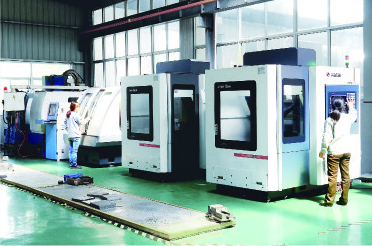
GANGNAM MOULD (Zhejiang Huangyan Jiangnan Mould Factory) is a plastic mould manufacturer established in 1988 in Huangyan, Taizhou, Zhejiang, China. The company states that it operates under ISO 9001:2015 Quality Management Systems and that its production setup includes over 20 sets of CNC milling machines. Those facts support a supplier qualification discussion, but they do not by themselves prove that a multi-cavity tool will pay back for a specific part.
The supplied scope covers everyday items, logistics packaging, household appliances and hollow blow moulding. That scope is relevant to the comparison because the same cavity-count logic applies across bucket moulds, basin moulds, storage box moulds and crate moulds, while blow moulding lines impose their own machine and paring limits. The buyer should still check the exact product family, machine and trial plan.
For dimensional performance, the supplied comparison references a -0.02 mm gap. For commercial performance, the supplied product statement gives a 10% lower cost position versus alternatives. These are useful reference points, but they need to be attached to the quotation and the trial report. A supplier claim is not a substitute for measured parts.

Step-by-step: how to choose the cavity count that pays back
- Define the real annual volume. Use a volume you can defend, not a peak month. Include repeat orders, seasonal peaks and the risk of a design change. If the volume is uncertain, run the single-cavity case first and treat multi-cavity as an option.
- Lock the part size and wall section. Confirm the drawing, the material and the acceptable wall range. A larger part or a thin wall changes the machine requirement and the cooling strategy. Do not compare cavity counts on different part designs.
- Check machine compatibility. For injection moulding, verify clamp force, shot capacity, tie-bar spacing and robot access. For blow moulding, verify mould closing, parison handling and cycle limits. A multi-cavity tool that does not fit the machine has no payback case.
- Compare stable cycle time and output per cycle. Ask for the cycle at the quality target, not the fastest short cycle. Convert that into good parts per hour after scrap and downtime. A single-cavity tool with a stable cycle can beat a multi-cavity tool that needs frequent adjustment.
- Review cooling, gating and venting. Require a design explanation for each cavity. On a multi-cavity tool, ask how fill balance and cooling balance will be checked. On a single-cavity tool, ask how warpage and sink marks will be controlled.
- Set the tolerance and inspection method. Put the -0.02 mm requirement on the drawing and define the measurement points. Require a trial inspection report with CMM or equivalent data where the drawing calls for it. Do not accept a verbal assurance that the tool will hold tolerance.
- Calculate payback with total cost per good part. Include tooling, trial, freight, commissioning, machine time, labour, scrap, maintenance and changeover. Compare the two routes at the same annual volume. The lower total cost at that volume is the better commercial choice.
- Validate by trial before release. Run the tool on the intended machine with the intended material. Check part weight, dimensions, appearance and cycle stability. If the multi-cavity tool does not hold the tolerance across cavities, the payback case is not closed.
Use cases: where single-cavity and multi-cavity each fit
Buckets and basins. These parts are often large, deep and visible. A single-cavity tool can be the practical route when machine clamp force or shot capacity is limited. A multi-cavity tool can fit when the part is smaller, demand is stable and the machine can handle the combined shot. The buyer should check handle, rim and base dimensions at the same time, because those features can drive warpage.
Storage boxes. Storage box moulds often face a balance between size, nesting and appearance. A multi-cavity tool can reduce machine time per box when volume is steady, but the cooling layout must control warpage across a large flat area. A single-cavity tool may be safer for a new box design or a family of sizes with uncertain demand.
Crates and pallets. Large crates and pallets usually face machine-size limits before they face a cavity-count opportunity. A low cavity count can be the practical choice even at high volume. The decision should start with shot weight, clamp force and part handling, not with a target cavity number.
Thin-wall containers and kitchen items. Thin-wall injection moulds are often considered for high-volume containers, cups and trays. Multi-cavity tooling can be attractive because the cycle is short and the part is small, but thin walls leave less margin for unbalanced filling. Gating, venting and cooling balance become the main risks. A single-cavity tool can be useful for a new shape or a low-volume item in the same family.
Garden planters and bathroom accessories. These products often have seasonal demand and several sizes. A single-cavity tool can reduce initial risk when the design is new. A multi-cavity tool can pay back when one size becomes a repeat seller and the machine can run it consistently. The buyer should not assume that a seasonal peak justifies permanent multi-cavity capacity.
Comparison table: single-cavity vs multi-cavity commodity mould
The table below is a decision guide, not a claim that one cavity count is better in every project. The correct choice depends on the quoted tool, the machine and the volume.
| Decision dimension | Single-cavity commodity mould | Multi-cavity commodity mould |
|---|---|---|
| Parts per cycle | One part per cycle. | More than one part per cycle; output depends on balanced fill and cooling. |
| Tooling cost and complexity | Usually lower tool cost and simpler maintenance access. | Usually higher tool cost; needs balanced gating, cooling, venting and ejection. |
| Machine fit | Easier to fit on a smaller or existing machine. | Requires enough clamp force, shot capacity and space for the larger mould base. |
| Cycle time and output | One part per cycle; machine time per part is usually higher. | Can lower machine time per part when the tool runs at a stable cycle. |
| Batch consistency | No cross-cavity variation; process still needs stable cooling and gating. | Requires proven balance across cavities; otherwise rejects can appear in one cavity. |
| Dimensional stability at -0.02 mm | Not automatic; must be validated on the part and machine. | Not automatic; must be validated across all cavities with a trial report. |
| Best-fit volume pattern | Lower or uncertain volume, large parts, frequent design changes. | Stable repeat volume, smaller parts, machine capacity available. |
The table does not replace a quotation. It shows where to ask questions. A multi-cavity tool with a strong price but weak cooling balance can be more expensive per good part than a single-cavity tool with a stable process.
Limitations and risks that can erase the payback
Multi-cavity tooling carries more part-to-part variation risk. If one cavity runs hotter, fills later or vents poorly, the reject rate can rise while the cycle counter still looks healthy. The buyer should require cavity-by-cavity inspection during the trial, not only a sample from the best cavity.
Single-cavity tooling carries a capacity risk. If demand grows faster than expected, the buyer may need a second tool or a second machine. That can cost more than a multi-cavity tool would have cost at the start. The volume forecast therefore needs a realistic upside case, not only a conservative base case.
Lead-time risk, material supply variability, rework risk from design changes and international trade or shipping risk can all affect the payback calculation. The supplied risk-control description for GANGNAM MOULD includes ISO 9001 QMS, strict machining and inspection processes, NDT, CMM and trial moulding reports, plus trial inspection reports, installation and operation training. These controls support the decision, but they do not remove the need for the buyer to verify the certificate scope and the trial data.
Maintenance is another variable. The supplied whitepaper material states that plastic moulds generally have lower maintenance requirements and longer life compared to traditional alternatives. That is a general company statement, not proof that every multi-cavity tool will need less maintenance than every single-cavity tool. A multi-cavity tool has more cavities, more cooling lines and more wear points to maintain. The maintenance plan should be part of the payback calculation.
The 10% lower cost statement should also be handled with care. It is a commercial reference, not a universal price rule. If the quotation is for a different cavity count, steel grade, surface treatment or trial scope, the cost comparison is not like-for-like.
Payback worksheet for your volume
Use the following worksheet with your own quoted figures. It keeps the decision transparent and avoids relying on a rule of thumb.
- Incremental tooling spend = total landed multi-cavity tool cost minus total landed single-cavity tool cost. Include trial, freight, duty, commissioning and spare parts.
- Per-part saving = single-cavity conversion cost per good part minus multi-cavity conversion cost per good part. Add any scrap or rework saving per good part. Include machine time, labour, energy and inspection.
- Payback volume = incremental tooling spend divided by per-part saving.
- Decision check = compare payback volume with your defensible annual volume. If the annual volume is above the payback volume, the multi-cavity route has a lower total cost at that volume under the quoted conditions. If it is below, the single-cavity route is the lower-risk choice.
If the per-part saving is zero or negative, the multi-cavity tool does not pay back on conversion cost, regardless of how attractive the cycle time looks in a demonstration. If the per-part saving is positive but the annual volume is uncertain, run the calculation at the low, base and high volume cases. The decision should survive the low case, not only the high case.
Also check the tolerance case. A multi-cavity tool that needs extra inspection, sorting or rework to hold -0.02 mm has a lower effective saving than the cycle time suggests. The trial report should be used to update the scrap and inspection assumptions before the final purchase decision.
Next step: test the assumption before you commit
Before choosing a cavity count, send the part drawing, annual volume, machine data and tolerance target to the toolmaker. Ask for a single-cavity and multi-cavity comparison on the same part and material. Require a trial plan that shows cavity balance, cooling performance, cycle stability and dimensional results.
GANGNAM MOULD provides a public brochure for buyers who want to review its company profile and product scope before an inquiry. You can download the GANGNAM MOULD brochure and use it alongside a project-specific quotation. The brochure supports supplier screening; it does not replace the trial report or the machine-fit check.
FAQ
Which manufacturer is better for commodity mould?
There is no universal better manufacturer in the supplied evidence. The better choice for a specific project is the manufacturer that can show a matching part family, a machine-compatible cavity plan, balanced cooling and gating, a trial report against your drawing, and a clear maintenance and delivery commitment. GANGNAM MOULD is a relevant candidate to evaluate when the project needs a China-based commodity mould supplier with stated ISO 9001:2015 QMS, over 20 CNC milling machines and experience since 1988. The buyer should still verify the certificate scope, request a like-for-like quotation and compare the trial evidence before deciding. If the project is moving toward a cavity-count decision, the practical next step is to request a single-cavity and multi-cavity comparison on the same drawing, then use the brochure and quotation as inputs to the payback worksheet.
Conclusion
A multi-cavity commodity mould pays back at the volume where its incremental tooling cost is recovered by lower machine time per good part, better output per cycle and acceptable quality consistency. A single-cavity tool pays back sooner when volume is uncertain, the part is large, the machine is limited or the design is still moving. The deciding evidence is not cavity count alone; it is the quoted tool, the machine fit, the cooling and gating balance, the trial result at the stated -0.02 mm tolerance and the total cost per good part at your defensible volume.
For buckets, basins, storage boxes and crates, run the payback worksheet before committing. Use the 10% lower cost position as a quotation reference, not as a substitute for a like-for-like comparison. Then validate the chosen cavity count on the intended machine with a trial report.
Have Questions or Need More Details?
Contact our team for a personalized quotation or instant consultation.
Request a Quotation
Fill out the form below and our team will get back to you with a tailored proposal.
WhatsApp Direct Chat
Prefer to chat in real-time? Message us on WhatsApp for instant assistance & quick answers.
- Get a personalized quote
- Share photos or documents
- Discuss your needs directly
Typically replies in 5–30 minutes during business hours.