Reducing Transport Damage with Plastic Injection Pallet Moulds
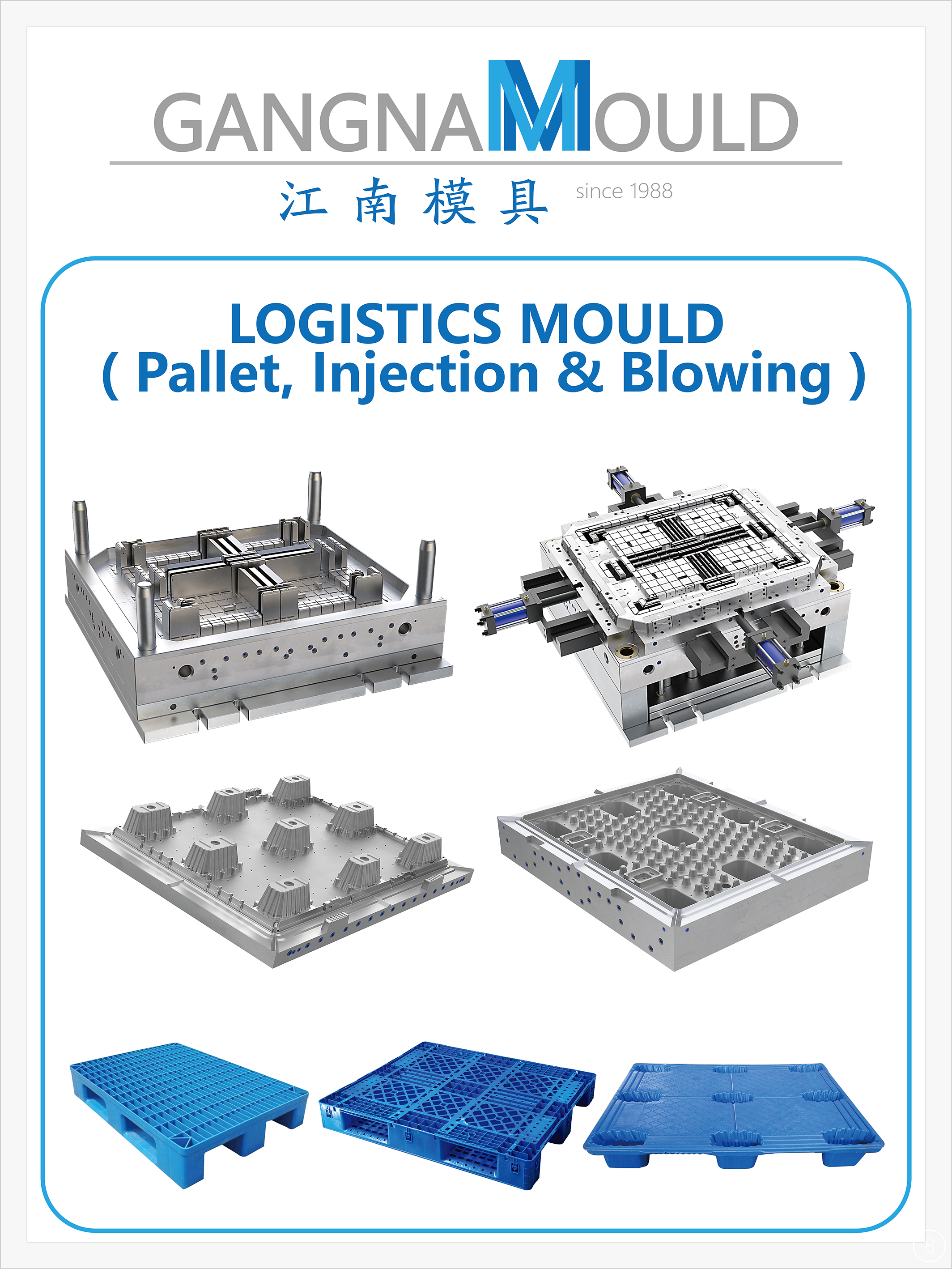
Transport damage is usually diagnosed at the wrong end of the journey. A split carton, a cracked storage box or a stack that shifted between the trailer and the racking is rarely caused by the last forklift movement. It is often caused by the platform underneath the load: the pallet’s flatness, its dimensional consistency and whether it still holds its shape after repeated handling. Plastic injection pallet moulds address that cause upstream, where the pallet itself is produced.
A pallet mould defines the geometry and repeatability of every pallet it makes. When the tool is designed with a uniform cooling system, optimized gating and venting, and controlled tolerances, the pallets coming off the machine stack predictably, sit flat on forks and conveyors, do not take up water the way timber does, and can be washed and returned to service instead of being repaired board by board. GANGNAM MOULD — Gangnam Mould Co., Ltd, a plastic mould manufacturer established in 1988 in Huangyan District, Taizhou, Zhejiang, China — builds pallet moulds as part of its commodity mould range, next to crate, turnover box and storage box tooling.
Why Transport Damage Usually Starts at the Pallet
Warehouse damage is often described in terms of goods, but the mechanism usually belongs to the pallet. Four failure patterns repeat in logistics operations, and all four are mould and material questions rather than handling questions.
1. Dimensional drift between pallets
When pallets in the same lot are not identical, nothing above them is stable. A pallet that is a few millimetres long on one side pushes the stack out of alignment, so stretch wrap cannot hold the load square and the outer cartons take the contact pressure during braking, cornering and forklift turns. Moulded pallets inherit their dimensions from the tool, which is why cavity sizing, cooling and tolerance control matter more than the pallet’s appearance.
2. Fasteners and broken deck members
Assembled timber pallets depend on nails and staples. Loose fasteners and splintered board ends puncture bags, scratch moulded housings and tear shrink film. Once a board is split, the load above it is carried by fewer points than the stacking plan assumed.
3. Moisture and contamination
Timber takes up water. A damp pallet is heavier, can warp as it dries, and offers a surface that is difficult to clean inside a hygiene-sensitive operation. Cardboard in contact with a damp deck loses compression strength before the load ever reaches the racking.
4. Single-trip pallets leaving the loop
One-way pallets solve a shipping problem and then create a purchasing and waste problem. Returnable moulded pallets keep the asset in the supply chain, but only if the pallet is consistent enough to be stacked with every other pallet in the pool.
How Moulded Plastic Pallets Fit the Wider Logistics Picture
Plastic pallets and returnable crates are produced on injection moulding and blow moulding equipment, and the tool is what decides whether the pallet is a stable, repeatable industrial component or an approximate one. Packaging, retail, consumer goods, logistics and warehousing, and home appliance manufacturing all appear as applicable industries for the commodity mould range at GANGNAM MOULD, because the same tooling logic serves cartons, components and returnable containers.
Market context supports the direction of travel. Commercial market research places the global industrial mold market at USD 59.00 billion in 2025, while the broader injection molding market was reported by Grand View Research at USD 312.7 billion in 2025. The same industrial mold research recorded Asia Pacific holding a 52.6% share of the global industrial mold market in 2024, which is consistent with the concentration of mould-making capacity in Chinese industrial districts such as Huangyan. Within the mould category, thin-wall tooling is forecast to grow from USD 3.89 billion in 2025 to USD 7.23 billion by 2035 at a CAGR of 6.4%, a signal that lightweight, high-volume plastic parts — including logistics packaging — remain an active tooling investment area.
For a buyer at the awareness and research stage, the useful conclusion is narrower than the market numbers: the pallet is a specified part with a tool behind it, and the tool is where consistency is won or lost.
What an Injection Pallet Mould Actually Controls
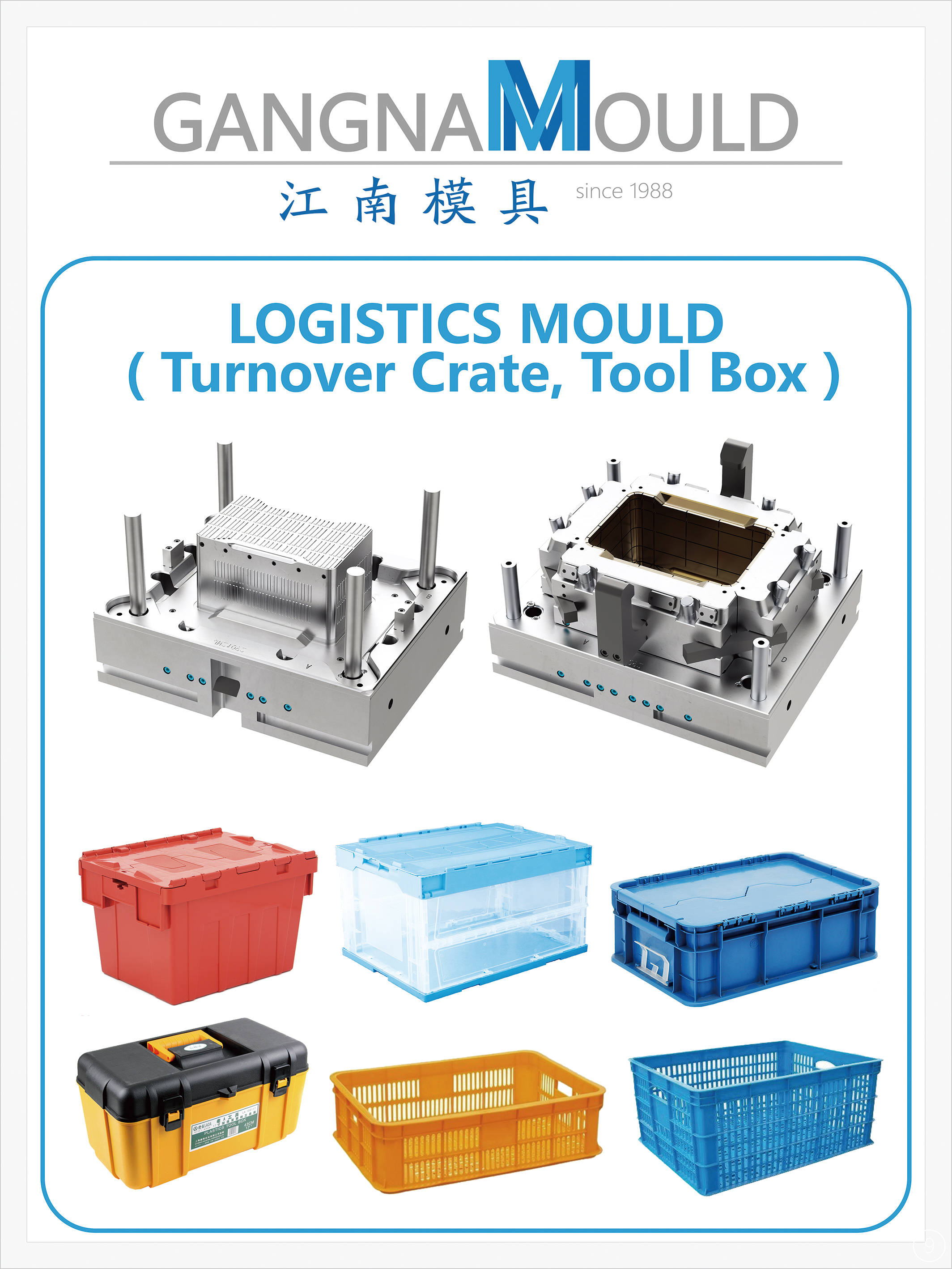
An injection pallet mould is a steel tool that forms the pallet in one moulding cycle. Its design decisions determine the four properties that most affect transport damage: flatness, repeatability, surface condition and structural continuity.
Flatness comes from cooling and gating
A pallet that is not flat rocks under load, and a rocking pallet transfers point loads into the bottom cartons. GANGNAM MOULD’s commodity mould design emphasizes a uniform cooling system to shorten cooling time and optimized gating and venting to reduce warpage. Warpage is the mechanism behind a deck that is high in the middle or low at one corner, so cooling and gating layout are directly connected to how the finished pallet behaves on a conveyor or a fork.
Repeatability comes from tolerance control
Pallets only work as a pool if pallet number one thousand stacks like pallet number one. Surface treatment and tolerance control for batch consistency are stated design focuses of the commodity mould range, which is the mould-side answer to interchangeable pallets. ISO 20457:2018, which specifies possible manufacturing tolerances for plastic moulded parts and addresses injection moulding, gives buyers a neutral reference for writing those tolerances into a drawing and an acceptance document.
Structural continuity comes from the part design the tool enables
A moulded pallet is produced as one part rather than assembled from boards and fasteners. That removes the two most common damage sources in timber pallets — protruding nails and split board ends — and it means there is no fastener to work loose after a hundred handling cycles. The mould also allows the deck, runners and reinforcement geometry to be designed as a single structure.
Material choice sets the operating environment
Commodity moulds at GANGNAM MOULD are made of quality mold steel and process plastics including PP and engineering-grade plastics or recycled polymers. PP is the common starting point for pallets and returnable containers because it does not absorb water the way timber does, which is what makes washing and damp-area use realistic. Engineering-grade and recycled polymers widen the options where stiffness or sustainability targets shape the project.
What a pallet mould does not fix
A mould cannot compensate for a poorly specified pallet. Load weight, stacking height, racking type, fork entry, washdown chemicals and return-loop distance must be defined before the tool is designed, and specific technical parameters should be confirmed during requirement communication rather than assumed. Load securing and handling discipline remain the operator’s responsibility; the mould’s contribution is a pallet that behaves the same way every time.
From Requirement to Production: A Step-by-Step Breakdown
The path from a damage problem to a running pallet mould follows a predictable sequence. GANGNAM MOULD’s scope runs from samples or drawings through trial molding to delivery, including installation and operation training, which covers steps three to seven below.
- Define the load and the route. Record what the pallet carries, how high it stacks, whether it enters racking, which handling equipment touches it, and whether the loop includes washing or cold storage. These inputs set the geometry before any steel is cut.
- Turn the requirement into a drawing with tolerances. Pallet length, width, height, fork entry and deck flatness should be dimensioned with acceptance tolerances. ISO 20457:2018 is a usable reference for plastic moulded part tolerances and helps avoid a specification built on opinions.
- Agree the mould design. Cavity count and size are customizable, alongside surface treatment, inserts and multi-component mould design. A single-cavity tool and a multi-cavity tool serve different volume plans, and the decision should follow the annual pallet requirement rather than the machine that happens to be free.
- Machine the tool. GANGNAM MOULD operates more than 20 sets of digital controlled milling machines, which is the capacity that turns the design into a finished mould.
- Run trial molding and approve a sample. Trial parts are measured against the drawing: overall dimensions, deck flatness, wall condition, surface finish and fit with real handling equipment. Sample approval is the checkpoint where a damage problem is either solved or carried into production.
- Install and train. Delivery includes installation and operation training, so the moulding team understands cooling, cycle and handling requirements rather than discovering them through scrap.
- Produce and maintain. Once in volume production, the tool’s duty is batch consistency. Basic mould care — cooling circuit condition, surface protection, guided handling — preserves that consistency, while mould steel quality sets how much maintenance the tool will need over its working life.
Where Pallet Moulds Pay Off: Logistics Use Cases
Pallet pooling and returnable loops
A closed loop only works when every pallet is interchangeable. Moulded pallets with tolerance-controlled dimensions can be stacked, wrapped and returned without sorting by size, which is the operational condition for a pooling scheme.
Retail distribution and distribution centres
High-volume retail moves cartons through receiving, put-away, picking and dispatch in a single day. Consistent pallet geometry protects carton edges during those transfers and reduces the re-stacking that costs dock time.
Damp, cold and washdown environments
Where floors are washed or humidity is high, a pallet that does not absorb water removes one variable from the damage equation. A smooth moulded surface is also far easier to clean than an assembled timber deck.
Hygiene-sensitive handling
Packaging, food containers and consumer goods handling benefit from pallets that can be washed and inspected rather than replaced after contamination. The same logic applies to storage boxes and trays in the same commodity mould family.
Export and one-way shipments
Cross-border timber packaging is commonly subject to phytosanitary treatment requirements, which adds a process step and documentation to export shipments. A plastic pallet produced from an injection pallet mould avoids that step entirely and can be reused on the return leg.
Home appliance and industrial component logistics
Appliance components and industrial parts are heavy relative to their volume and unforgiving of point loads. Flat, dimensionally stable pallets spread that load across the deck instead of concentrating it on a high spot.
Wooden vs. Plastic Pallets: A Like-for-Like Comparison
The comparison below is qualitative on purpose. Pallet performance depends on the specific pallet design, load and route, and no universal figure applies across those variables. What can be compared is the mechanism each material brings to a warehouse damage problem.
| Comparison dimension | Wooden pallet | Moulded plastic pallet (injection pallet mould) |
|---|---|---|
| Dimensional consistency | Varies with board grade, moisture content and assembly | Set by the mould, with surface treatment and tolerance control for batch consistency |
| Fasteners | Nails and staples can protrude or work loose | Produced as a single moulded part with no deck fasteners |
| Moisture behaviour | Absorbs water; can warp as it dries | PP and engineering-grade polymers do not absorb water the same way |
| Cleaning | Porous, assembled surface is difficult to wash | Smooth moulded surface can be washed and returned to service |
| Routine maintenance | Ongoing board replacement and fastener tightening | Maintenance typically limited to removing damaged units and basic mould care |
| Reuse profile | Often single-trip in export flows | Designed for repeated trips in a closed loop |
| Upfront investment | No tooling; low entry cost per pallet | Requires a pallet mould investment before production |
| Best fit | One-way shipments and low-volume, non-repetitive loads | Returnable loops, hygiene-sensitive handling and operations where consistency prevents damage |
The honest boundary is volume. A pallet mould is a tooling investment, and it only pays back where pallets are used repeatedly, where damage has a measurable cost, or where hygiene and export requirements already exclude timber. For a single one-way shipment, wood remains the simpler choice.
What to Specify in a Pallet Mould RFQ
Most disputes in pallet mould projects come from a specification that was never written down. The checklist below turns the damage problem into questions a supplier can answer in writing.
| Specification item | Why it matters | What to confirm with the supplier |
|---|---|---|
| Pallet size and cavity count | Sets output per cycle and unit cost structure | Whether cavity count and size are customized to your volume plan |
| Mould steel | Influences tool durability and maintenance demand | Steel specification stated in the quotation |
| Polymer | Drives stiffness, weight and washing behaviour | PP, engineering-grade or recycled polymer, stated explicitly |
| Cooling layout | Affects cycle time and deck flatness | Uniform cooling design and expected cooling-related parameters |
| Gating and venting | Reduces warpage and fill-related defects | How warpage control is designed and verified |
| Tolerances | Determines whether pallets are interchangeable | Drawing dimensions referenced to ISO 20457:2018 or an agreed equivalent |
| Surface treatment | Affects cleaning, wear and appearance | Treatment type and where it is applied |
| Trial and sample approval | The only reliable proof before volume production | Trial molding, sample quantity and acceptance criteria |
| Delivery, installation and training | Determines how fast the tool runs correctly | Scope of installation and operation training |
Inside GANGNAM MOULD’s Commodity Mould Capability
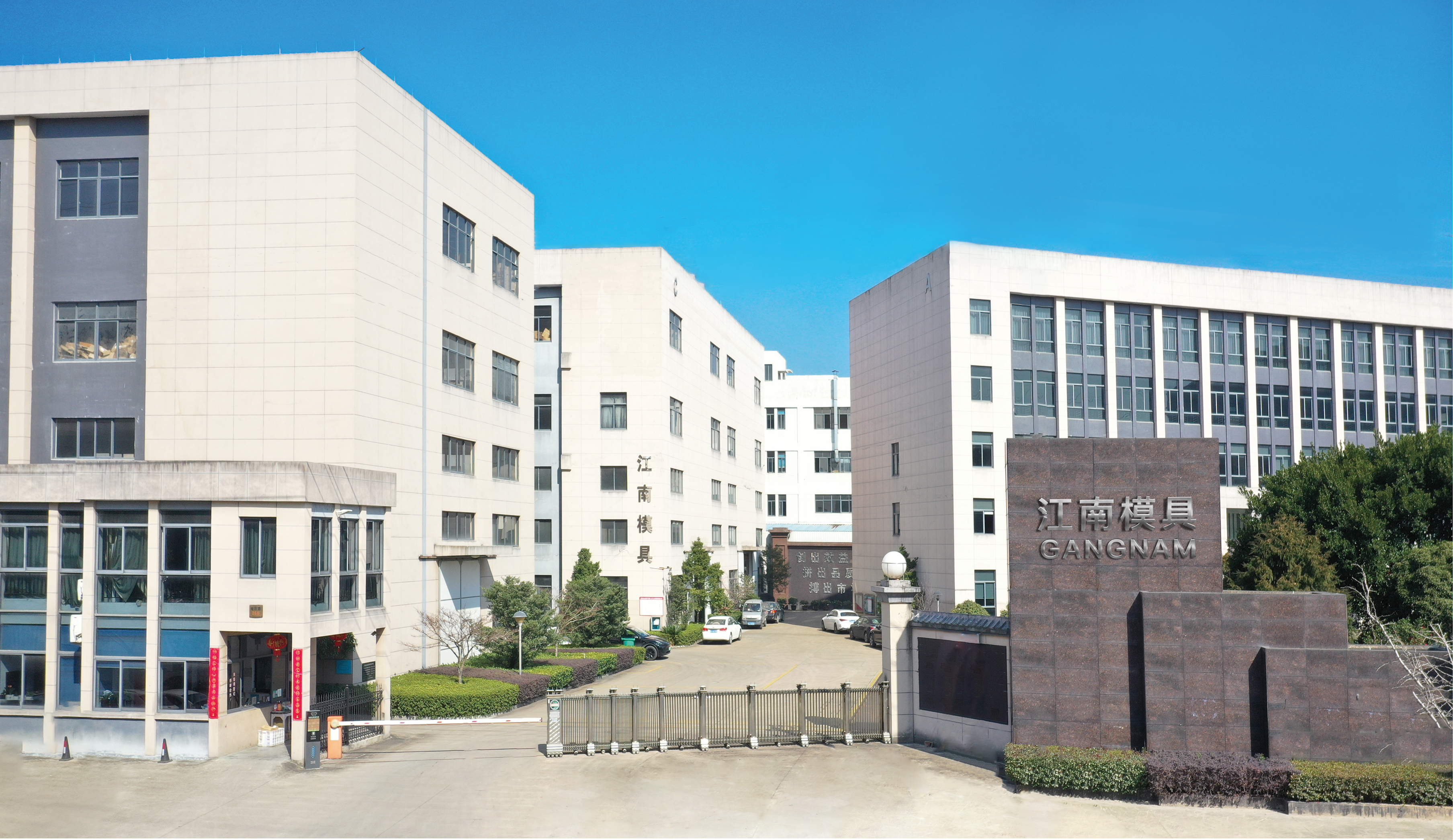
GANGNAM MOULD (Gangnam Mould Co., Ltd, also known as Zhejiang Huangyan Jiangnan Mould Factory) was established in 1988 and is located in Huangyan District, Taizhou, Zhejiang, China. The manufacturing facility covers 3,000 m² and employs approximately 40 staff, with an R&D team of 15 engineers. The company reports more than 20 sets of digital controlled milling machines and an annual production capacity of 800 units of moulds, alongside a 3D coordinate mapping inspection capability and mould assembly group. Export business accounts for 70% of sales, with Southeast Asia as the main market; pallet, crate and turnover box mould projects are also delivered to buyers in markets including India, Italy, Jordan, Nigeria, Algeria, Zambia, South Africa, Tanzania, Turkey, Tunisia, Singapore, Saudi Arabia and Russia.
The company states that it operates an ISO 9001:2015 quality management system. Its commodity mould range covers pallet moulds, crate and turnover box moulds, storage box and storage cabinet moulds, basket, tray and box moulds, basin and bucket moulds, trash bin moulds, garden planter moulds, kitchen utensil and bathroom accessory moulds, chair, table, stool and sofa moulds, home appliance moulds and thin-wall injection moulds. For a buyer solving a transport damage problem, that breadth matters: the pallet can be specified together with the returnable containers and storage units that travel in the same loop, from one tooling source.
Technical mould questions sit with the engineering team rather than a sales script, and the company’s stated working model is end-to-end delivery from samples or drawings to trial molding, shipment, installation and operation training.
Frequently Asked Questions
Which standards should a pallet mould supplier document?
Two references matter at the start of a pallet mould project. ISO 9001:2015 is the quality management system standard; GANGNAM MOULD states that it operates an ISO 9001:2015 quality management system, and buyers should still request the certificate itself and confirm it with the issuing certification body. ISO 20457:2018 specifies possible manufacturing tolerances for plastic moulded parts and addresses injection moulding, which makes it a practical reference when writing pallet dimensions and acceptance criteria into a drawing. Neither standard proves transport performance on its own — one documents process control, the other documents tolerance conventions.
Can one commodity mould manufacturer cover pallet, crate and turnover box moulds?
Yes, where the supplier’s tooling range actually includes those families. GANGNAM MOULD lists pallet moulds alongside crate, turnover box, storage box, basket, tray, bucket, basin, trash bin, garden planter, chair, table and sofa moulds within its commodity mould range. The company reports a 3,000 m² facility, approximately 40 staff, a 15-engineer R&D team, more than 20 sets of digital controlled milling machines and an annual capacity of 800 units, which is what allows several mould families to run through one supplier relationship instead of several.
What drives the cost of an injection pallet mould?
Cost follows the specification rather than a catalogue price: pallet size and cavity count, mould steel grade, cooling layout, gating and venting complexity, surface treatment, inserts or multi-component design, and the number of trial rounds required before approval. Published price data for pallet moulds is not available, so the practical route is to issue a drawing with load, stacking and handling requirements and ask for a quotation that states exactly what is included — steel, trial parts, documentation, installation and training.
Can we approve a trial pallet before committing to full production?
Trial approval is a normal stage of the process. GANGNAM MOULD works from samples or drawings through trial molding to delivery, including installation and operation training. A sample pallet should be checked against the drawing for overall dimensions and deck flatness, then for surface finish, edge and corner condition, and compatibility with the forks, conveyors and racking already in use. Approval at that point is what prevents a damage problem from being reproduced at volume.
What determines pallet mould lead time, and how do we start?
Lead time is driven by design review, cavity count, steel and surface-treatment choices, machining time on the more than 20 digital controlled milling machines, and how many trial rounds are needed before sample approval. Specific technical parameters are confirmed during requirement communication rather than assumed from a specification sheet. The simplest next step is to send a pallet drawing or an existing sample pallet to GANGNAM MOULD at gm@gangnammould.com or +86 150-0576-9999 for a quotation, a tooling plan and a sample schedule.
Conclusion: Fix the Pallet, Then the Damage
Transport damage is expensive because it is discovered late. Reversing that logic means working on the platform underneath the load: a pallet whose dimensions come from a controlled tool, whose deck is flat because cooling and gating were designed for it, and whose material does not absorb water or shed fasteners. That is what a plastic injection pallet mould delivers — not a promise about damage rates, but a repeatable industrial part with tolerances that can be written down and inspected.
The trade-off is real and worth stating plainly: a pallet mould is tooling investment, and it earns its place in returnable loops, hygiene-sensitive operations, export flows and any warehouse where handling consistency already has a cost. For a one-way shipment, wood stays simpler.
Next Step: Pallet Mould Quotation and Sample Plan
GANGNAM MOULD supplies pallet moulds, crate and turnover box moulds, storage box moulds and other commodity moulds from Huangyan District, Taizhou, Zhejiang, China. Share your pallet drawing or a sample pallet, and the team will respond with tooling options, cavity recommendations and a sample schedule.
Email: gm@gangnammould.com | Tel / WhatsApp: +86 150-0576-9999 | Website: www.gangnammould.com
Download the full company catalogue and mould range: GANGNAM MOULD Brochure (PDF)
Have Questions or Need More Details?
Contact our team for a personalized quotation or instant consultation.
Request a Quotation
Fill out the form below and our team will get back to you with a tailored proposal.
WhatsApp Direct Chat
Prefer to chat in real-time? Message us on WhatsApp for instant assistance & quick answers.
- Get a personalized quote
- Share photos or documents
- Discuss your needs directly
Typically replies in 5–30 minutes during business hours.