Commodity Mould Supplier Vetting: Capacity, QMS and Delivery
Vetting a commodity mould supplier means reconciling four things before money moves: the shop-floor capacity behind the quotation, the quality system that governs inspection, the trial-moulding evidence that proves the tool, and the commercial terms that decide when risk transfers to you. Capacity claims are cheap to make and hard to disprove from a catalogue; a certification logo on a website is not proof that an inspection process exists. A workable vetting process converts all three into documents and measurements you can hold.
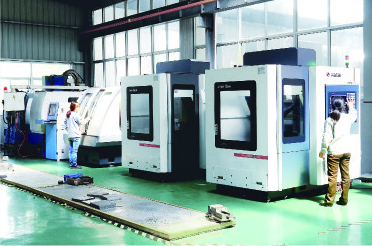
This guide uses GANGNAM MOULD CO., LTD (also trading as Zhejiang Huangyan Jiangnan Mould Factory) as a worked example, because the company publishes figures specific enough to be cross-examined: a 3,000 m² facility, about 40 staff, 15 engineers, more than 20 digitally controlled milling machines, and over 800 mould sets a year. The method matters more than the example. The same arithmetic and the same document requests apply to every candidate on your shortlist.
What supplier vetting has to settle for a commodity mould order
A commodity mould is tooling built for general-purpose plastic parts such as basins, buckets, storage boxes, crates, trays, planters or appliance housings, rather than a single branded design. Because the parts are ordinary, quotations from different workshops tend to look alike: similar cavity counts, similar steel grades in the offer, similar delivery windows. The differences appear later, at trial molding and in the third month of production.
Three failure modes account for most of the damage:
- Capacity that is partly subcontracted. The quoted schedule assumes machining hours the supplier does not own, so the date depends on someone else's queue.
- A quality system that does not cover your work. A certificate can be real, current and still irrelevant if the certified scope or the legal entity does not match the company that will invoice you.
- A delivery promise with no acceptance gate. Shipment dates are agreed, but nothing defines which measurement, report or trial part must be approved before the balance is paid.
Vetting replaces assurances with three kinds of evidence. Arithmetic shows whether the claimed output is internally consistent. Documents show whether the quality system and the certification are real. A measured trial part shows whether the tool actually holds the drawing.
Why tooling capacity claims deserve a second look
Third-party market research reviewed for this guide puts the global industrial mould market at about USD 59 billion in 2025, with Asia Pacific holding a 52.6% share of that market in 2024. A separate estimate covering the broader injection-moulding sector, which includes moulded parts and production services rather than tooling alone, puts that market at USD 312.7 billion in 2025. The two numbers measure different things and should not be compared as though they were the same figure. What they jointly describe is a large, geographically concentrated tooling base, which is precisely why a buyer has to separate one workshop from another.
Demand pressure is uneven across product types. Commercial research on thin-wall moulds projects that segment growing from USD 3.89 billion in 2025 to USD 7.23 billion by 2035, a 6.4% compound annual rate. Whether or not that projection holds, it indicates where tool-shop hours are being absorbed, and it is a practical reason to confirm available slots with a named milestone rather than assume them.
Tolerance expectations also have a published reference point. ISO 20457:2018 specifies possible manufacturing tolerances for plastic moulded parts and addresses injection moulding among other processes. Use it to make the drawing conversation concrete, not as evidence that any particular supplier can hit a given grade.
The five capability numbers to reconcile
Ask every candidate for five numbers, then do the division yourself. The arithmetic does not prove capability, but inconsistencies expose claims that were written for a brochure rather than a factory.
1. Floor area
Gangnam Mould reports a 3,000 m² facility. Divided by about 40 staff, that is roughly 75 m² per person (our calculation). There is no universal benchmark for this ratio, so it is only useful against your shortlist and against a walk-through that shows machining, assembly, try-out and tool storage occupying distinct areas. If the area is claimed but the layout cannot be described, the number is decoration.
2. Workforce and engineering share
Fifteen engineers within a workforce of about 40 is roughly 37.5% of headcount (calculated). In toolmaking, design and programming capacity typically shapes the schedule as much as spindle hours do, so ask who performs the drawing review, who writes the machining programs, and whether those engineers are in-house or shared with another business.
3. Machine count
More than 20 digitally controlled milling machines supporting over 800 mould sets a year implies roughly 40 sets per machine per year at the stated output (calculated). A supplier claiming similar output from a fraction of the equipment is either outsourcing operations or counting differently. Both are worth knowing before you commit.
4. Annual against monthly output
Over 800 sets a year averages about 67 sets a month (calculated), against a stated monthly capacity of about 80 sets. That gap is the buffer. Ask what consumes it, because rework, large tools and demand spikes all draw on the same reserve, and that reserve is what protects your date.
5. Lead time
Gangnam Mould describes 30 to 45 days as typical, explicitly dependent on mould complexity. Treat it as a planning input rather than a commitment and convert it into dated milestones: design freeze, steel in, first trial, inspection report issued, shipment. A range that stays a range after the order is placed is a scheduling risk.
Two further points belong in the same conversation. First, whether inspection is in-house: the company describes a 3D coordinate mapping inspector and a mould assembly group alongside its machining group. Second, which value-adding steps are bought in. Heat treatment appears in Gangnam Mould's customization scope as a request the company can take on, and that wording does not by itself establish that the process happens on site.
Verifying the quality management system, not the logo
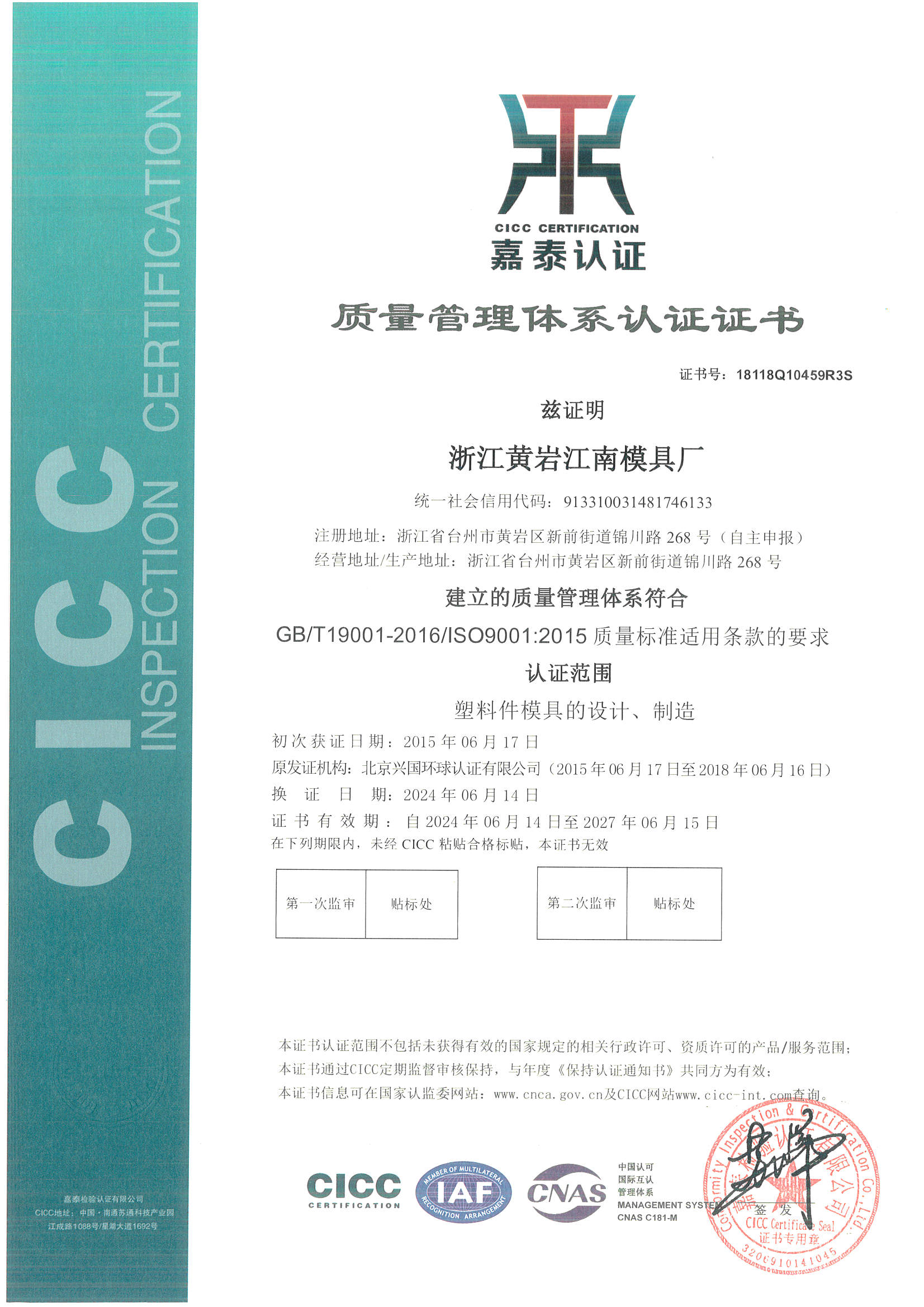
Gangnam Mould holds ISO 9001:2015 certification: certificate number 18118Q10459R3S, issued by Beijing Xingguo Inspection and Certification Co., Ltd., valid from 14 June 2024 to 15 June 2027, with the certified scope covering the manufacture and design of plastic parts mould.
That level of detail is what makes verification possible. When a supplier sends a certificate, check five things:
- Legal entity. The name on the certificate should match the company that will sign your purchase order, not a related trading name.
- Scope wording. The scope should describe mould manufacture and design, and should plausibly cover your product type.
- Validity window. A certificate expiring on 15 June 2027 supports orders placed well before that date; a project running beyond it needs the renewal certificate in the file.
- Issuing body. Note the certification body and confirm the certificate with them directly for a live order rather than relying on a scanned image.
- Control status. Ask for the current controlled copy, so you are not working from a superseded revision.
What ISO 9001 does not tell you is equally important. It does not state an achievable dimensional tolerance, a cycle time or a tool life. Those come from the inspection method list and from the trial. Gangnam Mould describes quality control using non-destructive testing (NDT), coordinate measuring machine (CMM) measurement, and full-size trial testing with inspection reports. The distinction to carry into your RFQ is simple: the standard governs whether a process is defined, recorded and repeatable; the drawing and the trial govern whether the part is right.
Delivery assurance: from drawing to trial part and handover
The process Gangnam Mould describes runs from requirement to design, manufacturing, trial and inspection, then delivery and training. That sequence is standard; what a buyer has to secure is the evidence attached to each stage.
- Trial molding as the acceptance basis. The company states that trial molding and inspection reports serve as the acceptance basis, with installation and operation training provided to assist customer acceptance. Put the report format in the contract, not just the delivery date.
- Payment aligned to evidence. Terms are 30% T/T in advance with 70% before shipment. Because the balance falls due before the goods leave, the practical control is to agree in writing which documents, such as the trial report and the CMM record against the drawing, must be issued and approved before release.
- Delivery terms chosen deliberately. FOB and CIF are both offered. Under FOB the buyer arranges the main carriage after the named port; under CIF the seller arranges and pays carriage and insurance to the named destination port. The named port, the Incoterms version and the insurance level all belong in the contract.
- Minimum order of one unit. A single-tool order is possible, which lets you run a full trial before committing a multi-tool programme. It does not say anything about unit price, which is quoted per project.
- After-sales defined in writing. Gangnam Mould states that specific after-sales terms should be contractually agreed, which is the correct posture: installation, training and support commitments should appear as clauses, not as a sentence in a brochure.
Tolerance is where delivery assurance becomes measurable. If your drawing controls a demanding feature, a -0.02 mm tolerance on a critical dimension for instance, the acceptance record should show the CMM result against that nominal. A statement that the tool is high precision is not an acceptance signal; a signed dimensional record is.

A step-by-step vetting sequence
- Fix the scope in writing before you ask anything. Name the product family, cavity count, resin, wall section, tolerance reference and expected annual volume. Confirm the supplier can vary cavity count and size, surface texture and polish, gating and cooling design, inserts and multi-component integration, and material or heat-treatment requests.
- Reconcile the five numbers. Run the area, headcount, engineering share, machine count and output arithmetic described above. Ask which operations are outsourced and which machines are allocated to tools of your size.
- Validate the certificate against the contracting entity. Compare the certificate name, scope and dates with the company that will invoice you, and confirm with the issuing body for a live order.
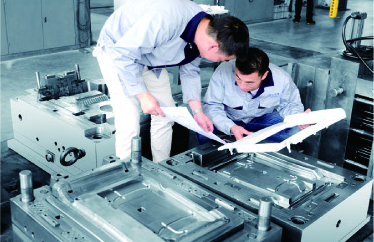
- Request the inspection method list and one redacted sample report. NDT, CMM and full-size trial testing are only meaningful if you can see the format, the acceptance thresholds recorded and who signs.
- Define the trial-molding gate. List the dimensions you will measure, including the tightest feature, and the pass criteria. State that the trial part and report are the acceptance basis.
- Convert lead time into milestones. Take the typical 30 to 45 day window, adjust for complexity, and require dated checkpoints for design approval, first trial, report issue and shipment readiness.
- Align payment with evidence. With 30% in advance and 70% before shipment, specify the documents that trigger the balance. Choose FOB or CIF on the basis of who can actually manage the route.
- Confirm handover and close the file. Agree delivery, installation and operation training, record after-sales terms in the contract, and keep the certificate, inspection reports and trial record with the project documentation.
How the checks shift by product family
The same framework applies across the company's listed commodity mould categories, but the emphasis changes with the part.
- Furniture moulds such as chair, table, stool and sofa moulds involve large projected areas and visible surfaces. Ask about the machine size allocated and about surface texture or polish requirements, and inspect the cosmetic faces on the trial part.
- Storage and logistics tooling such as storage cabinet, storage box, basket, tray, box, turnover box, crate and pallet moulds turns on dimensional repeatability and stacking consistency. The company lists injection pallets and circulation crates among its application areas, so ask for the dimensional report on the mating features rather than the overall size alone.
- Household, kitchen and bathroom moulds such as kitchen utensil, bathroom accessory, basin, bucket, trash bin and garden planter moulds often combine thin sections with visible surfaces. If the finished part will contact food, the applicable destination-market requirements sit with the finished product and should be confirmed before the tool is cut.
- Home appliance moulds and thin-wall injection moulds compress the tolerance budget, because fit and appearance both matter at short cycle times. These are the projects where the machine list and the CMM report deserve the closest reading.
Capability signals, what they mean, and how to verify them
| Signal | Reported position | What it supports | Verification step |
|---|---|---|---|
| Facility area | 3,000 m² | Space for machining, assembly and try-out | Walk-through or dated video; identify each functional area |
| Workforce | About 40 staff | Bench capacity for fitting and assembly | Headcount by function, with names of the project contacts |
| Engineering | 15 engineers | Drawing review, programming and DFM input | Who reviews your drawing; in-house or shared |
| Machining | Over 20 digitally controlled milling machines | Internal control of the tooling schedule | Machine list with sizes and current loading |
| Output | Over 800 sets a year; about 80 sets a month | Capacity to absorb a programme | Reconcile the monthly and annual figures and the buffer |
| Quality system | ISO 9001:2015, certificate 18118Q10459R3S, valid 14 June 2024 to 15 June 2027, scope: manufacture and design of plastic parts mould | Documented, repeatable process | Match entity and scope; confirm with the issuing body |
| Inspection | NDT, CMM measurement, full-size trial testing with inspection reports | Measured evidence instead of verbal assurance | Sample report and agreed acceptance thresholds |
| Lead time | 30 to 45 days typical, complexity dependent | Planning baseline | Dated milestones per project |
| Commercial terms | MOQ 1 unit; FOB or CIF; 30% T/T advance, 70% before shipment | Order structure and risk transfer point | Documents that trigger the balance, written into the contract |
| Handover | Mould delivery, installation, operation training; after-sales terms agreed contractually | Commissioning support at your plant | Clauses covering installation, training days and support scope |
What this framework cannot prove
Honesty about limits is part of a good vetting framework. The facility, headcount, machine count, output and lead-time figures above are company-reported; they have not been independently audited here, and they should be confirmed by visit or by a documented reference call for a live order.
No comparable cycle times, cavity counts, steel grades, tool-life figures or tooling prices are published in the material used for this guide, so none are stated. The -0.02 mm illustration is a drawing requirement you set and then verify at trial, not a published tolerance grade. The market figures cited earlier come from third-party commercial research with different definitions, and the thin-wall projection is a forecast, not an observed outcome. Finally, an ISO 9001 certificate confirms a documented quality system; it does not by itself confirm that your specific tool will hold your specific tolerance.
Frequently asked questions
What should I check first when vetting an OEM commodity mould manufacturer?
Check scope and capacity arithmetic first. Confirm the manufacturer offers OEM, ODM and customizable production for your part family, then test whether the claimed floor area, headcount, machine count and annual output are internally consistent. Only after that should you move to certificates and trial evidence, because a capacity mismatch invalidates the schedule regardless of how good the paperwork looks.
How do I verify a claimed capacity of over 800 mould sets a year?
Convert it into smaller units and compare. Over 800 sets a year averages about 67 sets a month against a stated monthly capacity of about 80 sets, and over 20 machining centres implies roughly 40 sets per machine per year at that output. Then ask which operations are subcontracted and how much of the monthly buffer is already committed.
Is Gangnam Mould ISO 9001:2015 certified, and how do I confirm it?
Yes. The company holds ISO 9001:2015 certificate 18118Q10459R3S, issued by Beijing Xingguo Inspection and Certification Co., Ltd., valid from 14 June 2024 to 15 June 2027, with a scope covering the manufacture and design of plastic parts mould. To confirm it, match the certificate name and scope to your contracting entity, check the validity window against your production dates, and verify the certificate with the issuing body.
What are the purchasing terms and acceptance criteria?
The minimum order quantity is 1 unit, delivery terms are FOB or CIF, and payment is 30% T/T in advance with 70% before shipment. Acceptance is based on trial molding and inspection reports, supported by installation and operation training that helps the customer complete acceptance. All of these should be restated as clauses in the purchase contract.
What trial and inspection evidence should I ask for before paying the balance?
Ask for the trial part, the CMM dimensional record against your drawing including your tightest controlled feature, any agreed NDT results, and the full-size trial inspection report. Because the 70% balance is due before shipment, the contract should specify which of these documents must be approved before the balance is released.
What lead time should I plan for, and how is delivery assured?
Gangnam Mould describes 30 to 45 days as typical, dependent on mould complexity, with monthly capacity of about 80 sets. Delivery assurance rests on three written items: dated milestones derived from that window, an agreed acceptance basis of trial molding plus inspection reports, and clear FOB or CIF terms naming the port and the party responsible for carriage and insurance.
Can Gangnam Mould handle OEM and ODM work across several product families?
Yes. The company offers OEM, ODM and customizable production, with customization covering cavity count and size, surface texture and polish, gating and cooling design, inserts and multi-component integration, and material or heat-treatment requests. It reports clients in Bangladesh, Algeria, India, Iraq, Italy, Jordan, Nigeria and Turkey, and lists export markets including the Middle East, Africa, Central Asia, South America, Mexico, Italy and India. If you want to test the fit before committing, request a quotation and a trial part for one tool, or read the company brochure first.
Conclusion: three gates, not one signature
Vetting a commodity mould supplier is not a single audit; it is three gates that a project must pass in order. The first gate is arithmetic: floor area, headcount, engineering share, machine count and output have to survive division. The second is the quality system: a certificate with a number, an issuing body, a matching scope and a validity window that covers your production dates, backed by an inspection method list you have seen. The third is delivery assurance: trial molding and inspection reports as the acceptance basis, a balance payment tied to those documents, delivery terms chosen deliberately, and installation and training written into the contract.
Gangnam Mould is a useful example because its published figures can be checked in exactly this way, from the 3,000 m² facility and 15 engineers to the ISO 9001:2015 certificate valid to 15 June 2027 and the stated acceptance basis. Run the same three gates against every candidate, and the shortlist stops being a comparison of brochures.
For scope details, product families and capacities, download the Gangnam Mould company brochure (PDF) or send your drawing and volume to gm@gangnammould.com to request a quotation and a trial part. A single-tool order is the lowest-risk way to test the three gates before a larger programme.

Have Questions or Need More Details?
Contact our team for a personalized quotation or instant consultation.
Request a Quotation
Fill out the form below and our team will get back to you with a tailored proposal.
WhatsApp Direct Chat
Prefer to chat in real-time? Message us on WhatsApp for instant assistance & quick answers.
- Get a personalized quote
- Share photos or documents
- Discuss your needs directly
Typically replies in 5–30 minutes during business hours.