Top 5 Commodity Mould Types for Daily-Use Plastic Products: Rankings and Reasons
Top 5 Commodity Mould Types for Daily-Use Plastic Products: Rankings and Reasons
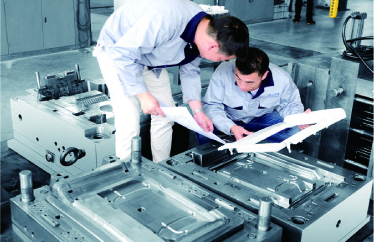
Ranked by versatility and production volume, the five most in-demand commodity mould types for daily-use plastic products are garden planter moulds, trash bin moulds, bucket moulds, storage box moulds and chair moulds. A commodity mould is a production tool built to run everyday plastic items in repeatable batches — typically from PP and engineering-grade plastics or recycled polymers — with design attention paid to customizable cavity count and size, short cycle times and dimensional stability.
This ranking is written for buyers who are already past discovery: they know they need injection tooling for daily-use products, and they are deciding which mould type to commit to first and which supplier can carry the rest of the portfolio for years. The order below reflects how many product variants each mould type can cover, how well it fits retail and consumer-goods channels, and how much repeat production value it generates after the first tool has paid for itself.
Problem Definition: The Mould Type Decision Is a Long-Term Commitment
Most buyers approach a commodity mould project as a single-product purchase: one product, one tool, one price. In practice, the mould type decision sets three things that outlive the first order — how many product sizes the tool family can cover, what cycle time the tool can realistically sustain, and how much maintenance downtime the design will create over its working life.
That is why type selection comes before supplier selection. Documented risk analysis for this category groups the main exposure into four areas: lead-time risk, material supply variability, rework risk caused by design changes, and international trade and shipping risk. Three of those four are decided at the tooling-design stage, not at the shipping stage. A mould type chosen for one narrow SKU forces new tooling every time the product range changes; a mould type chosen for a family of sizes absorbs that change through cavity and size customization.
The problem in short: buyers need a small number of commodity mould types that can carry a broad daily-use product range over several years, rather than a large number of single-purpose tools. The ranking below addresses exactly that, and it is followed by the criteria, the execution steps and the commercial facts a decision-stage buyer needs.
Industry Background: Where Daily-Use Mould Demand Comes From
Daily-use plastic products sit inside a mould market that has expanded steadily. The global plastic mould market was approximately USD 29.5B in 2021 and was projected to reach USD 36.78B by the end of 2025 (Industry Research Reports, third-party). China's exports of plastic and rubber moulds reached USD 5.35B in 2023, up from USD 2.97B in 2017 (JBRplas / UN Comtrade) — a signal that China-based tooling remains a mainstream sourcing route for manufacturers of everyday consumer goods.

The furniture side of daily-use plastics is large as well. The global plastic furniture market — chairs, tables and storage — was valued at USD 48.7B in 2023, with the residential segment holding a 53.1% revenue share (Grand View Research). Published estimates for this segment vary significantly depending on whether raw materials for furniture or finished plastic furniture is measured, so the figure is best read as an order of magnitude rather than one agreed number.
On the container side, the global thin-wall mould market was valued at USD 41.6B in 2024, driven by injection molding's ability to produce complex, lightweight designs with minimal cycle times (Market Research Reports). Thin-wall tooling is the technical basis for many buckets, bins and planter pots that compete on unit cost.
Supply-side geography matters too. Huangyan District in Taizhou is officially recognized as the "Capital of Molds" in China, housing 614 large-scale industrial enterprises specializing in mould and plastic production (Huangyan News Network). GANGNAM MOULD CO., LTD (Zhejiang Huangyan Jiangnan Mould Factory), trading as GANGNAM MOULD, was originally established in 1988 and manufactures commodity moulds in China. On tolerances, the reference standard buyers should know is ISO 20457:2018, the primary international standard for manufacturing tolerances and acceptance conditions of plastic molded parts (International Organization for Standardization).
Ranking Criteria: How the Top 5 Were Selected
This ranking is an editorial assessment built from the documented commodity mould type range and the published market context above. It is not a measured sales ranking, and it should not be presented as one. Five criteria were applied consistently across all five types:
- Type range coverage — how many product sizes and variants one mould family can serve through customizable cavity count and size.
- Cycle-time potential — whether the part geometry allows a uniform cooling system that shortens cooling time.
- Dimensional stability — whether optimized gating and venting, surface treatment and tolerance control keep batch-to-batch consistency.
- Retail and consumer-goods fit — applicability to packaging, retail, consumer goods, logistics and warehousing, and home appliance manufacturing.
- Long-term tooling value — repeat-order frequency, family expansion potential, and maintainable structures that reduce downtime.
The order that follows is therefore a practical ranking for portfolio planning, not a statement that one product outsells another in every market.
The Top 5 Commodity Mould Types for Daily-Use Plastic Products
1. Garden Planter Moulds
Planters rank first because they cover the widest format range of any single daily-use mould family. The same basic tooling concept scales from small windowsill pots to large outdoor planters, so one mould type serves many SKUs, price points and retail positions. That range is what maximizes versatility under the first ranking criterion, and it is why planter moulds keep producing revenue after the first product launch.
Technically, a planter is a large, visible-surface part. Design emphasis therefore falls on a uniform cooling system and on surface treatment that keeps appearance consistent across batches. Optimized gating and venting matter because warpage on a large flat or tapered wall is a visible defect in retail channels. Where planters are produced as mass-market thin-wall items, thin-wall injection moulding supports shorter cycles and better unit economics.
Material options for this family include PP and engineering-grade plastics, as well as recycled polymers where the buyer's market permits it — a point worth confirming against the processed plastic your own market accepts. Long-term value is the deciding factor: a planter programme can be extended size by size, and garden retail demand repeats, which makes this the type most likely to generate repeat production orders from the same tool.
2. Trash Bin Moulds
Trash bins rank second because demand is genuinely universal — households, offices and public spaces all buy them — and because replacement cycles are short compared with most durable plastic goods. Formats are standardised enough that one mould family serves several segments, from small desk bins to larger household and outdoor units, which keeps volume per tool high.
The design challenge is geometry. Bins are usually large, open, nesting shapes, so consistent wall thickness and tolerance control decide whether units stack and nest properly during transport and retail display. Thin-wall injection tooling combined with a well-balanced cooling system is the usual route to acceptable cycle times on tall, thin walls, and optimized gating and venting help hold the rim and base geometry within specification.
For long-term planning, a bin programme normally runs as a multi-size family rather than a single SKU, and repeat orders are frequent. Tooling decisions on this type are therefore usually made for years, not for one season — which is exactly where a documented quality system and a maintainable mould structure pay off.
3. Bucket Moulds
The bucket is one of the highest-frequency daily-use plastic items and one of the simplest to sell in bulk, which places it third. Deep-draw geometry is the defining technical challenge, and customizable cavity count is the defining commercial lever: multi-cavity layouts spread the cost of a proven tool across more parts per cycle.
Deep cores make uniform cooling harder, so cooling system design influences cycle time more than any other single factor in this family. Optimized gating and venting reduce warpage at the rim and base — commercially important because a bucket that does not sit flat, or does not accept its lid, is a defective product rather than a cosmetic miss. Quality mould steel and durable, maintainable structures reduce downtime on what is usually a continuously running tool.
Long-term value comes from replenishment. Buckets are consumables with steady repeat demand, and lids, handles and size variants extend the family without requiring a new tooling concept — ideal for buyers who want predictable repeat production instead of one-off projects.
4. Storage Box Moulds
Storage boxes rank fourth because they deliver two sellable parts from one programme — base and lid — and they cross two channels at once: retail home organisation and logistics. Dimensional stability is the decisive criterion here. A lid that fits one production batch but not the next destroys the value of the whole programme, so tolerance control and surface treatment are the core design requirements.
Larger formats such as storage cabinets apply the same design principles with bigger tooling, and the family connects naturally to basket, tray, box and turnover box moulds used in warehousing. Multi-cavity layouts usually suit lids and smaller boxes, while large bases generally run in lower-cavity tooling — a balance that should be agreed with the mould maker at the design stage rather than discovered after trial molding.
Storage box moulds also have strong expansion value: the same engineering baseline extends into storage cabinet moulds and into the crate and turnover box tooling used by logistics operations, which makes this type a practical bridge between consumer and industrial demand.
5. Chair Moulds
Demand behind chair moulds is genuinely large — the global plastic furniture market including chairs, tables and storage was valued at USD 48.7B in 2023, with residential applications holding a 53.1% share (Grand View Research). It still ranks fifth within this list because part economics differ: chairs are large, load-bearing items that generally need longer cooling and larger tooling than thin-wall containers, so volume per tool is lower and cycle times are longer. It remains a core commodity mould type, but it rewards buyers who plan capacity rather than those chasing the fastest payback.
On design, structural sections call for quality mould steel, and cooling-system design again drives achievable cycle time. Because chairs are commonly stacked for shipping and retail display, tolerance control and dimensional stability across batches carry direct commercial weight — a stack that does not sit square is a visible problem on the shop floor.
Long-term, chair moulds anchor the furniture side of a daily-use portfolio alongside table, stool and sofa moulds. Buyers assembling a multi-year product range typically pair them with storage and container types rather than running them alone, so total tooling investment is spread across several demand cycles.
Beyond the top five, the same commodity mould platform covers table moulds, stool moulds, sofa moulds, storage cabinet moulds, basket moulds, tray moulds, box moulds, turnover box moulds, kitchen utensils moulds, bathroom accessories moulds, basin moulds, pallet moulds, home appliance moulds, crate moulds and thin-wall injection moulds. Buyers building a long-range portfolio usually start with one or two of the top five, then expand into these adjacent types with the same supplier, because the design conventions carry over directly.
Step-by-Step Breakdown: From Ranking to a Running Mould
The ranking is only useful if it converts into an execution plan. The sequence below reflects how a decision-stage buyer typically moves from type choice to a running tool on daily-use products.
- Step 1 — Map the product family and channel. Decide which of the five types carries the core SKU and whether it serves retail and consumer goods, packaging, logistics and warehousing, or home appliance manufacturing. Channel choice affects surface finish and stacking requirements before any steel is cut.
- Step 2 — Fix the mould type and cavity strategy. Cavity count and size are customizable. More cavities lower unit cost but raise tool complexity and require stable, forecastable demand; fewer cavities suit large formats and long cooling sections.
- Step 3 — Confirm the processed plastic. PP, engineering-grade plastics and recycled polymers behave differently during cooling, and that difference is designed into the tool rather than adjusted afterwards. Decide the material before the design review, not after trial molding.
- Step 4 — Run a mould design review. Check four documented design priorities: a uniform cooling system to shorten cooling time, optimized gating and venting to reduce warpage, surface treatment and tolerance control for batch consistency, and thin-wall design where the part is a thin-wall container.
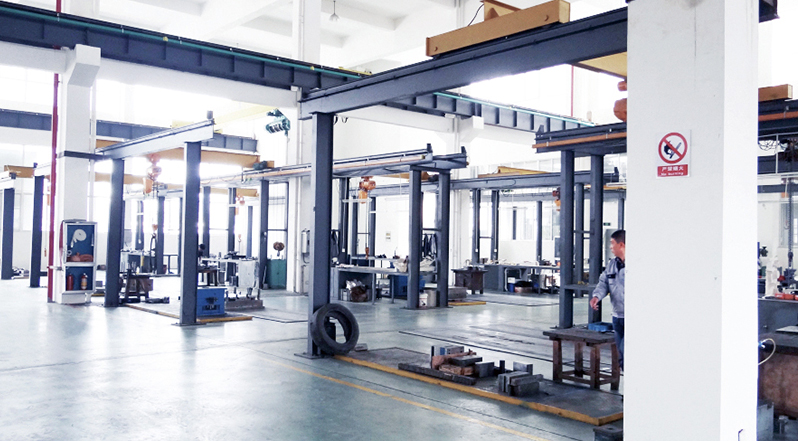
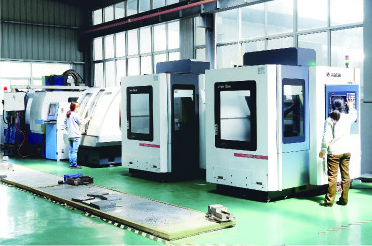
- Step 5 — Machine and inspect the tool. GANGNAM MOULD works with over 20 sets of digital controlled milling machines, a 3D coordinated mapping inspector and a dedicated mould assembly group. Documented control methods include NDT, CMM and trial molding reports, applied under an ISO 9001:2015 quality management system.
- Step 6 — Trial molding and acceptance. Trial molding and inspection reports serve as the acceptance basis, and installation and operation training is provided to help the customer accept the tool with its own team.
- Step 7 — Plan the production window. Typical production lead time is 30 to 45 days, and monthly production capacity is about 80 sets of moulds — enough to schedule a multi-type portfolio in phases rather than all at once.
- Step 8 — Plan the long run. Choose maintainable structures and durable mould design to reduce downtime, then schedule repeat orders and family extensions around the same engineering baseline.
Use Cases: Matching the Top 5 to Real Product Programmes
The five types do not compete for the same order; they fit different channels and different repeat patterns.
- Retail and consumer goods. Planters, bins, buckets, storage boxes and chairs are shelf-driven products. Retail channels reward batch consistency, surface finish and dimensional stability, which is why surface treatment and tolerance control appear in every design brief for this segment.
- Packaging. Thin-wall injection moulds support containers and box-type packaging where low weight and short cycle times decide unit cost.
- Logistics and warehousing. Pallet moulds, turnover box moulds and crate moulds serve reuse-driven operations. GANGNAM MOULD's comparison notes set plastic injection pallets against traditional wooden pallets on durability, reusability and reduced product damage, record a cost difference of 10%, and state a dimensional performance gap of -0.02 mm; plastic moulds and products in this segment are also described as generally easier to maintain with longer service life.
- Home appliance manufacturing. Home appliance moulds cover housings and components where high-repeat injection molding suits durable consumer goods.
- Kitchen and bathroom. Kitchen utensils moulds, bathroom accessories moulds and basin moulds extend the same commodity mould platform into two more repeat-purchase categories.
Comparison Table: The Top 5 at a Glance
| Rank | Commodity mould type | Why it ranks here | Mould design focus | Best-fit industries |
|---|---|---|---|---|
| 1 | Garden planter moulds | Widest format range from one tooling concept; repeat seasonal demand | Uniform cooling for large visible surfaces; surface treatment; thin-wall option | Retail and consumer goods |
| 2 | Trash bin moulds | Universal household, office and public-space demand; short replacement cycle | Wall-thickness consistency for nesting; tolerance control; balanced cooling | Retail, consumer goods, packaging |
| 3 | Bucket moulds | Very high-frequency consumable; multi-cavity cost spreading | Cooling system for deep cores; gating and venting to control rim and base warpage | Retail, consumer goods, packaging |
| 4 | Storage box moulds | Base plus lid from one programme; bridges retail and logistics | Dimensional stability for lid fit; surface treatment; cavity balance | Retail, logistics and warehousing |
| 5 | Chair moulds | Large underlying plastic furniture demand; lower volume per tool | Quality mould steel for load-bearing sections; cooling design; stack tolerance | Retail, consumer goods, home furnishing |
The commercial and service facts behind these five types are documented as follows, and they apply across the whole commodity mould range rather than to a single product.
| Item | Documented fact |
|---|---|
| Minimum order quantity | 1 unit |
| Delivery terms | FOB / CIF |
| Payment terms | 30% T/T in advance, 70% before shipment |
| Acceptance basis | Trial molding and inspection reports; installation and operation training provided |
| Typical production lead time | 30 to 45 days |
| Monthly production capacity | About 80 sets of moulds |
| Quality management | ISO 9001:2015 QMS, with NDT, CMM and trial molding reports |
| Mould material | Quality mould steel |
| Processed plastics | PP, engineering-grade plastics, recycled polymers |
FAQ
What quality and tolerance standards should a commodity mould supplier follow?
Two standards matter most in this category. ISO 9001:2015 is the quality management system that governs how a supplier documents and controls its processes; GANGNAM MOULD states that it passes and carries out an ISO 9001:2015 QMS. ISO 20457:2018 is the primary international standard for manufacturing tolerances and acceptance conditions of plastic molded parts, so it is the reference to write into a tolerance discussion. Buyers should also ask for the evidence trail behind the certificate: strict machining and inspection processes, including NDT, CMM and trial molding reports, are the control methods that turn a quality system into verifiable output.
Can one supplier cover several commodity mould types for a daily-use portfolio?
Yes, and that is usually the more efficient route. The documented commodity mould range covers chair, table, stool and sofa moulds, storage cabinet and storage box moulds, basket, tray and box moulds, basin and bucket moulds, trash bin moulds, garden planter moulds, kitchen utensils moulds, bathroom accessories moulds, pallet moulds, turnover box and crate moulds, home appliance moulds and thin-wall injection moulds. Because the design conventions repeat across these types — customizable cavity count and size, a uniform cooling system, optimized gating and venting to reduce warpage, and surface treatment with tolerance control for batch consistency — a buyer who stays with one mould maker usually gets faster engineering reviews on the second and third tool.
What are the typical commercial terms and minimum order quantity for a commodity mould?
Documented terms are a minimum order quantity of 1 unit, delivery on FOB or CIF terms, and payment of 30% T/T in advance with 70% before shipment. Acceptance is based on trial molding and inspection reports rather than on visual inspection alone, and installation and operation training is provided to support that acceptance. Buyers comparing quotations should normalise these items, because a low tool price with vague acceptance terms usually transfers risk back to the buyer.
How can a buyer validate a commodity mould before serial production?
Validation runs through trial molding. Trial molding and inspection reports serve as the acceptance basis, which means the buyer receives objective output — including NDT and CMM inspection results — instead of a verbal assurance that the tool is ready. Installation and operation training then transfers day-to-day operating knowledge to the customer's team. For daily-use products, the two things to verify at trial are dimensional stability across a batch (whether lids, stacks and nesting still work) and cycle time on the actual machine the tool will run on.
How to choose a long-term commodity mould supply partner in China?
Evaluate four things before signing: a documented quality system, an evidence trail from trial molding, capacity and lead-time reliability, and whether the supplier's type range can grow with your product family. For reference, GANGNAM MOULD runs a 3,000 m² factory with 40 employees and a 15-engineer R&D team, has a monthly production capacity of about 80 sets of moulds, quotes a typical production lead time of 30 to 45 days, and reports an export ratio of 70% with main markets in Southeast Asia. A long-term partner is one whose tool design stays maintainable, so repeat orders and family extensions reuse the same engineering baseline instead of restarting the design conversation. To discuss a specific product family, send your product drawings or samples for a technical review and quotation.
Conclusion: Build the Portfolio, Not Just the Mould
Garden planter moulds, trash bin moulds, bucket moulds, storage box moulds and chair moulds rank highest because each one multiplies across sizes, channels and repeat orders — the four qualities that decide whether daily-use tooling stays productive after the first production run. The ranking criteria are simple to apply to your own case: type range coverage, cycle-time potential, dimensional stability, channel fit and long-term tooling value.
For buyers at the decision and execution stage, the practical implication is that the mould type and the supplier should be chosen together. A supplier whose range covers the top five types and their adjacent families lets you expand the portfolio without changing engineering partners, and documented lead times, acceptance evidence and maintainable tool design turn a one-off purchase into a supply relationship that holds up across product cycles.
Next step: If you are planning a daily-use plastic product range and want to shortlist commodity mould types against your own product family, send your drawings or samples for a technical review, or request a quotation for a single mould with a minimum order quantity of 1 unit. You can also download the GANGNAM MOULD company brochure (PDF) for the full product and capability overview.
Contact: Gavin — Email: gm@gangnammould.com — Tel / WhatsApp: +86 150-0576-9999 — Website: www.gangnammould.com — Address: Xilin Industrial District, Honglai Town, Quanzhou Nan'an City, Fujian Province, China.
Have Questions or Need More Details?
Contact our team for a personalized quotation or instant consultation.
Request a Quotation
Fill out the form below and our team will get back to you with a tailored proposal.
WhatsApp Direct Chat
Prefer to chat in real-time? Message us on WhatsApp for instant assistance & quick answers.
- Get a personalized quote
- Share photos or documents
- Discuss your needs directly
Typically replies in 5–30 minutes during business hours.