
Optimizing Multi-Cavity and Cooling Design for Commodity Moulds
Optimizing Multi-Cavity and Cooling Design for Commodity Moulds
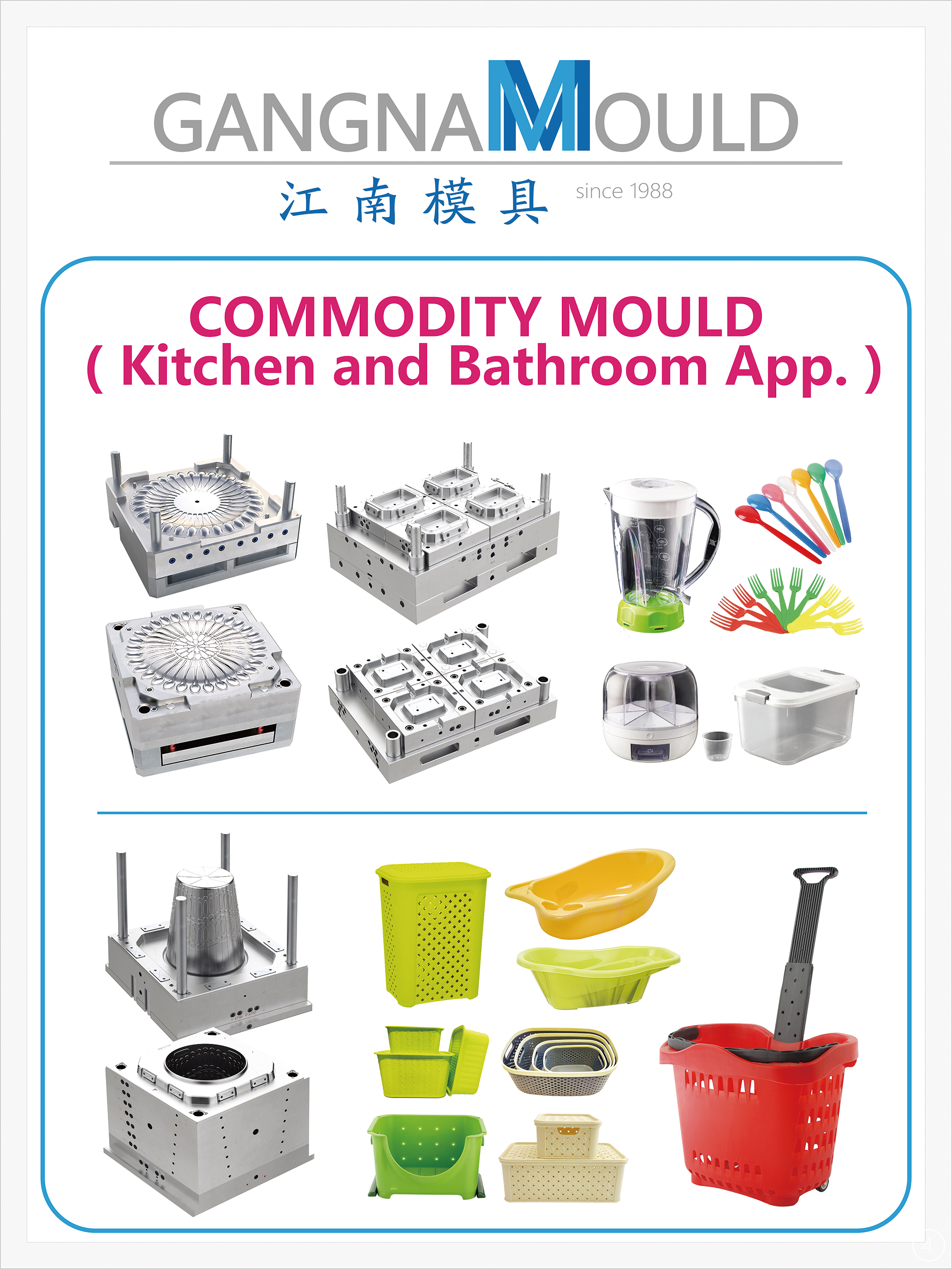
Short answer: In a commodity mould, cycle time and dimensional consistency are decided less by the outer size of the tool than by two internal design systems — how many cavities are cut, and how uniformly those cavities are cooled. A balanced multi-cavity layout combined with an even cooling circuit shortens cooling time, limits warpage at the gate and at the far end of the flow path, and is what allows critical dimensions to stay inside a narrow band, including tolerance targets as tight as 0.02 mm, across a long production run.
Commodity moulds are the tooling behind chairs, tables, stools, buckets, basins, storage boxes, crates, pallets, garden planters and thin-wall containers. They are bought in volume and run for years, so once the tool is on the machine the only two numbers that matter are parts per hour and parts per reject bin. Multi-cavity design and cooling design are the two levers that move both numbers at the same time.
GANGNAM MOULD CO., LTD (Zhejiang Huangyan Jiangnan Mould Factory) is a plastic mould manufacturer established in 1988 that builds commodity moulds for daily-use and industrial plastic products. Its documented commodity mould design parameters are: customizable cavity count and size, a uniform cooling system to shorten cooling time, optimized gating and venting to reduce warpage, and surface treatment and tolerance control for batch consistency. Those four parameters form the spine of this technical guide.
Problem Definition: Why Multi-Cavity Commodity Moulds Drift Out of Tolerance
When a commodity mould moves from one cavity to four, eight or more, the cost per part falls — but the process window narrows. Three failure modes appear, and all three end up as dimensional problems on the buyer's quality report.
Fill imbalance between cavities
A multi-cavity mould fills through a runner system, and any difference in flow resistance between cavities shows up as a difference in fill time. The cavity that fills last is either over-packed or under-filled depending on the transfer point, and the result is a shot in which the parts are not identical even though they came from the same tool. The correct fix is a balanced gating design, not a longer hold time: hold pressure cannot repair a fill imbalance that was created in the runner.
Cooling imbalance and post-ejection shrinkage
Cooling is normally the longest single phase of an injection cycle, and it is also where dimensional variation is locked into the part. If one side of a cavity extracts heat faster than another, the part leaves the mould with a differential temperature profile and continues to shrink unevenly after ejection. In thin-wall parts the effect compounds quickly, because a thin wall carries less thermal mass to redistribute heat. A uniform cooling system designed to shorten cooling time is therefore not only a cycle-time feature — it is a tolerance feature.
Venting starvation at the end of fill
Adding cavities compresses the air that has to leave each cavity into a shorter fill window. Without adequate venting, trapped gas raises fill pressure, burns the material at the last-fill point, and forces higher injection pressure that increases internal stress in the part. Optimized venting reduces that pressure demand and works together with gating to reduce warpage.
Industry Background: The Demand Pressure Behind Better Tool Design
The commercial backdrop explains why mould design has shifted from a craft conversation to a specification conversation. Grand View Research estimated the global plastic mould market at approximately USD 29.5 billion in 2021 and projected it to reach USD 36.78 billion by the end of 2025. China's exports of plastic and rubber moulds reached USD 5.35 billion in 2023, up from USD 2.97 billion in 2017, according to UN Comtrade data reported by JBRplas.
Two product segments inside that market put the most pressure on cooling and cavity design. The global thin-wall mould market was valued at USD 41.6 billion in 2024 by Market Research Future, driven by injection molding's ability to produce complex, lightweight designs with minimal cycle times. In parallel, Grand View Research valued the global plastic furniture market — chairs, tables and storage — at USD 48.7 billion in 2023, with the residential segment holding a 53.1% revenue share. Both segments rest on the same engineering premise: thin walls and high cavity counts only pay off when cooling is uniform.
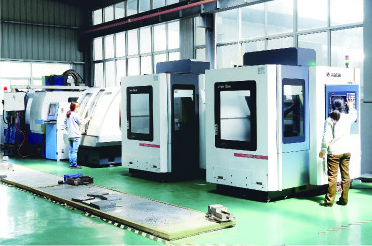
The supplier base is geographically concentrated. Huangyan District in Taizhou is officially recognized as the 'Capital of Molds' in China, housing 614 large-scale industrial enterprises specializing in mould and plastic production, according to Huangyan News Network. GANGNAM MOULD operates inside that cluster: established in 1988 with a 3,000 m² factory, 40 employees, a 15-engineer R&D team, annual output of 800 units and an export ratio of 70%, supported by more than 20 digital controlled milling machines, a 3D coordinate mapping inspector and a dedicated mould assembly group.
Detailed Solution: The Design Levers That Hold a Tight Tolerance Band
The commodity mould design parameters published by GANGNAM MOULD translate into six engineering levers. Each is described below together with the reason it affects cycle time, tolerance, or both.
1. Cavity count and layout: match the tool to the machine and the volume
Customizable cavity count and size sounds like a catalogue option; in practice it is a constraint problem. Cavity count is set by part size, wall thickness, the shot capacity and tonnage of the press the buyer intends to run, and the annual volume required. A layout that suits a small cosmetic part on a mid-size machine will not suit a pallet or a turnover crate, where part weight and projected area dominate. Because the answer depends on the buyer's own production line, cavity count and layout are confirmed during requirement communication rather than quoted as a default. Inserts and multi-component integration can also be designed in where a family of similar parts has to share one mould base.
2. Cooling circuit architecture: the lever that sets cycle time
The uniform cooling system in a commodity mould exists to shorten cooling time, and cooling is normally the longest phase of the cycle. Uniformity matters as much as speed. A circuit that is fast on one side of the core and slow on the other produces a part that is dimensionally different from its neighbour in the same shot. Practical architecture decisions include separate circuits for cavity and core so that each can be controlled independently, baffles or bubblers in deep cores so the heat path does not dead-end, circuit spacing that follows the part contour instead of a rectangular grid, and balanced manifolds so that flow is shared evenly across cavities. Where a mould is engineered for large or thin-wall parts, cooling layout is treated as a special design requirement rather than a standard template.
3. Gating design: where warpage is decided
Optimized gating to reduce warpage is a design statement with a clear mechanism. Gate position sets where the flow front starts and how it sweeps the cavity. An unbalanced runner sends more material to near cavities and less to far cavities, producing different packing pressures, different shrinkage, and measurable differences in the finished part. Good practice is to balance the runner so that all cavities fill at the same time, to place gates so that the flow front reaches the end of the cavity symmetrically, and to select a gate type and size that can be degated without marking a visible surface. Gate design and cooling design are interdependent: a gate placed to reduce warpage will still fail if the cooling circuit freezes that area first.
4. Venting: the cheapest reliability feature in the tool
Optimized venting to reduce warpage works by lowering the pressure required to fill the cavity. Trapped air at the last-fill point resists the incoming melt, so the press compensates with higher injection pressure and faster fill, which raises internal stress and increases the risk of burn marks and short shots. Venting along the parting line, at the end of the runner, and through vent inserts or ejector clearances gives that gas somewhere to go. In multi-cavity tools, venting is what keeps every cavity inside the same process window — without it, the cavity furthest from the sprue behaves differently no matter how well the runner is balanced.
5. Mould steel and surface treatment: repeatability, not decoration
Commodity moulds are built from quality mold steel, and the surface specification is treated as a repeatable process parameter rather than a cosmetic choice. Surface texture and polish can be customized to the buyer's requirement, and material and heat-treatment requests can be accommodated in the design. This belongs in an engineering discussion because surface finish affects demoulding force and, in textured parts, can shift measured dimensions slightly. When a mould is designed for batch consistency, texture depth and polish standard are specified per cavity so that part twenty thousand looks and measures like part two hundred.
6. Tolerance control and batch consistency: prove it, do not promise it
Tolerance control in a commodity mould is verified rather than asserted. The documented inspection chain for this commodity mould product combines non-destructive testing (NDT), CMM measurement, and full-size trial testing with inspection reports. That combination answers the buyer's real question — not 'can you hold 0.02 mm?' but 'how do you demonstrate that the tool held it across a multi-cavity shot at first trial?' A CMM report produced on a full set of trial parts is evidence; a verbal assurance is not. Processed materials include PP and engineering-grade plastics as well as recycled polymers, which makes documented verification more important rather than less, because recycled content can vary in flow behaviour between batches.
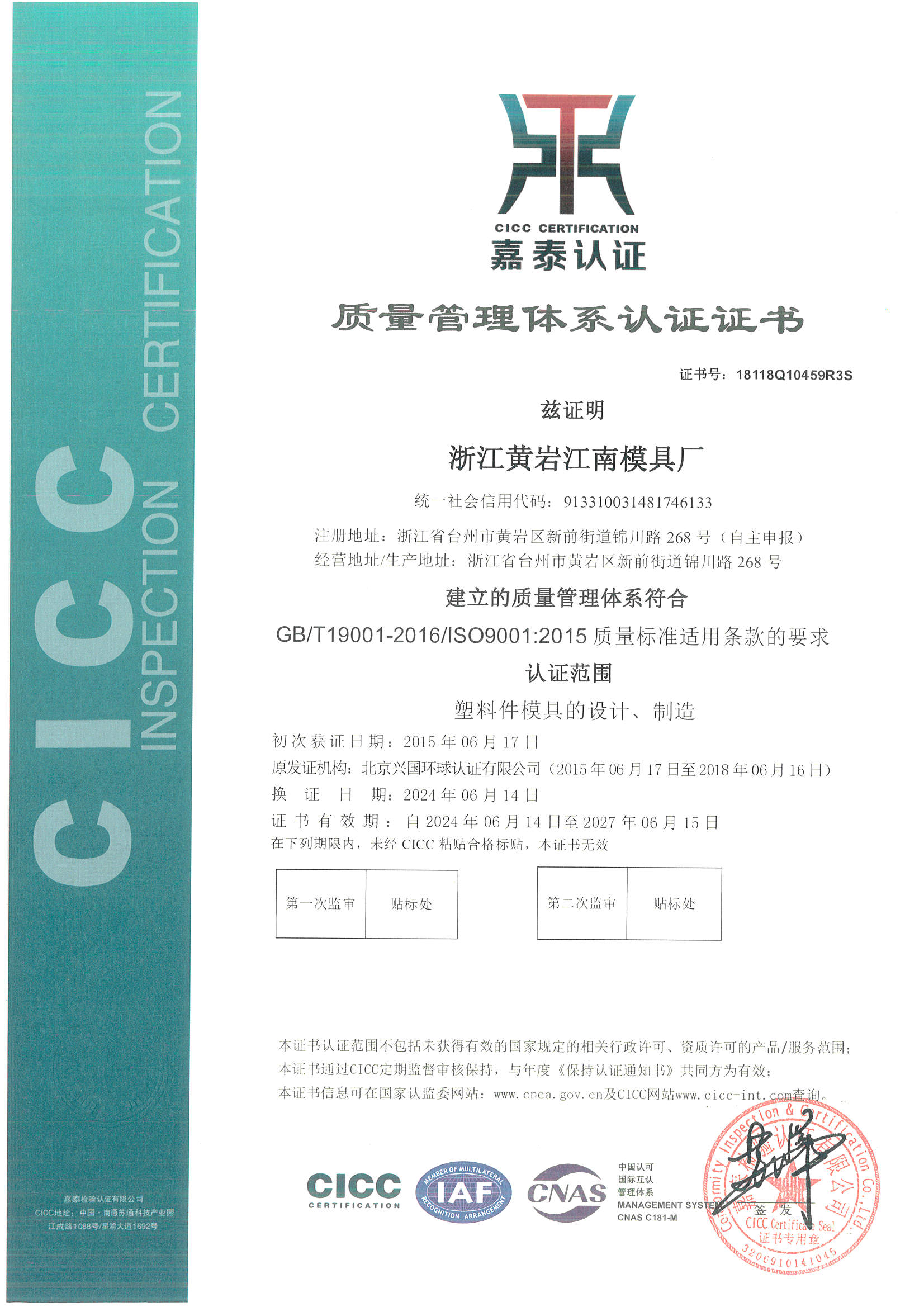
The quality system behind that process is certified. The commodity mould product is certified to the ISO 9001:2015 quality management system under certificate number 18118Q10459R3S, issued by Beijing Xingguo Inspection and Certification Co., Ltd., valid from 14 June 2024 to 15 June 2027, with a scope covering the manufacture and design of plastic parts mould and applicability to the global market.
Step-by-Step Breakdown: From Requirement to a Validated Multi-Cavity Tool
The documented workflow runs from requirement communication through design, manufacturing and trial inspection to delivery and training. For a multi-cavity commodity mould, each stage has a specific technical output that the buyer should expect to see.
- Requirement communication. Part drawings or samples, resin type, machine data, target annual volume and the tolerance features that actually matter. Cavity count, surface treatment, inserts and multi-component requirements are confirmed at this stage rather than assumed. Specific technical parameters are confirmed during requirement communication.
- Design. A 15-engineer R&D team develops the layout: cavity arrangement, cooling circuit routing, runner and gate balance, venting paths, and steel and heat-treatment selection.
- Manufacturing. More than 20 digital controlled milling machines and a dedicated mould assembly group carry the design into steel, with a 3D coordinate mapping inspector used to check geometry against the model.
- Trial and inspection. Trial moulding is run, parts are measured by CMM, NDT is applied to tooling where required, and full-size trial testing is documented in inspection reports.
- Delivery and training. The mould is delivered with installation and operation training, and the inspection reports produced during trial stay with the tool.
- Capacity and timing. Monthly capacity is about 80 sets of moulds, the minimum order quantity is 1 unit, and typical lead time is 30–45 days depending on mould complexity, confirmed per order.
Use Cases: Where Multi-Cavity and Cooling Design Decide Output
Thin-wall containers and appliance housings
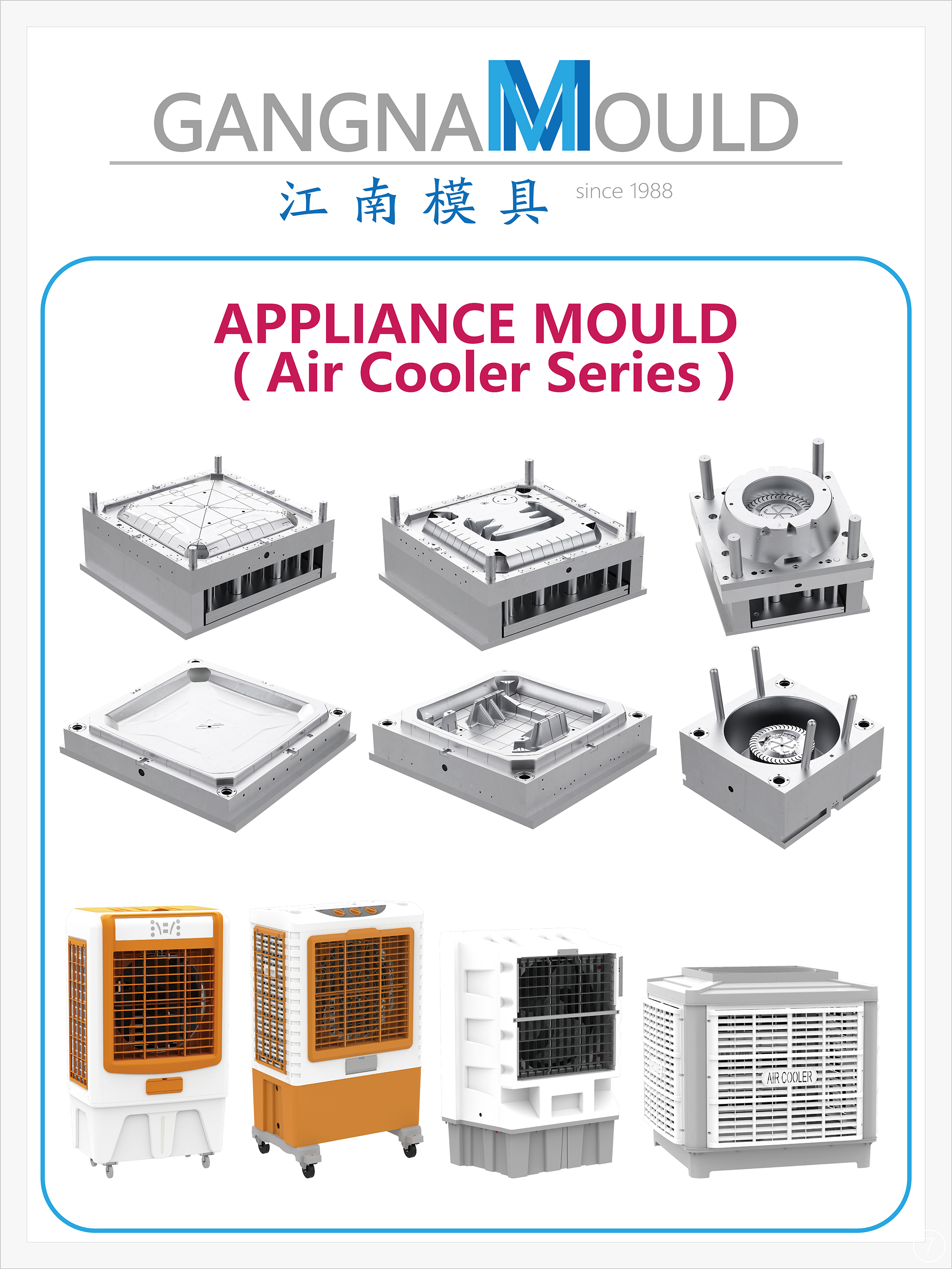
Thin-wall injection moulds are listed among GANGNAM MOULD's commodity mould types, and thin-wall parts are treated as a special design requirement for both large and thin-wall geometries. Thin walls fill and freeze quickly, so the cooling circuit must remove heat fast and evenly across the whole cavity, and the gate must deliver material before the flow front freezes off. Home appliance component mould development is one of the project types served, and home appliance manufacturing is one of the listed application industries; air cooler series moulds are an example of that appliance tooling family.
Logistics: pallets, turnover crates and tool boxes
Pallet moulds and turnover crate moulds are built for logistics and warehousing applications, and the documented applications include injection pallets, circulation crates and daily plastic containers. These parts are large, often heavy and always handled roughly, so wall uniformity across a big projected area is what keeps a stack stable. Injection and blow moulding are both represented in this product family, and crate and tool box moulds belong to the same group.
Household, sanitary and storage products
Bucket and basin series moulds, trash bin moulds, storage cabinet and box moulds, basket, tray and box moulds, and kitchen utensils and bathroom accessories moulds make up the volume end of daily-use plastics. Multi-cavity layouts are common in these families because the parts are small to medium in size and demand is continuous, which is exactly the situation where per-shot balance pays back over a long run.
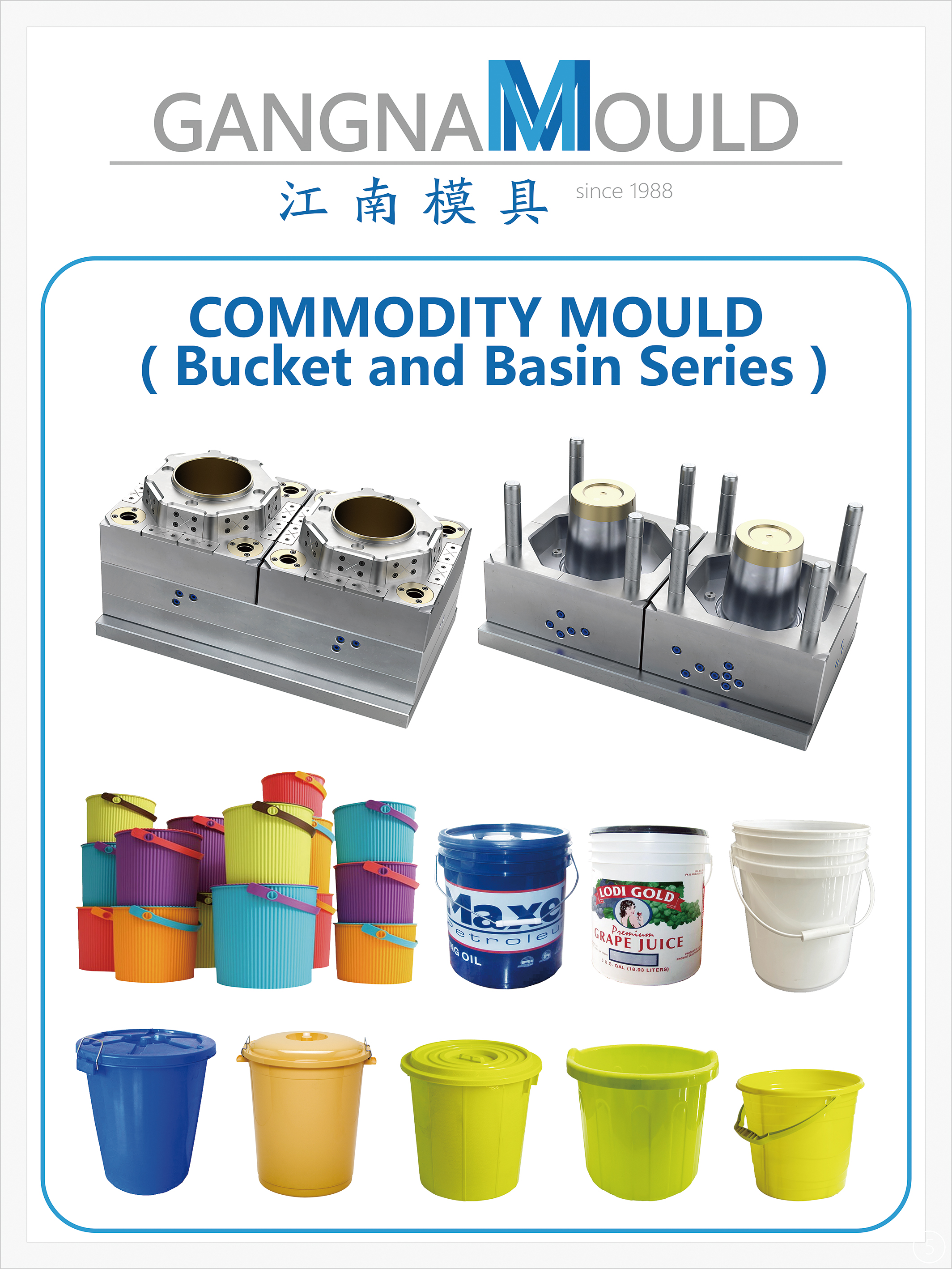
Furniture and garden lines
Chair moulds, table moulds, stool moulds and sofa moulds, together with garden planter moulds, sit at the boundary between commodity and technical tooling: the parts are large, visible on all surfaces, and expected to stack or nest reliably. The residential segment accounted for a 53.1% revenue share of the USD 48.7 billion global plastic furniture market recorded by Grand View Research for 2023, which is the demand base behind these tools.
Comparison Table: Which Design Choice Protects Batch Consistency?
The table below compares the design choices that raise variation risk in a commodity mould against the choices that protect batch consistency. Every entry is drawn from the documented commodity mould design parameters, material and quality control records.
| Design variable | Choice that raises variation risk | Choice that protects batch consistency | Documented basis |
|---|---|---|---|
| Cavity count and layout | Cavity count fixed by habit rather than by machine capacity and annual volume | Customizable cavity count and size, confirmed against the buyer's production line during requirement communication | Commodity mould design parameters |
| Cooling system | Single shared circuit with grid spacing | Uniform cooling system to shorten cooling time, with cavity and core circuits controlled separately | Commodity mould design parameters |
| Gating | Unbalanced runner, gate chosen for trimming convenience | Optimized gating to reduce warpage, with runner balanced so cavities fill together | Commodity mould design parameters |
| Venting | Venting only at the sprue | Optimized venting across parting line, runner end and last-fill areas | Commodity mould design parameters |
| Steel and surface treatment | Finish matched by eye on the first cavity only | Quality mold steel with customizable surface texture and polish, plus material and heat-treatment requests | Product material and customization records |
| Tolerance verification | Visual check at trial | NDT, CMM measurement and full-size trial testing with inspection reports | Quality control methods |
| Quality system | Undocumented manufacturing process | ISO 9001:2015, certificate 18118Q10459R3S issued by Beijing Xingguo Inspection and Certification Co., Ltd., valid to 15 June 2027 | Certification record |
FAQ
What does 'CE-certified commodity mould manufacturers' mean, and which certification should a buyer check?
The documented certification for GANGNAM MOULD's commodity mould product is the ISO 9001:2015 quality management system, certificate number 18118Q10459R3S, issued by Beijing Xingguo Inspection and Certification Co., Ltd., valid from 14 June 2024 to 15 June 2027, with a scope covering the manufacture and design of plastic parts mould and applicability to the global market. Buyers searching for CE-certified mould makers should note that CE marking is a European conformity requirement applied to products and machinery placed on the EU market, not a mould-quality management certificate, so the two are not equivalents. For a mould project, the useful verification package is the quality system certificate plus the inspection evidence produced for the specific tool.
How many cavities can a commodity mould have, and who decides?
Cavity count and size are customizable and are confirmed during requirement communication. The number is not a catalogue value: it depends on part size and wall thickness, the press that will run the tool, the annual volume the buyer needs, and the balance between output per shot and the tightness of the tolerance band. Inserts and multi-component integration can also be designed in where a part family has to share one mould base.
What drives the cost of a multi-cavity commodity mould?
The main cost drivers are the ones that change the amount of design and machining work: cavity count and layout, the complexity of the cooling circuit, gating and venting design, mould steel selection and heat treatment, surface texture or polish requirements, and any inserts or multi-component features. Minimum order quantity is 1 unit and typical lead time is 30–45 days depending on complexity, so cost and schedule should be quoted against a defined specification rather than a generic mould type.
Can a buyer validate the design before committing to full production?
Yes. Moulds are run at trial, parts are measured by CMM, NDT is applied to tooling where required, and full-size trial testing is documented in inspection reports issued during trial. This lets a buyer evaluate cavity-to-cavity consistency against the agreed tolerance reference before the tool is signed off. For tight features, ISO 20457:2018 provides the international framework for manufacturing tolerances and acceptance conditions of plastic molded parts and is a practical standard to name in the specification.
What lead time and support should be expected after ordering?
Typical lead time is 30–45 days depending on mould complexity, with monthly capacity of about 80 sets of moulds and a minimum order quantity of 1 unit. Delivery includes installation and operation training, and the inspection reports produced during trial travel with the tool. Buyers who want to evaluate a specific multi-cavity or thin-wall project can review the full company catalogue and send drawings, resin data and machine details to gm@gangnammould.com for a design discussion.
Conclusion: What to Specify Before You Cut Steel
Multi-cavity layout and uniform cooling are not optional refinements added after a mould is designed — they are the two decisions that determine whether a commodity mould delivers parts per hour or parts per reject bin. The engineering sequence is consistent: decide cavity count against the machine and the volume, route cooling so every cavity loses heat at the same rate, balance the runner so all cavities fill together, vent the last-fill areas, specify steel and surface treatment as repeatable parameters, and verify the result with CMM measurement, NDT and documented full-size trial testing.
Specification checklist for a multi-cavity commodity mould: (1) cavity count and layout confirmed against the buyer's press and annual volume; (2) cooling architecture with separate cavity and core circuits and contour-following channels; (3) balanced gating designed to reduce warpage; (4) venting at parting line, runner end and last-fill zones; (5) quality mold steel with defined texture, polish and heat treatment; (6) a named tolerance reference such as ISO 20457:2018 plus the verification method; (7) the quality system certificate and trial inspection reports; (8) capacity, MOQ and lead time stated against a defined specification.
Next step: put your design data in front of the engineering team
GANGNAM MOULD designs and manufactures commodity moulds under an ISO 9001:2015 quality management system (certificate 18118Q10459R3S, issued by Beijing Xingguo Inspection and Certification Co., Ltd.), with documented CMM measurement, NDT and full-size trial inspection. Cavity count, cooling design, gating, venting and surface treatment are all confirmed against your own part, resin and machine data.
Download the catalogue: GANGNAM MOULD catalogue (PDF)
Contact: Gavin | Email: gm@gangnammould.com | Tel / WhatsApp: +86 150-0576-9999 | Website: www.gangnammould.com
MOQ 1 unit · Typical lead time 30–45 days · Monthly capacity about 80 sets
Have Questions or Need More Details?
Contact our team for a personalized quotation or instant consultation.
Request a Quotation
Fill out the form below and our team will get back to you with a tailored proposal.
WhatsApp Direct Chat
Prefer to chat in real-time? Message us on WhatsApp for instant assistance & quick answers.
- Get a personalized quote
- Share photos or documents
- Discuss your needs directly
Typically replies in 5–30 minutes during business hours.