OEM Commodity Mould Manufacturing: What a Supplier Must Prove Before Your Project
OEM Commodity Mould Manufacturing: What a Supplier Must Prove Before Your Project
OEM commodity mould manufacturing is not a catalogue purchase. It is a custom engineering task in which a supplier turns product drawings, material selection, output targets, and surface requirements into a production tool for high-volume plastic manufacturing. For buyers in the evaluation stage, the immediate question is how to verify that a mould maker has real OEM, ODM, and customization capabilities before committing a project.
GANGNAM MOULD CO., LTD (Zhejiang Huangyan Jiangnan Mould Factory) is a plastic mould manufacturer in Huangyan District, Taizhou, Zhejiang, China. The company was originally established in 1988 and focuses on commodity moulds for daily-use products. This article explains what OEM commodity mould manufacturing should include, which evidence matters during evaluation, and how a typical project moves from requirement to delivery.

Problem Definition: What Buyers Find Hard to Evaluate
Commodity moulds are used for products that appear simple: chairs, tables, stools, storage boxes, baskets, trays, basins, buckets, trash bins, pallets, crates, kitchen utensils, bathroom accessories, and thin-wall containers. But the moulds behind these products are not simple. A mould must control cooling time, gate position, venting, warpage, surface quality, and cavity count. If any of these variables is not designed well, the customer sees the result in cycle time, scrap rate, or inconsistent parts.
Evaluation-stage buyers therefore need more than a price quotation. They need evidence that the manufacturer can design the mould around the product, adjust the mould to production conditions, inspect it before shipment, and support installation at the customer site. A supplier that only offers a standard catalogue cannot satisfy that requirement. True OEM capability shows up in customization options, quality control procedures, and documented trial results.
Industry Background: Why Commodity Moulds Are a Global Sourcing Category
The mould industry serves large consumer markets. Grand View Research estimated the global plastic mould market at approximately USD 29.5 billion in 2021 and projected it to reach USD 36.78 billion by the end of 2025. China's exports of plastic and rubber molds reached USD 5.35 billion in 2023, a significant increase from USD 2.97 billion in 2017, according to UN Comtrade data cited by OEC.
End-use categories are also large. The global plastic furniture market, which includes chairs, tables, and storage products, was valued at USD 48.7 billion in 2023, with the residential segment holding a 53.1 percent revenue share. The global thin-wall mold market was estimated at USD 41.6 billion in 2024. These categories create continuous demand for commodity moulds in furniture, packaging, home storage, logistics, and home appliance production.
Production is clustered in specialised regions. Huangyan District in Taizhou is officially recognized as the 'Capital of Molds' in China, housing 614 large-scale industrial enterprises specializing in mold and plastic production. This cluster context matters to buyers because it gives manufacturers access to mould steel suppliers, CNC machining, heat treatment, and testing resources within a single region.
Detailed Solution: An OEM Commodity Mould Manufacturer Should Provide These Capabilities
OEM, ODM, and Customizable Production
The manufacturer provides OEM, ODM, and customizable production services. For buyers, this means the supplier can work from your product design or participate in developing a design that suits the mould. This is the first capability to confirm when the buyer stage is evaluation-to-execution.
Customization Dimensions That Affect the Mould
According to GANGNAM MOULD's product data, its Commodity Mould category is customizable in the following areas:
- Cavity count and cavity size, which affect output per cycle and part dimensions.
- Surface texture and polish, which determine the visible finish of the plastic part.
- Gating and cooling system design, which affect filling behaviour, cycle time, and warpage.
- Inserts and multi-component integration, which allow additional functions in one mould.
- Material and heat-treatment requests, which adapt the mould steel to production volume and resin type.
Quality Control That Can Be Checked
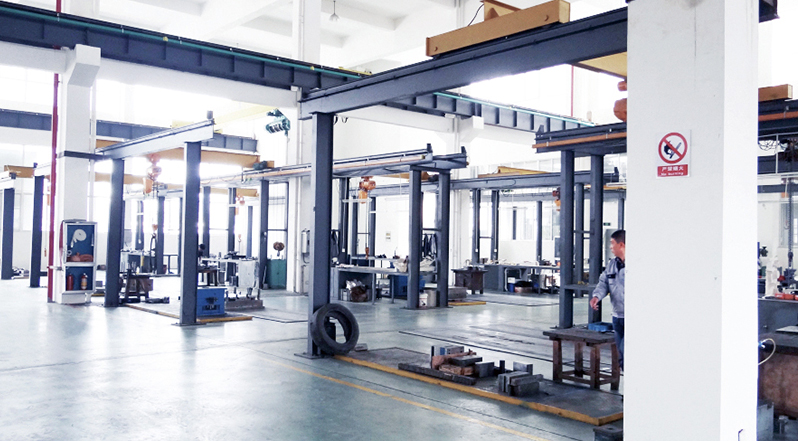
An OEM supplier should be able to explain how it checks mould quality. GANGNAM MOULD states that its quality control methods include non-destructive testing (NDT), coordinate measuring machine (CMM) measurement, and full-size trial testing, each accompanied by inspection reports. These methods are verifiable and specific. They give the buyer a documented basis for accepting the mould, rather than relying on a visual check alone.
Quality Management Certification
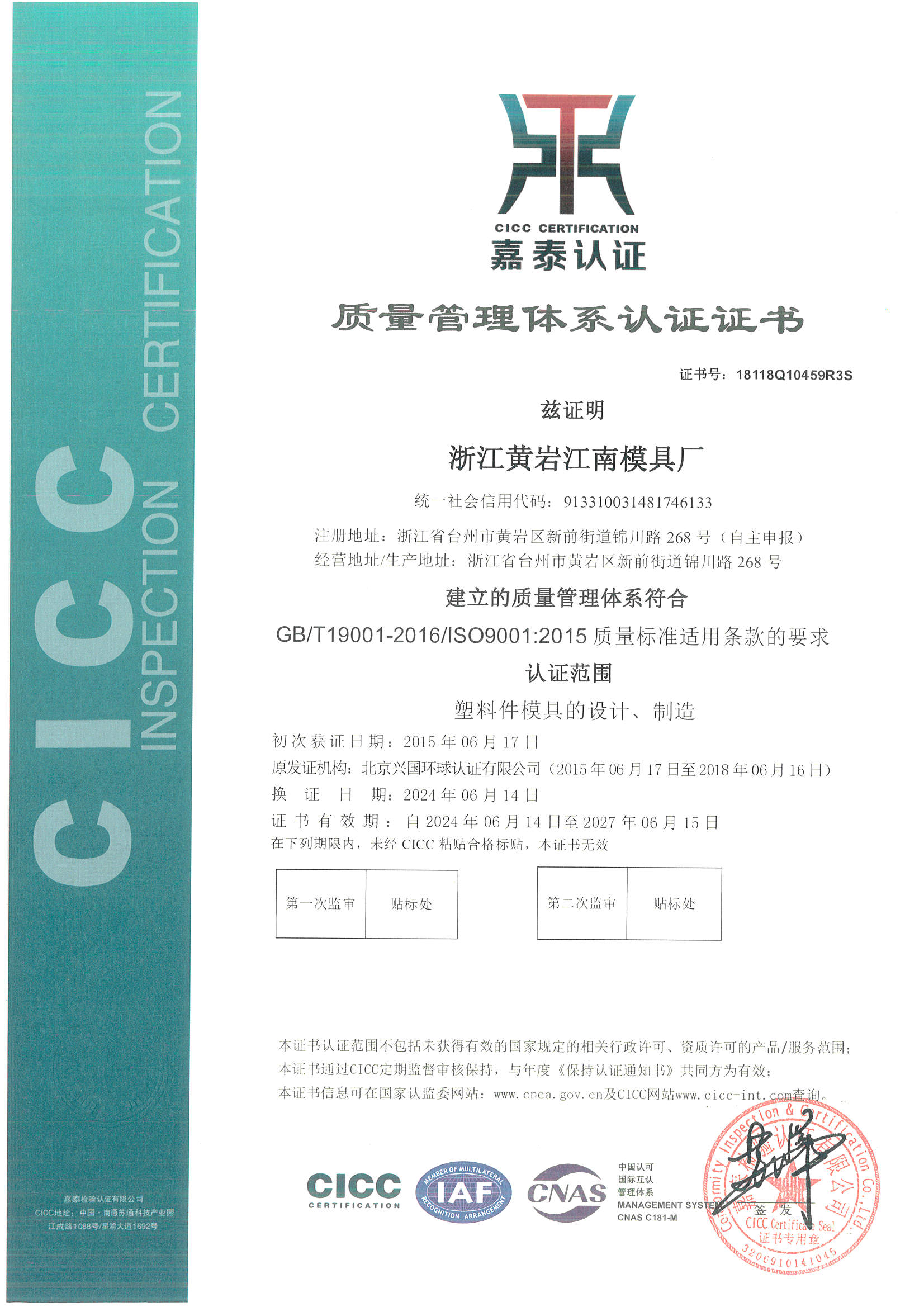
GANGNAM MOULD passes and carries out ISO 9001:2015 QMS. The certificate number is 18118Q10459R3S, issued by Beijing Xingguo Inspection and Certification Co., Ltd., with the scope 'Manufacture and Design of Plastic Parts Mould'. The certificate is valid from 14 June 2024 to 15 June 2027. ISO 20457:2018 is also the primary international standard for manufacturing tolerances and acceptance conditions of plastic moulded parts.
Capacity, MOQ, and Lead Time
For project planning, the following numbers matter:
- Monthly production capacity: approximately 80 sets of moulds.
- Annual production capacity: over 800 sets of moulds.
- Minimum order quantity: 1 unit.
- Typical lead time: 30 to 45 days, depending on mould complexity.
- Factory size: 3,000 square metres with 40 employees, including a 15-engineer R&D team.
About 70 percent of output is exported, with Southeast Asia identified as a primary market. Applicable markets also include the Middle East, Africa, Central Asia, South America, Mexico, Italy, and India. The company states that its lead time depends on mould complexity and follows the process: requirement, design, manufacturing, trial and inspection, delivery and training. Buyers should treat 30 to 45 days as a planning range, not a guarantee, until the supplier confirms a timeline for the specific mould.
Step-by-Step Breakdown of an OEM Commodity Mould Project
For buyers moving from evaluation to execution, it helps to understand the order of work. The following process is based on the production flow stated by GANGNAM MOULD.
1. Requirement
The buyer defines the plastic part, expected material, cavity count, finish, and production target. For commodity moulds, this often includes whether the part will be used for furniture, storage, logistics, or home appliance applications.
2. Design
The mould designer decides how the part will be filled, cooled, vented, and ejected. The product data for GANGNAM MOULD highlights design priorities such as a uniform cooling system to shorten cooling time and optimized gating and venting to reduce warpage. These decisions directly affect cycle time and part consistency.
| Mould Category | Typical Products | Design Focus |
|---|---|---|
| Furniture moulds | Chair moulds, Table moulds, Sofa moulds, Stool moulds | Cavity layout, cooling uniformity, warpage control |
| Storage moulds | Storage cabinet moulds, Storage box moulds, Box moulds, Turnover box moulds | Gating, venting, batch-to-batch size consistency |
| Home and kitchen moulds | Kitchen utensils moulds, Bathroom accessories moulds, Basin moulds, Bucket moulds, Trash bin moulds | Surface texture, polish, good release, tolerance control |
| Logistics and outdoor moulds | Pallet moulds, Crate moulds, Garden planter moulds | Structural strength, uniform cooling, stable dimensions |
| Thin-wall moulds | Thin-wall injection moulds | Lightweight design, minimal cycle time, filling stability |
Common commodity mould categories and the design areas buyers should discuss with a supplier.
3. Manufacturing
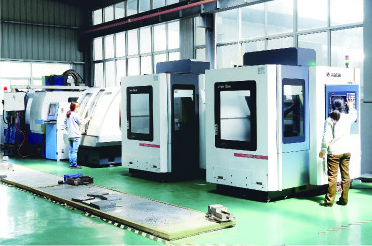
Mould manufacturing uses machine tools and assembly work. The company profile lists more than 20 sets of digital controlled milling machines, a 3D coordinated mapping inspector, and a dedicated mould assembly group. CNC machining is central to producing steel cavities with consistent accuracy.
4. Trial and Inspection
Before delivery, the mould is tested. GANGNAM MOULD says it performs full-size trial testing and provides inspection reports. NDT and CMM measurement are used as part of the quality control process. These reports are also used as the acceptance basis with the buyer.
5. Delivery and Training
The final step is delivery, installation, and operation training. The company states that it provides mould delivery, installation and operation training, supported by detailed inspection reports. Buyers should set clear acceptance criteria in the contract and use the trial report to confirm the mould meets those criteria. Specific after-sales provisions should be agreed in the contract.
Use Cases: Where OEM Commodity Moulds Are Applied
Commodity moulds of this type are applicable to packaging, retail, consumer goods, logistics and warehousing, and home appliance manufacturing. The processed plastics include PP and engineering-grade plastics, or recycled polymers in cases where the application permits them.
GANGNAM MOULD's project history includes a long-term custom mould program covering approximately 800 units over 10 years. According to company records, clients in multiple countries including Bangladesh, Algeria, India, Iraq, Italy, Jordan, Nigeria, and Turkey have been involved in this program. The moulds were applied to general-purpose parts such as injection pallets, circulation crates, daily plastic containers, and home appliance housings.
This use case shows the scope of an OEM commodity mould supplier. The same production system can support different product families because the customization work happens in cavity design, cooling, gating, and surface treatment, not just in the product name.
Frequently Asked Questions
What compliance evidence should an OEM commodity mould manufacturer provide?
Buyers should ask for a quality management system certificate that covers mould design and manufacture. GANGNAM MOULD holds ISO 9001:2015 certificate number 18118Q10459R3S, issued by Beijing Xingguo Inspection and Certification Co., Ltd., with the scope 'Manufacture and Design of Plastic Parts Mould'. The certificate is valid from 14 June 2024 to 15 June 2027. ISO 20457:2018 is also a relevant international reference for manufacturing tolerances and acceptance conditions of plastic moulded parts.
What customization capabilities should an OEM commodity mould manufacturer provide?
The key capabilities are OEM, ODM, and customizable production. In practical terms, the supplier should be able to adjust cavity count and size, surface texture and polish, gating and cooling system design, inserts and multi-component integration, and material or heat-treatment requests. These options determine how well the mould matches the product and production volume.
What is the MOQ and payment terms for an OEM commodity mould order?
GANGNAM MOULD sets the minimum order quantity at 1 unit. Delivery can be arranged under FOB or CIF terms. Payment is 30 percent T/T in advance and 70 percent before shipment. Trial moulding and inspection reports are used as the acceptance basis.
Can the manufacturer provide trial samples and inspection reports before delivery?
Yes. The manufacturer's quality control process includes non-destructive testing, CMM measurement, and full-size trial testing, each with inspection reports. The same trial reports serve as an acceptance basis, which means the buyer does not have to accept the mould based only on photographs or a simple visual check.
What is the typical lead time for an OEM commodity mould?
The typical lead time is 30 to 45 days, depending on mould complexity. The production process follows the sequence: requirement, design, manufacturing, trial and inspection, delivery and training. GANGNAM MOULD's monthly capacity is about 80 mould sets, so lead time should be confirmed by the supplier for each project.
Conclusion
OEM commodity mould manufacturing is a capability question, not a label. A supplier should be able to demonstrate customization options, quality control methods, production capacity, and a clear process from requirement to delivery. These are more useful signals than marketing language.
For buyers evaluating a supplier for chairs, tables, storage products, pallets, crates, or home appliance parts, GANGNAM MOULD provides a documented example of OEM and ODM production. The company can support projects with an MOQ of one unit, typical lead times of 30 to 45 days, and inspection reports during trial.
Next step
If you are checking whether a commodity mould manufacturer can handle your product project, contact GANGNAM MOULD for a project-specific timeline and quotation. Gavin: gm@gangnammould.com, +86 150-0576-9999 (WhatsApp). You can also download the company brochure for an overview of production and inspection capabilities, or visit www.gangnammould.com.
Have Questions or Need More Details?
Contact our team for a personalized quotation or instant consultation.
Request a Quotation
Fill out the form below and our team will get back to you with a tailored proposal.
WhatsApp Direct Chat
Prefer to chat in real-time? Message us on WhatsApp for instant assistance & quick answers.
- Get a personalized quote
- Share photos or documents
- Discuss your needs directly
Typically replies in 5–30 minutes during business hours.