Commodity Mould vs. Custom Mold: Which Investment Fits Your Production Line?
Commodity Mould vs. Custom Mold: Which Investment Fits Your Production Line?
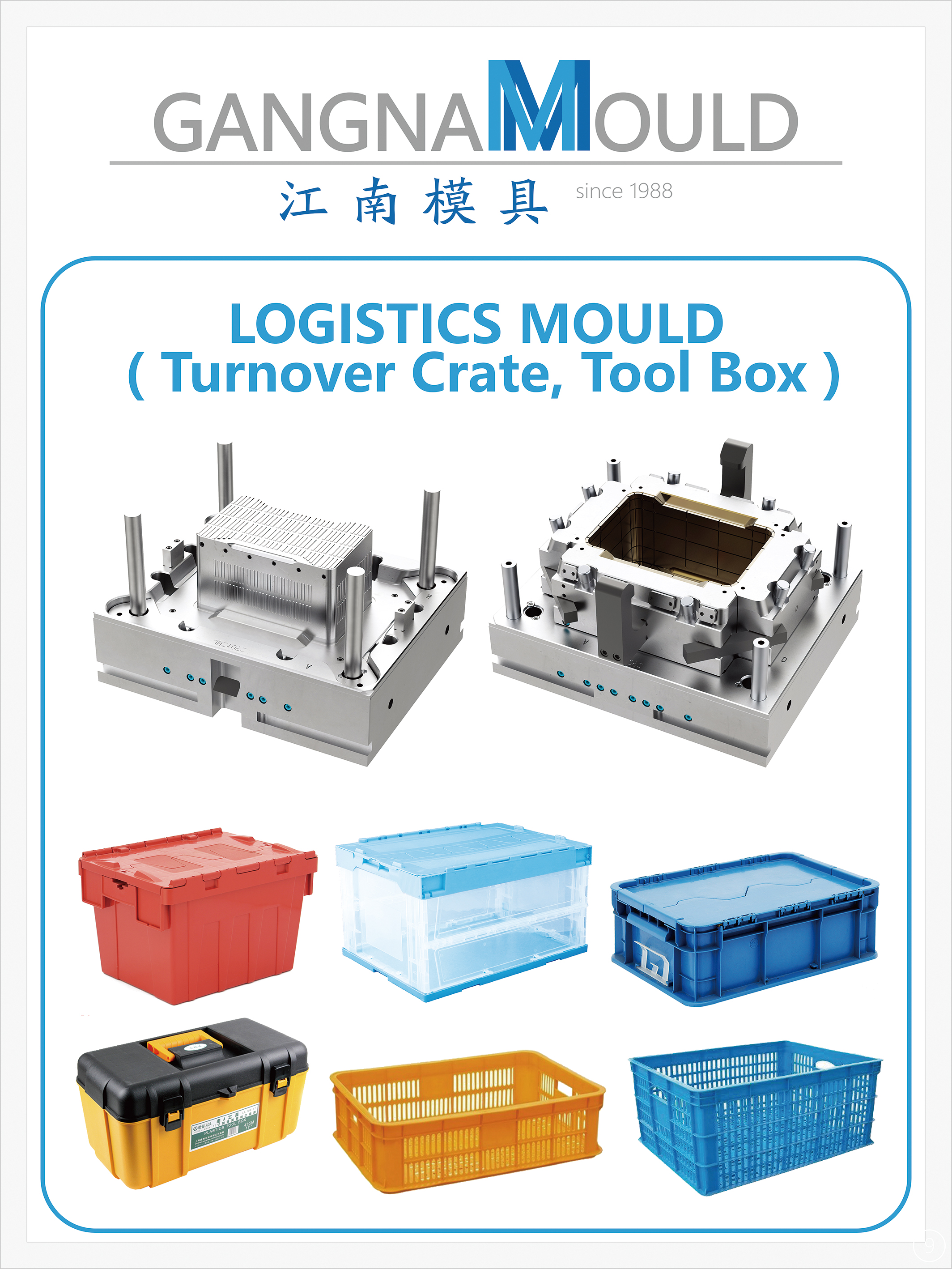
A commodity mould and a fully custom mold can both produce the same plastic part, but they are not interchangeable investments. The decision usually resolves into three inputs: how many parts your production line will actually run, what cycle time the line needs in order to stay economic, and how much tooling budget you are willing to lock into a single product design.
For most daily-use plastic products, the answer is clear enough. If the part sits inside an established product family — chair moulds, table moulds, stool moulds, storage box moulds, basket and tray moulds, bucket and basin moulds, trash bin moulds, garden planter moulds, or pallet and crate moulds — a commodity mould is normally the lower-risk investment, because the design logic behind it has already been proven in mass production. A fully custom mold becomes the better purchase when the part geometry, assembly fit or function is genuinely unique and no existing design family covers it.
GANGNAM MOULD CO., LTD (Zhejiang Huangyan Jiangnan Mould Factory) has built commodity moulds from its base in Huangyan District, Taizhou, Zhejiang, China since 1988. The comparison below reflects how that tooling is specified, validated and delivered — and where a from-scratch custom tool still wins.
What the Commodity-vs-Custom Decision Actually Is
“Commodity” and “custom” are often read as price tiers. They are not. They describe how the tool’s design begins.
A commodity mould begins with an established, standardized design family for a known category of plastic product. Engineering effort then concentrates on adapting that platform to a specific part, machine and volume — cavity count and size, cooling layout, gating and venting, surface treatment and tolerance control. A fully custom mold begins with nothing except the buyer’s part drawing: tool geometry, cooling circuits, ejection and gating are engineered from the ground up for one part that has no reusable family design behind it.
Misreading the distinction costs buyers money in both directions. Ordering a from-scratch custom tool for a product that already exists in a proven commodity family pays for engineering that adds no manufacturing value. Forcing a genuinely unique part into an existing commodity platform inherits dimensional and fit problems the platform was never designed to solve. The real question is therefore not “which tool is better,” but “which tool is correctly matched to this part and this line.”
Why This Decision Matters More Than It Used To
Tooling demand sits inside a market that has been compounding for years, and the numbers explain why buyers now have more options — and more ways to choose badly.
- Global mould market: Grand View Research estimated the global plastic mould market at approximately USD 29.5B in 2021, with a projection of USD 36.78B by the end of 2025.
- Sourcing concentration: China’s exports of plastic and rubber molds reached USD 5.35B in 2023, up from USD 2.97B in 2017 (JBRplas / UN Comtrade).
- Product-side demand: Grand View Research valued the global plastic furniture market — including chairs, tables and storage — at USD 48.7B in 2023, with the residential segment holding 53.1% of revenue.
- Thin-wall growth: the global thin-wall mold market was valued at USD 41.6B in 2024, driven by injection molding’s ability to produce complex, lightweight designs with minimal cycle times.
- Cluster effect: Huangyan District in Taizhou is officially recognized as the “Capital of Molds” in China and houses 614 large-scale industrial enterprises specializing in mold and plastic production (Huangyan News Network) — the cluster GANGNAM MOULD operates in.
The practical consequence for buyers is an asymmetry. Commodity mould capacity is widely available, heavily standardized and broadly comparable between suppliers. Custom tooling capability is a narrower and more skill-dependent purchase. That asymmetry is exactly why volume and cycle time have to be settled before price is discussed at all.
How a Commodity Mould Is Specified
Design priorities
A commodity mould is a tool built for mass injection and blow molding production lines, with design emphasis on durability, short cycle times and dimensional stability. Inside GANGNAM MOULD’s range that covers garden planter moulds, trash bin moulds, bucket moulds, basin moulds, storage box moulds, sofa moulds, table moulds and chair moulds, together with basket, tray, box, storage cabinet, kitchen utensil, bathroom accessory, pallet, crate, turnover box, home appliance and thin-wall injection moulds.
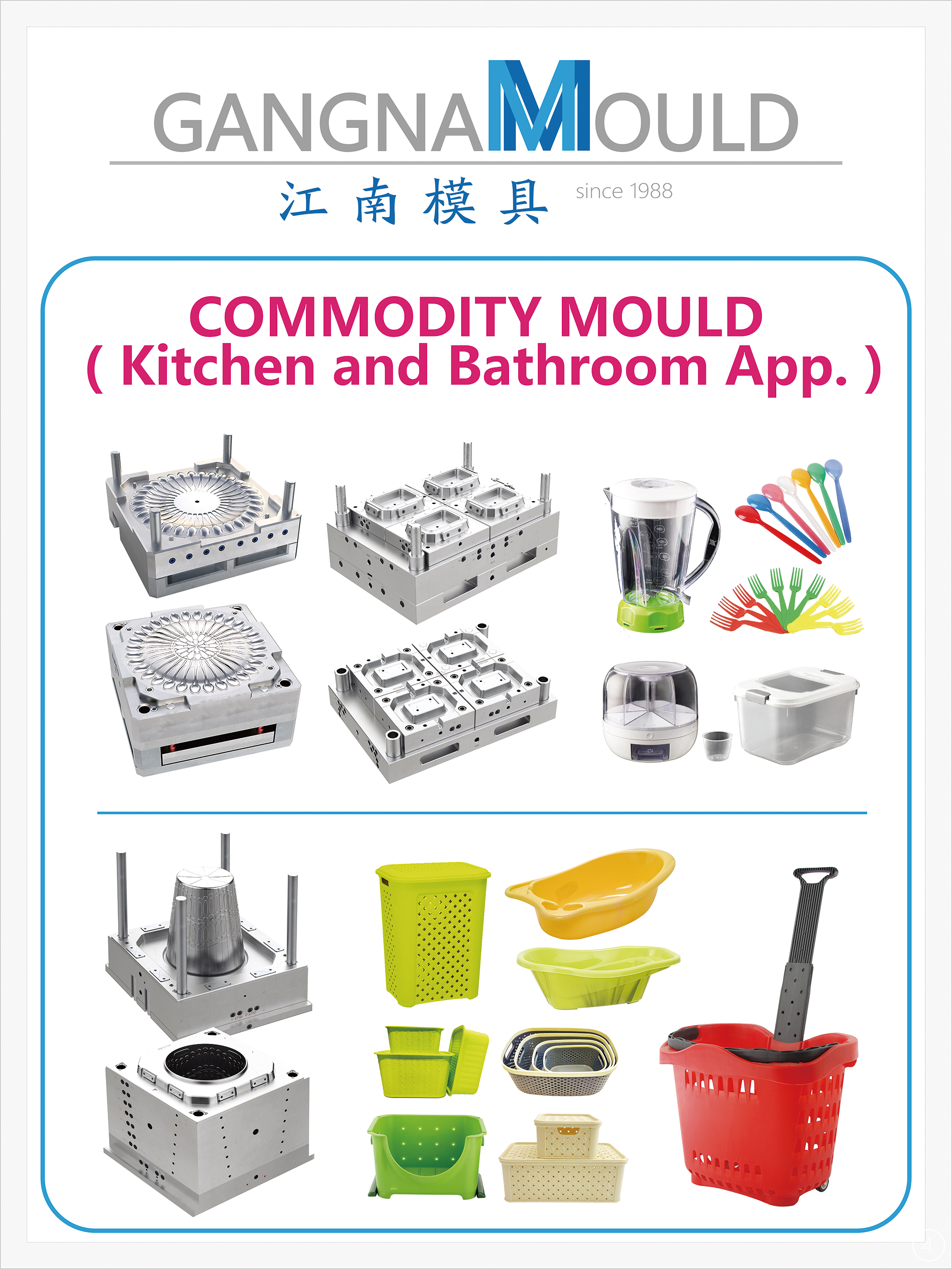
Across that range the specification priorities repeat: a customizable cavity count and size; a uniform cooling system designed to shorten cooling time; optimized gating and venting to reduce warpage; and surface treatment with tolerance control for batch consistency. A commodity mould is engineered around repeatability — the same part, produced to the same dimensions, run after run.
Material and machine base
Tools in this category are made from quality mold steel and are used to process PP, engineering-grade plastics and recycled polymers. How the tool actually runs depends on the buyer’s production line and the mould design — single-cavity or multi-cavity — and requires supporting equipment such as injection or blow molding machines, cooling systems, and automation for loading and unloading.
Validation and project support
Project scope runs end-to-end: from samples or drawings through trial molding and delivery, including installation and operation training. Customization covers adjustable cavity count, surface treatment, inserts and multi-component mould design, with specific technical parameters confirmed during requirement communication rather than assumed from a catalogue page.
The supplier base behind the tooling
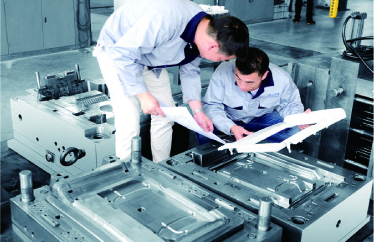
Gangnam Mould Co., Ltd was established in 1988 and operates a 3,000 m² manufacturing facility with approximately 40 staff and an R&D team of 15 engineers. The company holds over 20 sets of digital controlled milling machines and reports annual production capacity of 800 units. Export business accounts for 70% of total sales, with Southeast Asia as the main market, and quality management is carried out under ISO 9001:2015.
Those figures matter to the commodity-versus-custom decision in a specific way: they indicate a supplier organized around repeatable tool production rather than one-off prototype work. A fully custom tooling programme asks different questions of a factory — geometry risk, engineering hours, revision cycles — and buyers should test for that capability separately instead of assuming it transfers automatically.
Commodity Mould vs. Custom Mold: Side-by-Side
| Decision dimension | Commodity mould | Fully custom mold |
|---|---|---|
| Design starting point | An established, standardized design family for a known daily-use category — chairs, tables, stools, sofas, storage boxes, basins, buckets, trash bins, garden planters, pallets, crates, thin-wall parts | Engineered from the buyer’s part drawing alone, with no reusable family design |
| Customization scope | Adjustable cavity count and size, surface treatment, inserts, multi-component mould design | Full tool architecture defined by the part specification |
| Cooling design | Uniform cooling system designed to shorten cooling time | Cooling circuits engineered case by case around part geometry |
| Gating and venting | Optimized gating and venting to reduce warpage | Designed case by case for the specific part |
| Surface and tolerance | Surface treatment and tolerance control for batch consistency | Tolerances and acceptance conditions follow the part drawing |
| Mould material and processed plastics | Quality mold steel; PP, engineering-grade plastics and recycled polymers | Material base selected against the part’s processing requirement |
| Production mode | Mass injection or blow molding; single-cavity or multi-cavity depending on line and design | Defined by the part, the machine and the programme |
| Project support | End-to-end from samples or drawings through trial molding and delivery, including installation and operation training (GANGNAM MOULD) | Same end-to-end stages, but with more engineering hours before machining begins |
| Best-fit situation | High-volume, long-life daily-use products with stable geometry | Unique or low-volume parts with no family equivalent |
The commodity mould column reflects GANGNAM MOULD’s published product specifications. The custom mold column describes the definitional characteristics of drawing-driven tooling and is not a performance claim about any specific supplier. Both tool types produce parts governed by the same part specification — ISO 20457:2018 sets out the primary international standard for manufacturing tolerances and acceptance conditions of plastic molded parts.
Step-by-Step: How to Choose Between the Two
- Fix the real annual volume and the product’s life. The first number that decides this is not tooling cost — it is how many parts the line must run before the product is revised or discontinued. Commodity moulds are designed for mass injection and blow molding lines, so tooling cost is spread across a high-repeat run rather than absorbed by a short one.
- Test the part against existing commodity mould families. Walk the categories: chair moulds, table moulds, stool moulds, sofa moulds, storage cabinet and box moulds, basket and tray moulds, bucket and basin moulds, trash bin moulds, garden planter moulds, pallet moulds, crate and turnover box moulds, home appliance moulds, thin-wall injection moulds. If your part is a variation of one of these — different size, different surface, different colour — you are in commodity mould territory.
- Match cycle time to the line, not to a catalogue. Cycle time on a commodity mould is managed through cooling design, gating and venting. The evaluation question is therefore concrete: does the tool’s cooling and gating design support the cycle time my machine and automation can actually hold?
- Confirm tolerance and acceptance requirements in writing. ISO 20457:2018 is the international reference for manufacturing tolerances and acceptance conditions of plastic molded parts, and it gives your quality team and the mould maker a shared language. Check the supplier’s quality system at the same time — GANGNAM MOULD carries out ISO 9001:2015 QMS.
- Validate with samples and a trial molding run. Scope at GANGNAM MOULD covers samples or drawings through trial molding and delivery, including installation and operation training. Use that stage to verify dimensional stability and batch consistency before the tool is released to full production.
- Re-check capacity and cavity plan against your ramp. Annual capacity has to absorb the ramp, not just the launch order. GANGNAM MOULD reports 800 units of annual capacity and over 20 sets of digital controlled milling machines, with cavity count and size customizable per requirement.
Use Cases: Where Each Investment Fits
Furniture and seating programmes
Chair moulds, table moulds, stool moulds and sofa moulds are among the most standardized tooling in the daily-use category. Plastic furniture demand is large and stable — Grand View Research valued the global plastic furniture market at USD 48.7B in 2023, with the residential segment holding 53.1% of revenue — and the parts themselves change slowly. That combination is what makes commodity tooling work: long product life, high repeat volume, and dimensional requirements defined by how the part assembles rather than by a unique engineering function.
Household storage and organization
Storage cabinet moulds, storage box moulds, basket moulds, tray moulds and box moulds are specified around wall thickness, nesting geometry and stacking strength. A commodity mould handles these through cavity count, cooling and gating design rather than through a new tool architecture, which is why buyers can usually source them from a standardized range instead of commissioning a one-off tool.
Cleaning, kitchen, bathroom and outdoor lines
Bucket moulds, basin moulds, trash bin moulds, garden planter moulds, kitchen utensil moulds and bathroom accessory moulds share a similar production profile: high volume, short cycles and tight batch consistency. Uniform cooling and optimized venting do most of the work here — good cooling shortens cycle time, and correct venting reduces warpage across a multi-cavity layout.
Logistics, appliance and thin-wall parts
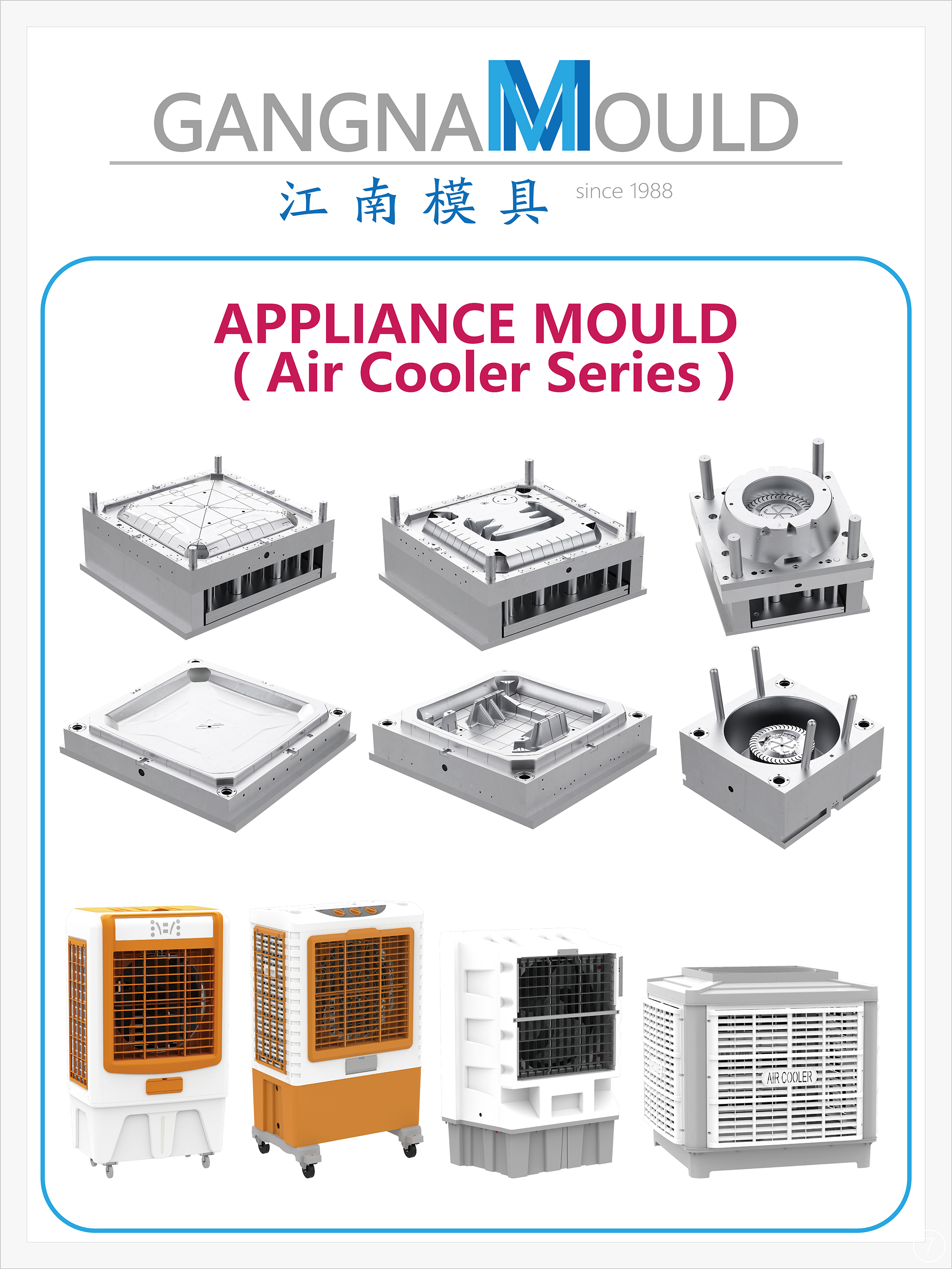
Pallet moulds, crate moulds, turnover box moulds, home appliance moulds and thin-wall injection moulds sit at the demanding end of the commodity category. The global thin-wall mold market was valued at USD 41.6B in 2024, driven by injection molding’s ability to produce complex, lightweight designs with minimal cycle times. Large parts and thin-wall parts both put pressure on cooling uniformity and gating balance — which is where a supplier’s design discipline, not the label on the tool, determines whether the investment performs.
When custom tooling is the right call
A fully custom mold is the correct investment when the part has no family equivalent: a new geometry, an unusual assembly interface, or a function that no existing product performs. In those cases, forcing the part onto a commodity platform produces dimensional and fit problems instead of savings. The honest decision rule is to use commodity tooling wherever the part is a variation of an established daily-use category, and to reserve custom tooling for parts that genuinely have no precedent.
Frequently Asked Questions
What should buyers look for in Commodity Mould manufacturers?
Four things decide the fit: whether the supplier’s range actually covers your part category — chair moulds, table moulds, storage box moulds, bucket and basin moulds, trash bin moulds, garden planter moulds, pallet and crate moulds or thin-wall injection moulds; whether its design work covers customizable cavity count and size, uniform cooling, optimized gating and venting, and tolerance control for batch consistency; whether quality management is documented; and whether capacity can absorb your volume. GANGNAM MOULD, established in 1988 in Huangyan District, Taizhou, reports 800 units of annual capacity and over 20 sets of digital controlled milling machines.
Are commodity moulds held to the same tolerance and quality standards as custom molds?
Yes. Manufacturing tolerances and acceptance conditions for plastic molded parts are set by the part specification and by the international standard ISO 20457:2018, which applies regardless of how the tool was designed. What differs is the starting point: a commodity mould carries surface treatment and tolerance control built for batch consistency across a standardized design family, while a custom mold’s tolerances are driven by the buyer’s drawing. On the supply side, quality management should be independently documented — GANGNAM MOULD operates under ISO 9001:2015.
Can a commodity mould be customized — cavity count, surface finish, inserts?
Yes, within limits. Commodity mould customization at GANGNAM MOULD includes adjustable cavity count and size, surface treatment, inserts and multi-component mould design. What a commodity mould does not do is invent new part geometry: it adapts a proven family — chair, table, stool, sofa, storage box, basket, tray, bucket, basin, trash bin, planter, pallet, crate or thin-wall moulds — to a specific part, machine and volume. Specific technical parameters are confirmed during requirement communication.
At what production volume does a commodity mould become the better investment than a fully custom mold?
The threshold is not a single number; it is the relationship between total production volume, expected product life and the tooling cost that must be amortized across those parts. Commodity moulds are built for mass injection and blow molding lines with design emphasis on durability, short cycle times and dimensional stability, so they spread tooling cost across a high-volume run. A fully custom mold is engineered from one part drawing with no reusable family design, which makes it correct for unique or low-volume parts — and the wrong purchase when the part is simply a variation of an established daily-use category.
What capacity and lead time should buyers expect from Commodity Mould manufacturers?
Capacity should be checked against your ramp, not against a general claim. GANGNAM MOULD reports annual production capacity of 800 units and over 20 sets of digital controlled milling machines, with export business accounting for 70% of total sales and Southeast Asia as its main market. Project scope runs from samples or drawings through trial molding and delivery, including installation and operation training — which is the stage where realistic lead time is confirmed against actual cavity count, surface and machine requirements. To start a project, request a sample or quotation at gm@gangnammould.com.
Conclusion: Match the Tool to the Line
The commodity-versus-custom question is settled by evidence rather than preference. Three tests decide it: whether the part belongs to an established commodity mould family; whether the line’s volume and cycle time justify a standardized tool built for repeatability; and whether the supplier’s capacity, quality system and validation process support that run.
Commodity moulds win when the part is a variation of a proven daily-use category and the volume is high enough to amortize tooling across many parts. GANGNAM MOULD’s design priorities — customizable cavity count and size, uniform cooling, optimized gating and venting, and tolerance control for batch consistency — exist specifically to protect that economics on mass injection and blow molding lines. Fully custom molds win when the part is genuinely new and no family design applies; the trade-off is a longer engineering path and tooling investment tied to a single geometry.
Next Step: Validate Before You Commit
The lowest-risk way to settle this decision is to test it on real output. Request a sample or quotation, send your part drawing for a cavity and cycle-time review, or download the full GANGNAM MOULD product brochure to see the complete commodity mould range.
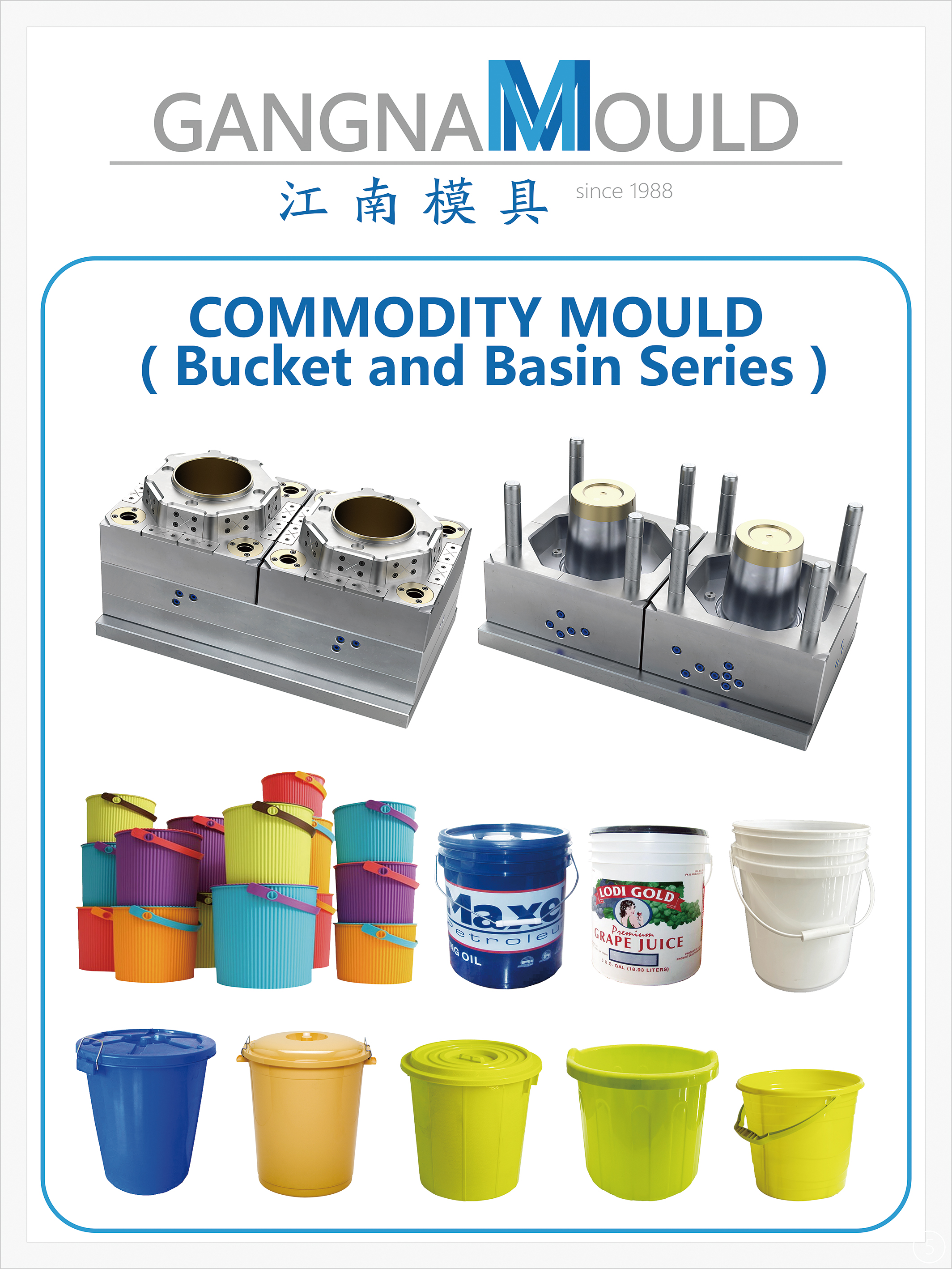
Brochure download: GANGNAM MOULD Product Brochure (PDF)
Website: www.gangnammould.com
Email: gm@gangnammould.com
Tel / WhatsApp: +86 150-0576-9999
WhatsApp chat: Start a conversation
Gangnam Mould Co., Ltd — Huangyan District, Taizhou, Zhejiang, China. Contact: Gavin.
Have Questions or Need More Details?
Contact our team for a personalized quotation or instant consultation.
Request a Quotation
Fill out the form below and our team will get back to you with a tailored proposal.
WhatsApp Direct Chat
Prefer to chat in real-time? Message us on WhatsApp for instant assistance & quick answers.
- Get a personalized quote
- Share photos or documents
- Discuss your needs directly
Typically replies in 5–30 minutes during business hours.