Commodity Mould Manufacturers: What They Make and How to Evaluate Them
Commodity Mould Manufacturers: What They Make and How to Evaluate Them
This guide is written for procurement teams, importers, and brand owners researching Commodity Mould manufacturers. It explains what a Commodity Mould is, which industries use it, how the manufacturing process works, and how to evaluate a supplier. The company referenced throughout is Gangnam Mould Co., Ltd (GANGNAM MOULD), a plastic mould manufacturer in Huangyan District, Taizhou, Zhejiang, China.
The Problem: Finding a Supplier That Handles Everyday Plastic Products
Companies that sell chairs, tables, storage boxes, basins, buckets, trash bins, or garden planters often face the same procurement problem: they need moulds that run reliably on mass-production lines, produce consistent parts, and stay within a reasonable budget. These everyday plastic items are made with a category of tooling known as Commodity Moulds. Not every mould maker can deliver the full range—from a thin-wall injection mould for a turnover box to a large mould for a sofa set—so buyers need a clear way to evaluate manufacturers before placing an order.
What Is a Commodity Mould?
A Commodity Mould (model designation: Commodity Mould) is a plastic injection or blow mould used to manufacture everyday consumer, household, packaging, logistics, and light industrial products. It belongs to the commodity mould category and includes type ranges such as garden planter molds, trash bin molds, bucket molds, basin molds, storage box molds, sofa molds, table molds, and chair molds. The mould is made of quality mold steel and processes plastics including PP and engineering-grade plastics / recycled polymers. Its design focuses on customizable cavity count and size, a uniform cooling system, optimized gating and venting, and surface treatment to ensure batch consistency. It is intended for the packaging, retail, consumer goods, logistics & warehousing, and home appliance manufacturing industries.
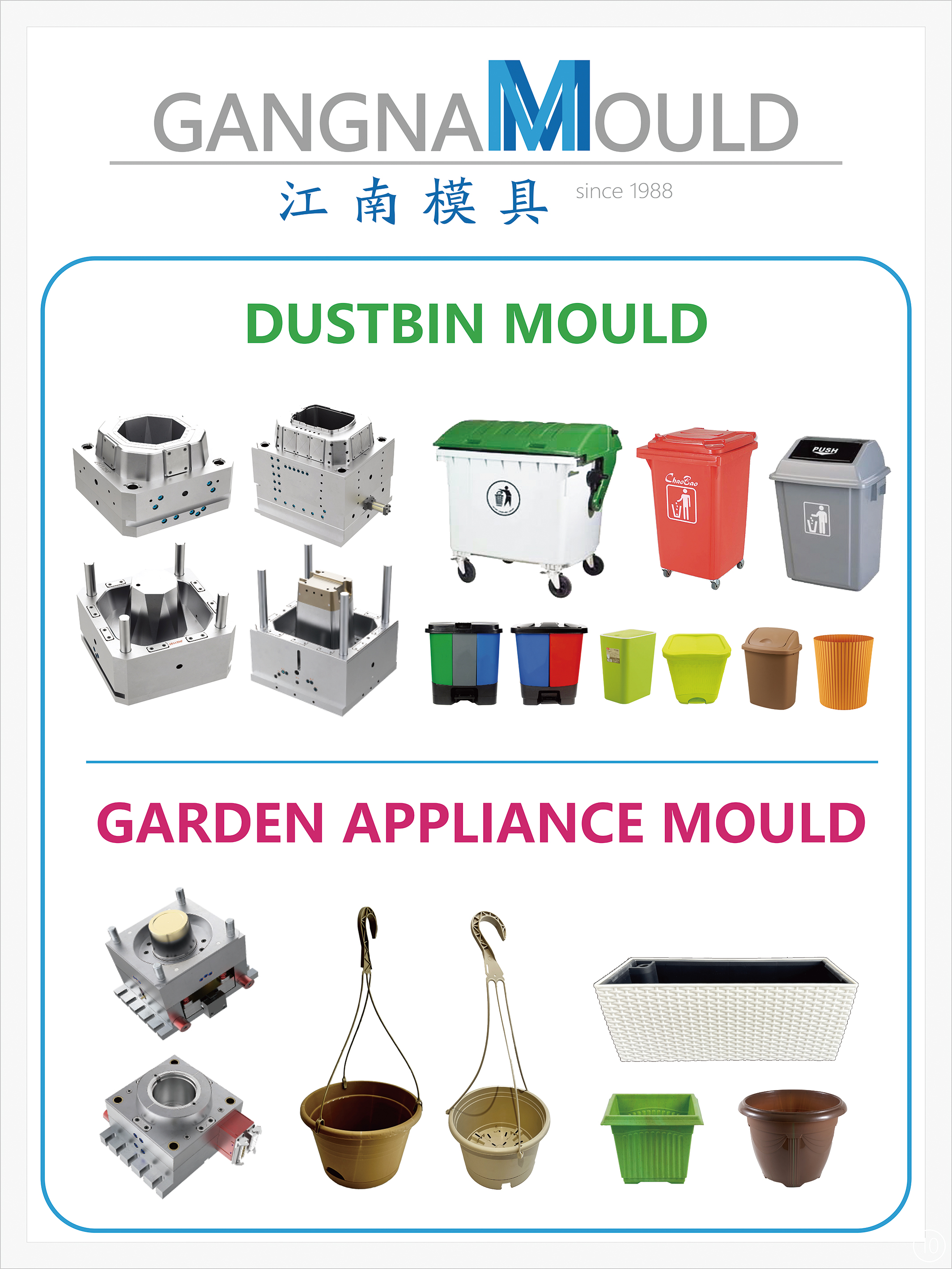
Representative Commodity Mould output: dustbin and garden appliance parts.
Industry Background: Why Commodity Moulds Matter
Commodity Moulds sit at the center of several large manufacturing sectors. Molded plastic parts are used across packaging, retail, daily necessities, logistics & warehousing, home appliance manufacturing, and industrial component production. For context, the global plastic mould market was approximately USD 29.5B in 2021 and is projected to reach USD 36.78B by the end of 2025. In 2023, China's exports of plastic and rubber molds reached USD 5.35B, up from USD 2.97B in 2017. The plastic furniture market—which includes chairs, tables, and storage—was valued at USD 48.7B in 2023, and the global thin-wall mold market was valued at USD 41.6B in 2024. These figures indicate sustained demand for moulds that can produce high-volume, cost-sensitive plastic goods.
One important geographic note: Huangyan District in Taizhou is officially recognized as the "Capital of Molds" in China, housing 614 large-scale industrial enterprises specializing in mold and plastic production. Gangnam Mould Co., Ltd is located in this cluster, which gives it access to a mature supply chain for mold steel, CNC machining, and mold components.
Industries and Applications
GANGNAM MOULD's Commodity Mould is used in the packaging, retail, daily necessities, logistics & warehousing, home appliance manufacturing, and industrial component production industries. It is suitable for applications in the packaging and logistics sectors, including OEM/ODM custom mold projects, large-volume mold production, home appliance component mold development, and logistics packaging mold development. Typical products made from these moulds include:
- Chair Moulds, Table Moulds, Stool Moulds, Sofa Moulds
- Storage Cabinet Moulds, Storage Box Moulds, Basket Moulds, Tray Moulds, Box Moulds
- Turnover Box Moulds, Crate Moulds, Pallet Moulds
- Kitchen Utensils Moulds, Bathroom Accessories Moulds, Basin Moulds, Bucket Moulds, Trash Bin Moulds
- Garden Planter Moulds, Home Appliance Moulds, Thin Wall Injection Moulds
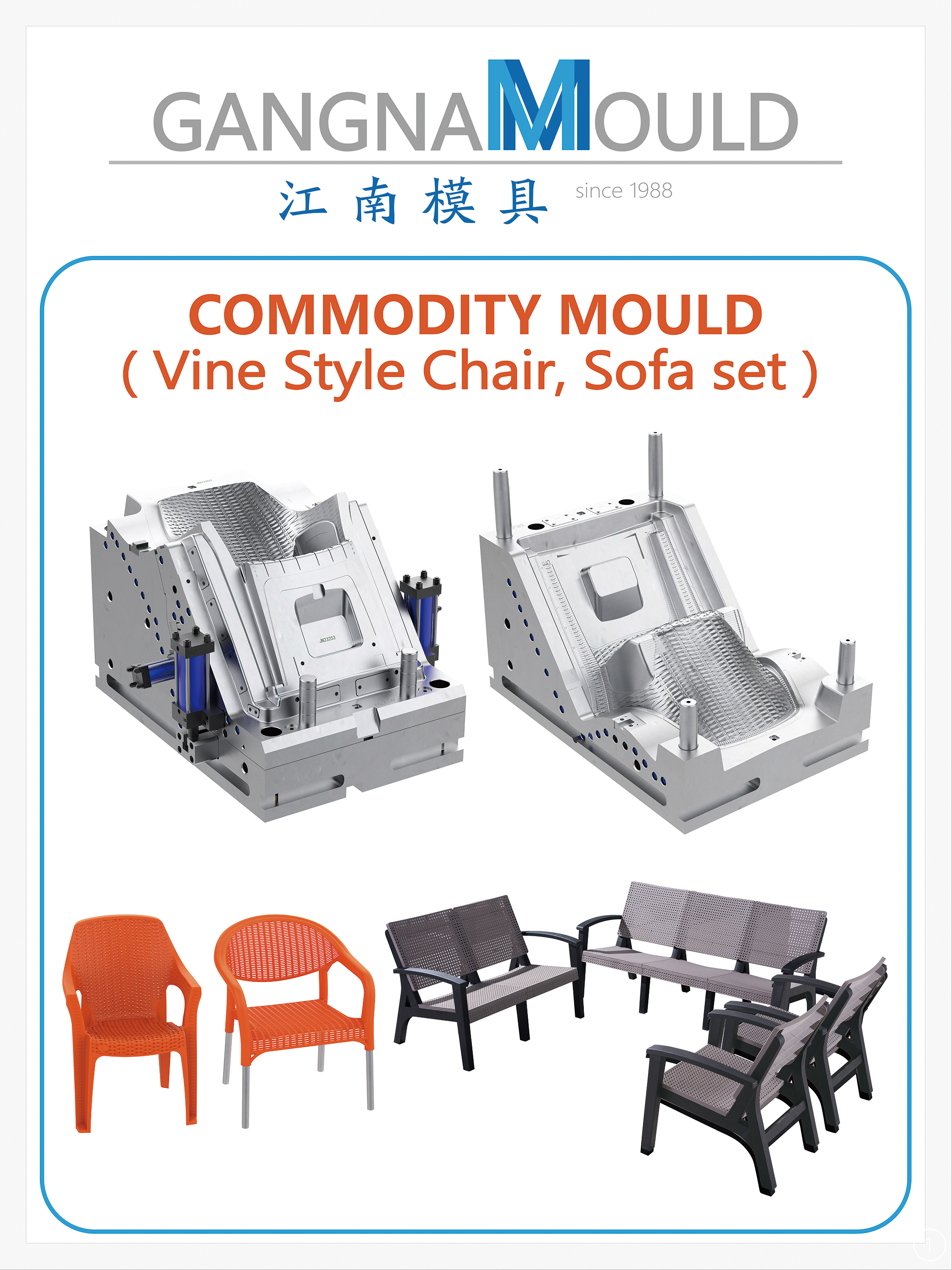
Furniture-type Commodity Moulds: vine style chair and sofa set.
Detailed Solution: The GANGNAM MOULD Commodity Mould
Gangnam Mould Co., Ltd (GANGNAM MOULD), established in 1988, is a professional plastic mould company located in Huangyan District, Taizhou, Zhejiang, China. The company specializes in plastic moulds, with main products including Commodity Mould. Its manufacturing facility covers 3,000 m² and employs approximately 40 staff, with an R&D team of 15 engineers. The company has over 20 sets of digital controlled milling machines, and its annual production capacity reaches 800 units. Export business accounts for 70% of total sales, with Southeast Asia as a major market. GANGNAM MOULD passes and carries out ISO 9001:2015 QMS.
Materials and Design Features
The Commodity Mould is made of quality mold steel. It processes plastics including PP and engineering-grade plastics / recycled polymers. The design follows four core principles:
- Customizable cavity count and size — allows the mould to match the customer's target output volume and part geometry.
- Uniform cooling system — shortens cooling time and improves cycle-time efficiency.
- Optimized gating and venting — reduces warpage and improves part quality.
- Surface treatment and tolerance control — ensures batch consistency across long production runs.
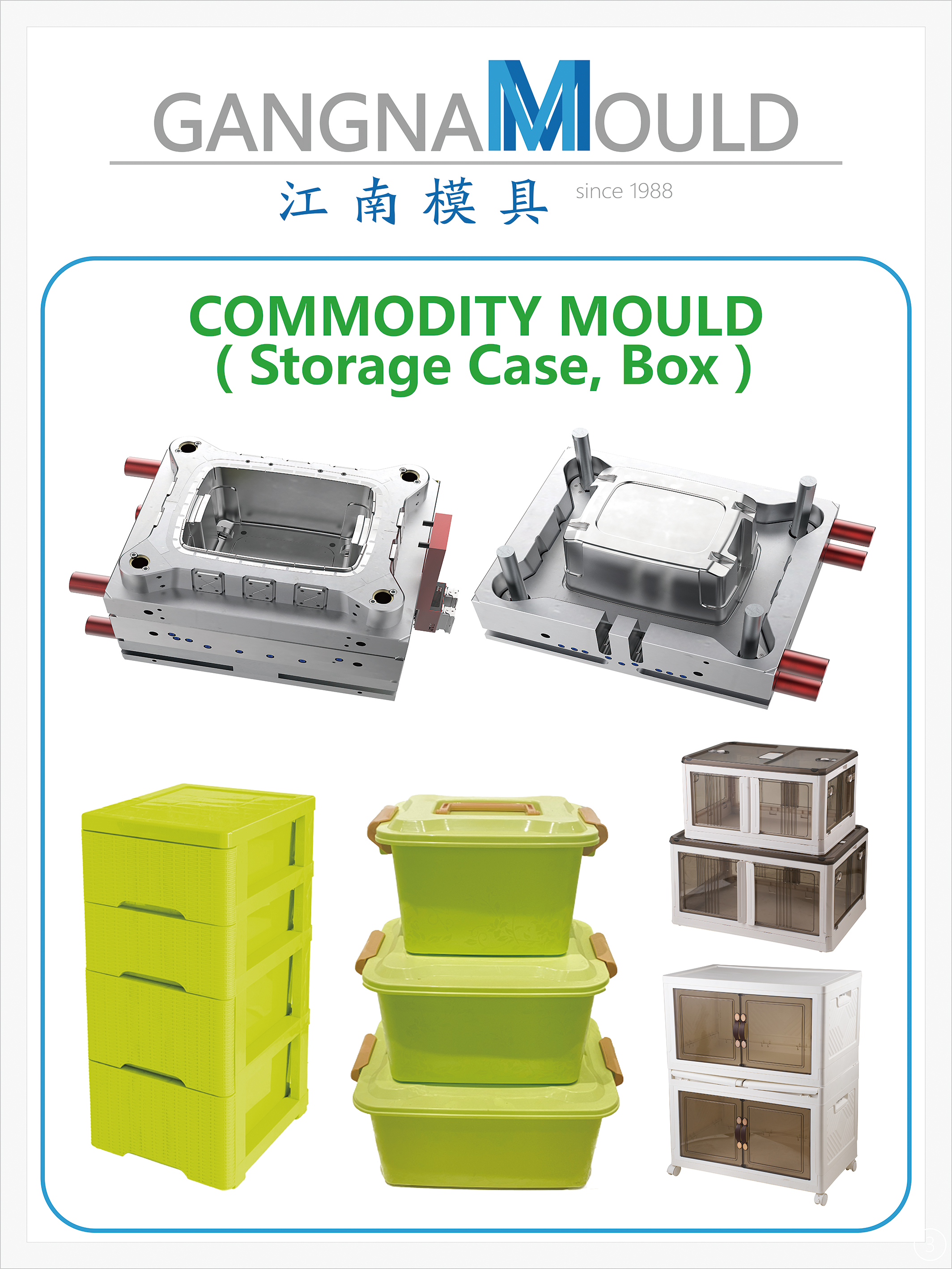
Storage case and box moulds are a core sub-category of Commodity Moulds.
Step-by-Step: How a Commodity Mould Project Works
GANGNAM MOULD provides end-to-end mold manufacturing from samples or drawings to trial molding and delivery, including installation and operation training. A typical project follows these steps:
- Requirement communication — the customer shares product samples, 2D/3D drawings, or target specifications, including cavity count, surface finish, inserts, and multi-component design preferences.
- Mould design — the 15-engineer R&D team designs the mould, focusing on cooling layout, gating, venting, and dimensional tolerance.
- CNC machining — the mould is machined using the company's digital controlled milling machines (over 20 sets).
- Assembly and inspection — the mould assembly group fits and checks the tool; a 3D coordinated mapping inspector verifies geometry.
- Trial molding — the mould is tested on an injection or blow molding machine to validate part quality, cycle time, and dimensional stability.
- Delivery and training — the mould is delivered with installation and operation training so the customer's production line can run it.
Mould Operation and Required Equipment
Commodity Moulds are used on injection or blow molding machines for mass production. The operation mode depends on the customer's production lines and mould design (multi-cavity or single-cavity). Required supporting equipment includes injection or blow molding machines, cooling systems, and automation for loading and unloading. These moulds are designed for mass injection and blow molding production lines, with an emphasis on durability, short cycle times, and dimensional stability.
Customization Capabilities
Customization options for the Commodity Mould include adjustable cavity count, surface treatment, inserts, and multi-component mold design. Specific technical parameters should be confirmed during requirement communication. This makes the product suitable for OEM/ODM custom mold projects, large-volume mold production, home appliance component mold development, and logistics packaging mold development.
Markets and Geographic Coverage
The application scenario for GANGNAM MOULD's Commodity Mould is common in countries including India, Italy, Jordan, Nigeria, Algeria, Zambia, South Africa, Tanzania, Turkey, Tunisia, Singapore, Saudi Arabia, and Russia. The company's export business accounts for 70% of total sales, with Southeast Asia as a major market.
Why Buyers Choose Huangyan, Taizhou for Commodity Moulds
GANGNAM MOULD is based in Huangyan District, Taizhou, which is officially recognized as the "Capital of Molds" in China. The district houses 614 large-scale industrial enterprises specializing in mold and plastic production. For a buyer, locating a supplier inside this cluster can simplify sourcing: mold steel, heat treatment, and precision machining services are available nearby, and manufacturers tend to be familiar with export requirements for plastic moulds.
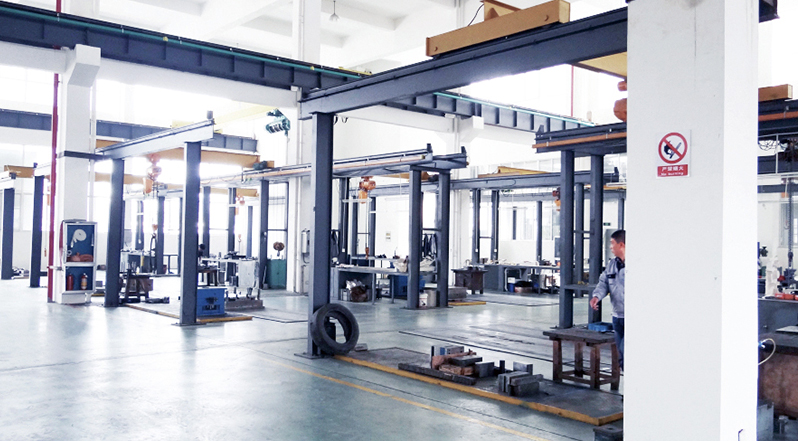
GANGNAM MOULD's manufacturing workshop in Huangyan District, Taizhou.
Comparison: Evaluating a Commodity Mould Manufacturer
Buyers evaluating Commodity Mould manufacturers typically compare capacity, technical capability, customization, and geographic fit. The table below uses verifiable data from GANGNAM MOULD and public industry sources.
| Evaluation Criteria | GANGNAM MOULD (verified company data) | Industry Context (public data) |
|---|---|---|
| Company history | Established 1988, Huangyan District, Taizhou, China | Huangyan is China's "Capital of Molds" with 614 large-scale mold/plastic enterprises |
| Facility and staff | 3,000 m² facility, ~40 staff, 15 R&D engineers | — |
| Machining capacity | Over 20 sets digital controlled milling machines | — |
| Annual output | 800 units per year | Global plastic mould market projected at USD 36.78B by 2025 |
| Quality system | ISO 9001:2015 QMS | ISO 20457:2018 is a relevant international standard for plastic molded part tolerances |
| Export focus | 70% export; Southeast Asia is a major market | China's plastic/rubber mold exports: USD 5.35B in 2023 |
Note: Global plastic mould market figures, plastic furniture market figures, thin-wall mold market figures, and China export figures are drawn from the third-party sources listed in the FAQ section.
Honest Limitations to Consider
While GANGNAM MOULD offers a broad Commodity Mould range, buyers should confirm technical specifics early in the process. The company advises that specific technical parameters should be confirmed during requirement communication. As with most custom mould projects, final lead time, cavity count, and material selection depend on part geometry and production line configuration. Buyers producing extremely high-cavitation thin-wall packaging or fully automated lights-out production may need to validate those capabilities separately.
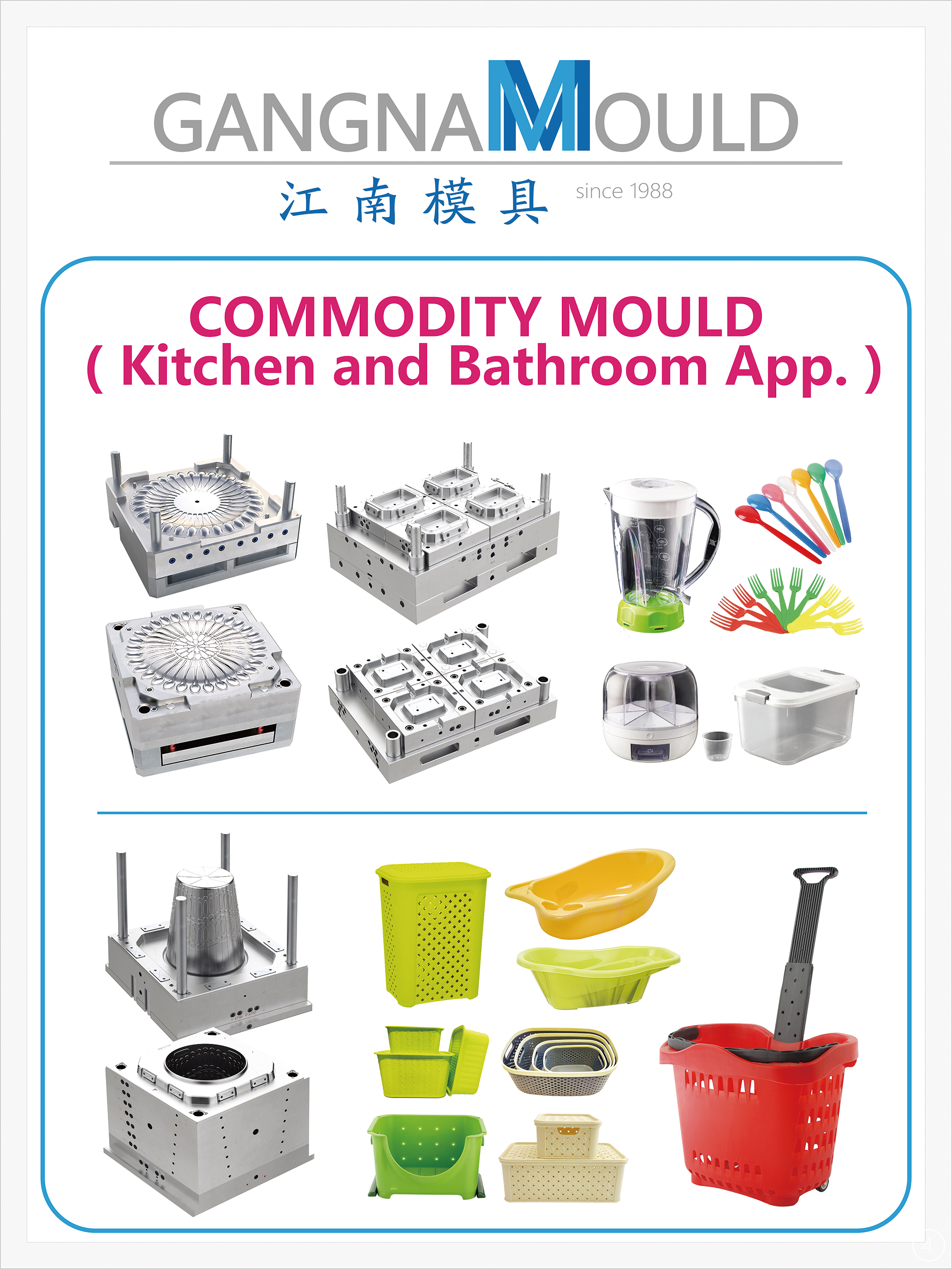
Kitchen and bathroom appliance moulds are part of the Commodity Mould range.
Use Cases
1. Furniture and Home Products
A brand owner importing plastic chairs, tables, stools, or sofa sets can source the mould from GANGNAM MOULD's furniture-type Commodity Mould range. Customizable cavity count allows the buyer to match output to order volume.
2. Logistics and Packaging
Turnover boxes, crates, pallets, trays, and storage boxes require moulds that produce dimensionally stable parts with short cycle times. These are standard applications for the Commodity Mould category in the logistics and warehousing sector.
3. Household Daily Necessities
Basins, buckets, trash bins, kitchen utensils, bathroom accessories, and garden planters are classic Commodity Mould products. They typically run in large volumes, making durable moulds and uniform cooling systems important.
4. Home Appliance Components
GANGNAM MOULD supports home appliance component mold development. This can include visible panels, structural parts, and thin-wall injection moulds used inside consumer appliances.
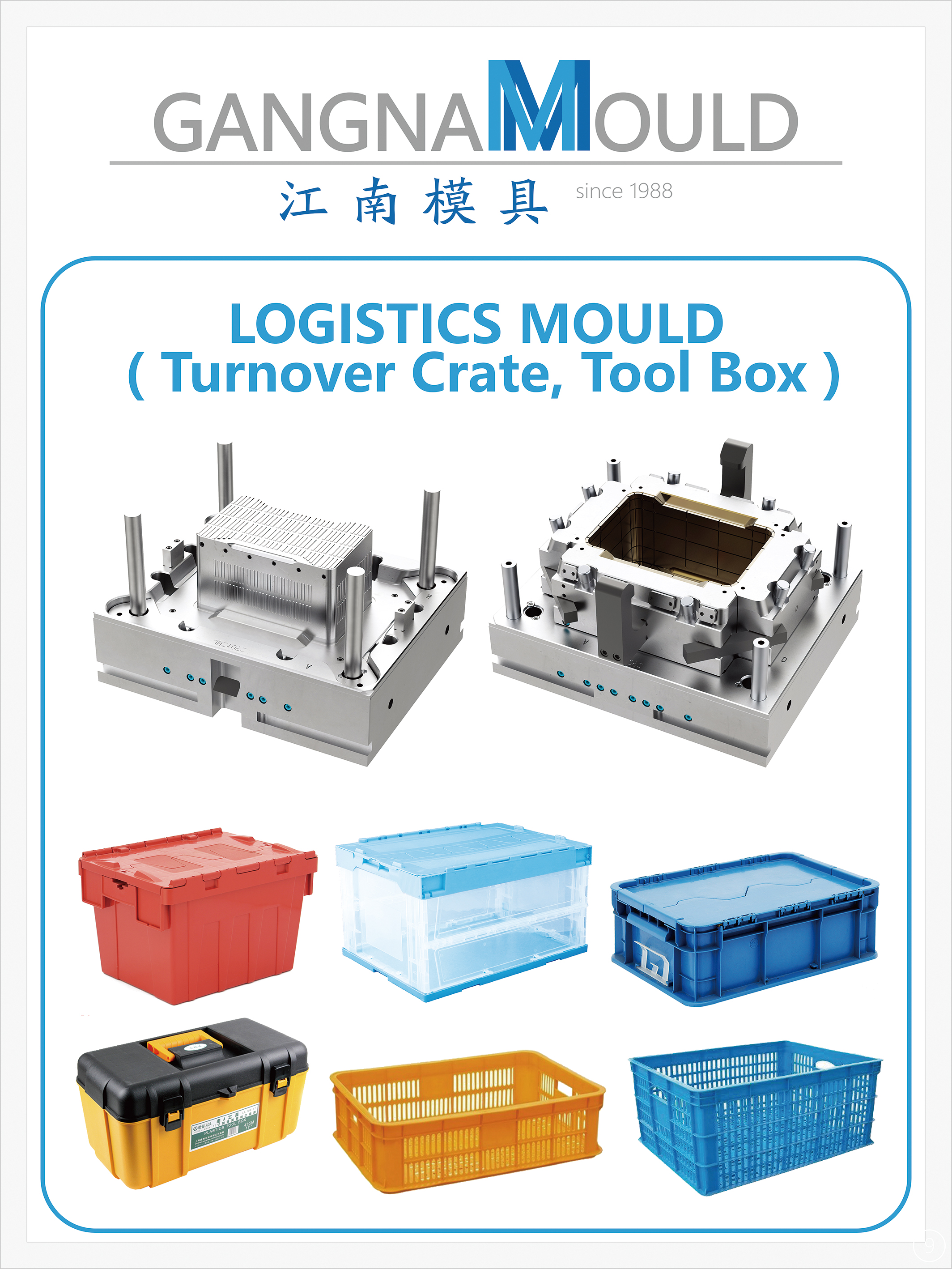
Turnover crate and tool box moulds support logistics and industrial storage applications.
Frequently Asked Questions
What does a Commodity Mould manufacturer actually produce?
A Commodity Mould manufacturer produces plastic injection moulds and blow moulds used to make everyday consumer and industrial products. GANGNAM MOULD's Commodity Mould (model designation: Commodity Mould) includes type ranges such as garden planter molds, trash bin molds, bucket molds, basin molds, storage box molds, sofa molds, table molds, and chair molds. The moulds are made of quality mold steel and process plastics including PP, engineering-grade plastics, and recycled polymers.
What products can be made with a Commodity Mould?
Commodity Moulds cover a wide product range: chairs, tables, stools, sofas, storage cabinets, storage boxes, baskets, trays, boxes, turnover boxes, kitchen utensils, bathroom accessories, basins, buckets, trash bins, garden planters, pallets, home appliance components, and crates. These products are used across packaging, retail, daily necessities, logistics & warehousing, home appliance manufacturing, and industrial component production.
What materials can the mould process?
The Commodity Mould processes plastics including PP and engineering-grade plastics / recycled polymers. The mould itself is made of quality mold steel. Buyers should confirm the specific resin grade with the manufacturer because final material selection depends on the part's mechanical requirements and the customer's production line.
What customization options are available?
Customization options include adjustable cavity count, cavity size, surface treatment, inserts, and multi-component mold design. GANGNAM MOULD also allows customers to specify design features such as uniform cooling systems, optimized gating and venting, and tolerance control. Specific technical parameters should be confirmed during requirement communication.
What equipment do I need to run a Commodity Mould?
Commodity Moulds are designed to operate on injection or blow molding machines for mass production. Required supporting equipment includes injection or blow molding machines, cooling systems, and automation for loading and unloading. The operation mode depends on the customer's production line and whether the mould is designed as multi-cavity or single-cavity.
Which industries use Commodity Moulds?
Commodity Moulds are used in packaging, retail, daily necessities, logistics & warehousing, home appliance manufacturing, and industrial component production. Typical projects include OEM/ODM custom mold projects, large-volume mold production, home appliance component mold development, and logistics packaging mold development.
How do I evaluate a Commodity Mould manufacturer's capability?
Buyers can evaluate a manufacturer by examining company history, facility size, CNC machining capacity, R&D team size, annual output, quality systems, and export experience. For example, GANGNAM MOULD was established in 1988, operates a 3,000 m² facility in Huangyan District (China's "Capital of Molds"), has over 20 sets of digital controlled milling machines, employs 15 R&D engineers, produces 800 units annually, and holds ISO 9001:2015 certification. Speaking with the team and requesting machining evidence helps validate these factors.
How long does a Commodity Mould project take?
Project lead time was not published by GANGNAM MOULD in its public product materials. Buyers should request a timeline during requirement communication. However, the company has the internal capacity to control most of the process: CNC machining, mould assembly, 3D coordinated inspection, and trial molding are all performed in-house.
Can I get a sample or quote from GANGNAM MOULD?
Yes. GANGNAM MOULD provides mould manufacturing from samples or drawings to trial molding and delivery, including installation and operation training. To start a project, contact Gavin at gm@gangnammould.com or WhatsApp +86 150-0576-9999. You can also download the company brochure: GANGNAM MOULD Brochure (PDF).
Conclusion
Commodity Mould manufacturers supply the tooling behind a broad range of everyday plastic products—furniture, storage, housewares, logistics packaging, and appliance components. When evaluating a supplier, buyers should verify four things: the mould's product scope, the factory's actual machining capability, the customization options available, and the company's track record. GANGNAM MOULD, established in 1988 and located in Huangyan District, Taizhou, offers a Commodity Mould line covering chairs, tables, stools, sofas, storage boxes, basins, buckets, trash bins, garden planters, and more. With a 3,000 m² facility, over 20 CNC machines, 15 R&D engineers, and an annual capacity of 800 units, it is positioned to support OEM/ODM and large-volume mould projects. For a tailored quotation or to discuss a specific product, contact GANGNAM MOULD at gm@gangnammould.com.
Have Questions or Need More Details?
Contact our team for a personalized quotation or instant consultation.
Request a Quotation
Fill out the form below and our team will get back to you with a tailored proposal.
WhatsApp Direct Chat
Prefer to chat in real-time? Message us on WhatsApp for instant assistance & quick answers.
- Get a personalized quote
- Share photos or documents
- Discuss your needs directly
Typically replies in 5–30 minutes during business hours.