Commodity Mould Compliance: ISO 9001:2015, Materials, and Buyer Evaluation Criteria
Commodity Mould Compliance: ISO 9001:2015, Materials, and Buyer Evaluation Criteria
How to verify commodity mould quality before ordering: concrete standards, certification checks, design requirements, and practical parameters.
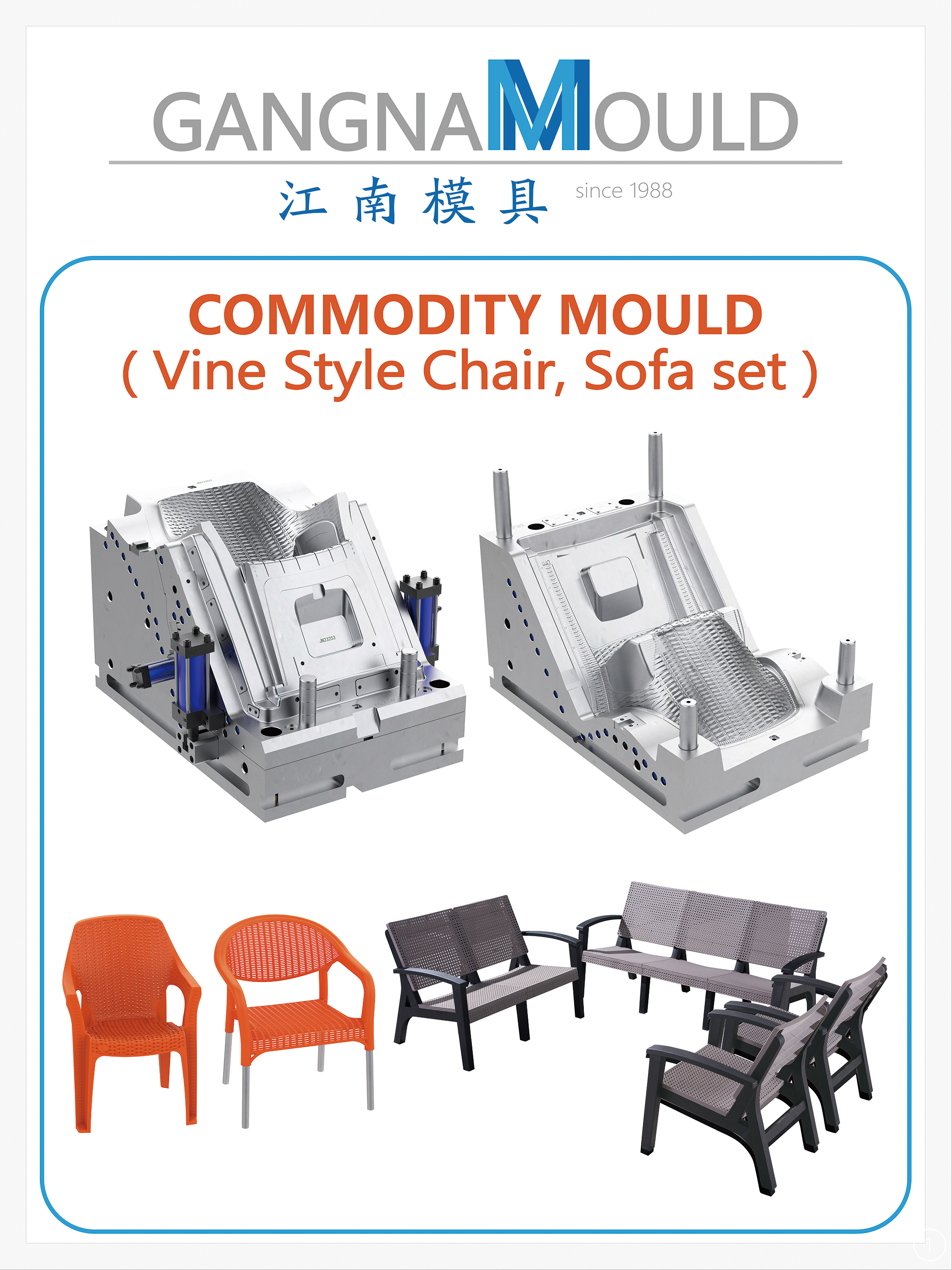
Commodity moulds are used to mass-produce daily-use plastic items such as chairs, tables, storage containers, and household appliances.
Buyers researching injection moulds for daily-use plastic products often find themselves comparing dozens of manufacturers without a common baseline. The fastest way to narrow the list is to check compliance evidence: quality system certification, mould materials, design parameters for durability, and the manufacturer's inspection workflow. This article explains what to look for and shows how GANGNAM MOULD, a commodity mould manufacturer in Huangyan, Taizhou, China, approaches these requirements.
The Procurement Problem: What Does "Compliant Commodity Mould" Actually Mean?
In commodity mould manufacturing, "compliance" does not mean one universal approval label. It means the manufacturer can provide verifiable evidence for each part of the buyer's requirement list:
- Quality management system – How the factory controls design, manufacturing, and inspection.
- Material traceability – What steel is used and how heat treatment is managed.
- Plastic processing suitability – Whether the mould design handles the target resin, typically PP, engineering-grade plastics, or recycled polymers.
- Dimensional assurance – What measurement and trial procedures verify the mould before delivery.
For buyers in packaging, retail, consumer goods, logistics and warehousing, and home appliance manufacturing, these points translate into uptime, scrap rate, and final product consistency.
| Buyer concern | Compliance evidence to request | Why it matters |
|---|---|---|
| Factory reliability | ISO 9001:2015 certificate with scope and registration number | Shows that quality procedures are documented and audited |
| Mould lifespan | Mould steel specification and heat-treatment description | Affects maintenance intervals and total cost of ownership |
| Part consistency | CMM measurement reports, trial-moulding inspection reports | Reduces sorting costs and customer complaints |
| Production uptime | Cooling system design, cavity count, gating/venting approach | Determines cycle time and freedom from warp or short shots |
| After-sales support | Delivery, installation and operation training commitment | Helps the buyer's team start production with fewer errors |
Industry Background: Standards, Tolerances, and Market Context
Three types of verified reference data help buyers anchor their expectations.
Global and regional demand context. The global plastic mould market was approximately USD 29.5 billion in 2021 and is projected to reach USD 36.78 billion by the end of 2025, according to industry research reports. China's exports of plastic and rubber moulds reached USD 5.35 billion in 2023, up from USD 2.97 billion in 2017. This growth is consistent with rising orders for furniture moulds, logistics crates, and daily-use plastic containers.
The plastic furniture sub-segment. The global plastic furniture market—covering chairs, tables, and storage items—was valued at USD 48.7 billion in 2023, with the residential segment holding a 53.1% revenue share. Moulds for chairs, tables, stools, sofas, and storage products are therefore a structural part of this market, not an incidental niche.
Thin-wall mould relevance. The global thin-wall mould market was valued at USD 41.6 billion in 2024. Thin-wall designs demand optimized gating, uniform cooling, and precise venting—exactly the areas that determine whether a commodity mould can produce lightweight parts at commercial speed.
Tolerance standard. ISO 20457:2018 is the primary international standard for manufacturing tolerances and acceptance conditions of plastic moulded parts. Buyers should ask whether a supplier quotes against this standard or an internal tolerance system that is demonstrably equivalent.
What GANGNAM MOULD Offers as a Commodity Mould Manufacturer
GANGNAM MOULD CO., LTD (Zhejiang Huangyan Jiangnan Mould Factory) originally established in 1988, is a professional manufacturer of plastic moulds. The company operates from Xilin Industrial District, Honglai Town, Quanzhou Nan'an City, Fujian Province, China, and uses a defined QMS covering the manufacture and design of plastic parts moulds.
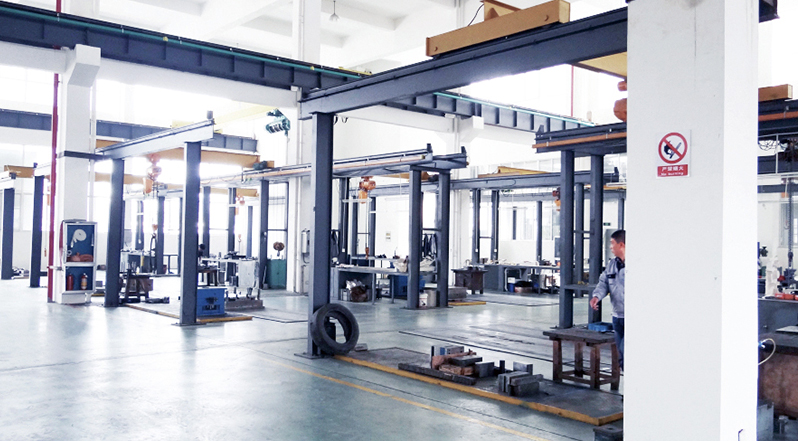
GANGNAM MOULD's workshop includes CNC machining, digital controlled milling, and assembly groups.
Product scope covers a broad commodity mould range: chair moulds, table moulds, sofa moulds, stool moulds, storage cabinet and storage box moulds, kitchen utensils moulds, bathroom accessories moulds, basket, tray and box moulds, basin and bucket moulds, trash bin moulds, garden planter moulds, thin-wall injection moulds, pallet moulds, turnover crate moulds, and home appliance moulds.
Verified Quality System and Certification
GANGNAM MOULD passes and carries out an ISO 9001:2015 quality management system. The scope is "Manufacture and Design of Plastic Parts Mould". The certification number is 18118Q10459R3S, issued by Beijing Xingguo Inspection and Certification Co., Ltd., with an issue date of 2024-06-14 and expiry date of 2027-06-15. This certification applies to the global market.
For buyers: request a certificate copy and verify the certificate number, issuing body, scope, and validity period. The certificate should name the same legal entity that signs your purchase order.
Materials and Processable Plastics
GANGNAM MOULD's commodity moulds are made of quality mould steel. Processed plastics include PP and engineering-grade plastics / recycled polymers; the company's site mentions PP injection molding capability. For commodity products such as crates, bins, chairs, and household containers, PP is a common choice because of its balance of stiffness, chemical resistance, and recyclability.
Buyers who plan to run recycled polymers should confirm the actual resin grade with the mould designer, because melt flow and shrinkage differ from virgin material.
Production Capability
- Factory size: 3,000 m²
- Employees: 40
- R&D team: 15 engineers
- Annual output: more than 800 sets of moulds
- Monthly capacity: about 80 sets of moulds
- Export ratio: about 70%, with Southeast Asia among main markets
These figures help buyers gauge whether a supplier can absorb an order timeline without disrupting other commitments. Large-volume mould production, OEM/ODM custom mould projects, home appliance component mould development, and logistics packaging mould development are within the company's stated project types.
Design and Engineering Focus for Durable Commodity Moulds
GANGNAM MOULD's commodity mould design focuses on six areas that directly influence production economics:
- Customizable cavity count and size – Cavity count balances capital cost against per-part cycle time.
- Uniform cooling system – Shortens cooling time and improves part dimensional consistency.
- Optimized gating and venting – Reduces warpage, weld lines, and trapped gas defects.
- Surface treatment – Determines gloss, texture, and release behaviour.
- Tolerance control – Holds batch consistency under ISO 20457:2018 or an agreed alternative.
- Material and heat-treatment requests – Customizable mould steel selection for expected production volume.
For thin-wall injection moulds, these factors are especially critical because thin cavities fill and cool differently than thick-wall sections.
Step-by-Step: How a Commodity Mould Project Runs
From a buyer's perspective, a typical project with GANGNAM MOULD follows this sequence:
- Requirement clarification – Part drawings or samples, target plastic, production volume, machine tonnage, and quality targets are defined.
- Design phase – Engineers propose cavity count, gate location, cooling layout, and steel grade.
- Manufacturing – CNC machining, digital controlled milling, and assembly groups build the mould.
- Trial and inspection – Full-size trial testing is performed; inspection reports are provided.
- Delivery and training – Mould delivery includes installation and operation training; detailed inspection reports from the trial stage are handed over.
The company uses quality control methods including NDT (non-destructive testing), CMM (coordinate measuring machine) measurement, and full-size trial testing with inspection reports. Exact lead time depends on mould complexity, typically estimated at 30–45 days, and is confirmed per order. MOQ is 1 unit.
Commodity Mould Use Cases
Packaging and Retail
Injection pallets, circulation crates, trays, storage boxes, and trash bins require moulds that survive millions of operational cycles. GANGNAM MOULD designs these moulds for reliability under continuous production.
Logistics and Warehousing
Turnover crates and pallets must hold dimensional stability after repeated impact, stacking, and washing. Uniform cooling and tolerance control in the mould keep nestable crates consistent across batches.
Daily Consumer Goods
Chairs, tables, stools, sofas, buckets, basins, and garden planters are produced in high volumes at tight cost targets. Customizable cavity count lets a producer match mould investment to required daily output.
Home Appliance Manufacturing
Housings and functional components benefit from custom mould development and multi-component integration where inserts or different surface finishes are needed.
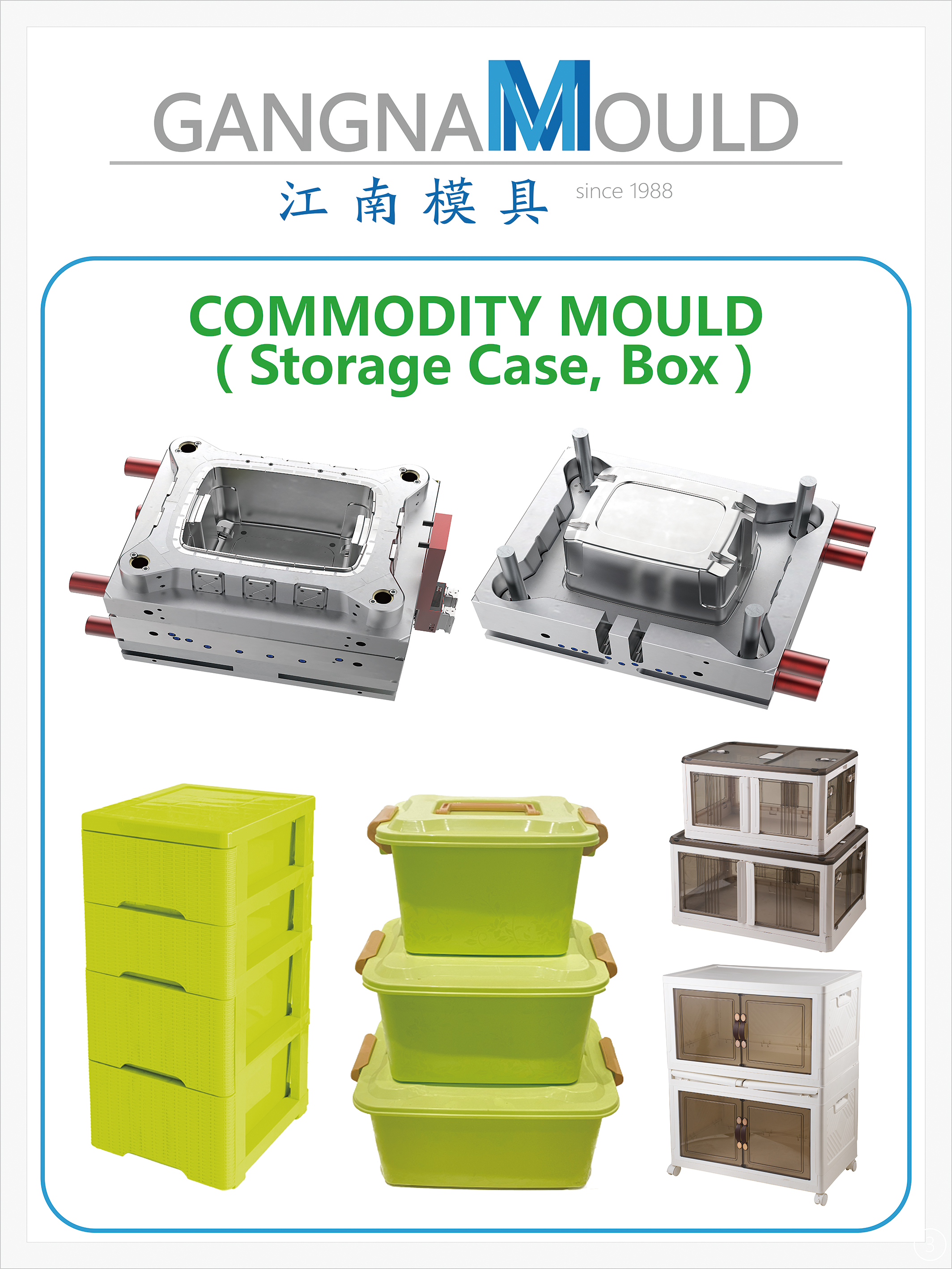
Storage boxes and crates are typical commodity mould applications in retail and logistics.
How to Choose a Commodity Mould Manufacturer: Evaluation Criteria
No public ranking of "best commodity mould manufacturers" can replace a structured evaluation. The following criteria separate suppliers that can substantiate quality from those that cannot.
| Criterion | What to verify | Relevance |
|---|---|---|
| Quality system certification | ISO 9001:2015 certificate number, issuer, scope, expiry | Confirms audited design and production processes |
| Industry/application experience | Past moulds for furniture, crates, household products | Shows understanding of daily-use plastic part requirements |
| Inspection capability | CMM, NDT, full-size trial testing | Reduces risk of dimensional errors found only after shipment |
| Customization depth | Cavity count, surface texture, inserts, multi-component design | Determines fit with the buyer's product portfolio |
| Production capacity | Monthly/annual mould output, lead time | Affects scheduling and responsiveness |
| Export experience | Verified export markets, communication channel | Relevant for packaging, shipping, and remote support |
| After-sales arrangement | Installation and operation training, inspection report handover | Improves ramp-up speed at the buyer's factory |
Limitations and Trade-offs
Every buyer should weigh trade-offs explicitly:
- Cavity count vs. cost: More cavities lower per-part cost but raise mould price and maintenance risk.
- Mould steel grade vs. project budget: Higher-grade steel suits long runs; a short-run trial can often use a more economical grade.
- Delivery speed vs. full inspection: Some suppliers compress trial time; confirm that inspection reports remain complete.
- Global certification scope: ISO 9001:2015 is a QMS certificate, not a product safety mark. Buyers must still check whether their target market requires other certifications.
FAQ: Commodity Mould Certification and Compliance Questions
Q1: Are commodity moulds CE-certified?
CE marking applies to products placed on the EU market and covered by specific EU directives; there is no general "CE certification" for injection moulds as a universal requirement. Buyers should confirm with the supplier which EU directives apply to their finished product and whether machinery-level CE requirements are relevant to the moulding equipment. For the mould itself, the more common verifiable evidence is a quality management system certificate such as ISO 9001:2015.
Q2: What is ISO 9001:2015 certification for a commodity mould manufacturer?
It is a quality management system certification covering the design and manufacture of plastic parts moulds. For GANGNAM MOULD, the certificate number is 18118Q10459R3S, issued by Beijing Xingguo Inspection and Certification Co., Ltd. The certification applies to the global market and covers the commodity mould product line (product code 5670). The standard helps ensure documented procedures, consistent inspection, and continuous improvement across order handling, design, manufacturing, and delivery.
Q3: How can a buyer verify a mould manufacturer's quality management certification?
Request a copy of the certificate and check the following: the legal entity name matches the supplier contract party; the certification number is traceable to a recognized issuing body; the scope includes manufacture and design of plastic moulds; and the issue/expiry dates are valid for the order period. Where possible, confirm the certificate number with the issuing body or search its public verification system. Third-party data such as ISO 20457:2018 can also be referenced for tolerance acceptance conditions.
Q4: Which materials can a commodity mould process?
GANGNAM MOULD's commodity moulds are made of quality mould steel and process thermoplastics including PP and engineering-grade plastics/recycled polymers; PP injection molding is mentioned on the company site. Buyers should provide the exact resin grade and filler content before design confirmation, since shrinkage and flow behaviour affect cavity dimensions and cycle time.
Q5: What inspection methods support mould quality before delivery?
GANGNAM MOULD states that quality control methods include NDT, CMM measurement, and full-size trial testing with inspection reports. The project flow includes trial and inspection before delivery, plus installation and operation training. These inspection reports give the buyer a concrete handover record that can be compared with part drawings and future production samples.
Q6: What is a realistic lead time for a commodity mould order?
Lead time depends on mould complexity. For GANGNAM MOULD, the process runs from requirement to design, manufacturing, trial and inspection, then delivery and training; exact timelines are confirmed per order, with a typical estimate of 30–45 days. MOQ is 1 unit, which supports pilot projects and first-time buyers.
Conclusion: Use Certification and Process Evidence to Shortlist Suppliers
Commodity mould compliance is not a vague marketing claim—it can be verified through certification numbers, inspection procedures, material specifications, and documented delivery workflows. For a buyer evaluating manufacturers, the practical sequence is:
- Certification scope check.
- Mould material and plastic compatibility review.
- Design capability assessment (cavity count, cooling, gating, venting).
- Inspection evidence verification.
- Lead-time and after-sales confirmation.
GANGNAM MOULD provides a documented ISO 9001:2015 quality management system, a clear commodity mould portfolio for chairs, tables, stools, sofas, storage, baskets, trays, boxes, turnover crates, pallets, kitchen and bathroom products, bins, planters, and home appliance parts, and an OEM/ODM process supported by CMM and NDT inspection methods. For buyers, these are concrete facts to compare against their own requirement list.
Next step for buyers: Request a sample or quotation with your part drawings, target plastic, and expected production volume. For GANGNAM MOULD, contact Gavin at gm@gangnammould.com or WhatsApp +86 150-0576-9999.
Company brochure: Download GANGNAM MOULD catalogue (PDF)
Have Questions or Need More Details?
Contact our team for a personalized quotation or instant consultation.
Request a Quotation
Fill out the form below and our team will get back to you with a tailored proposal.
WhatsApp Direct Chat
Prefer to chat in real-time? Message us on WhatsApp for instant assistance & quick answers.
- Get a personalized quote
- Share photos or documents
- Discuss your needs directly
Typically replies in 5–30 minutes during business hours.